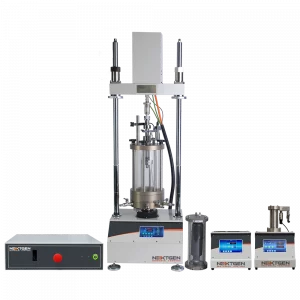
ASTM D5311/D5311M is a soil test method used to run load-controlled cyclic undrained triaxial tests on saturated soil specimens. It is commonly used in geotechnical laboratories when evaluating how soils may respond to earthquake-type or other repeated (cyclic) loading.
The standard focuses on cyclic response measurements such as strain development and excess pore-water pressure under cyclic axial loading at a specified effective confining pressure and consolidation condition. If you need help aligning a project specification with the right cyclic triaxial configuration and instrumentation, you can talk with our team.
ASTM D5311/D5311M-25 Standard Test Method for Load Controlled Cyclic Triaxial Response of Soil
ASTM D5311/D5311M is a test method describing how to perform load-controlled cyclic undrained triaxial tests to evaluate the cyclic response of saturated soils using intact or reconstituted specimens.
Because cyclic triaxial testing is sensitive to specimen condition, consolidation, stress waveform, and instrumentation, equipment selection and lab procedures are typically specified tightly at the project level (or by the requesting engineer) to ensure comparable results.
Quick Definition
What it is: A load-controlled, cyclic, undrained triaxial test method for saturated soils.
What it provides: Cyclic response data such as cyclic/average axial strains and excess pore-water pressure development versus number of cycles under a defined confining pressure and applied cyclic stress conditions.
Where it’s used: Geotechnical design and investigation programs related to earthquake loading, cyclic stability, and liquefaction-type evaluations.
What This Standard Covers
This test method describes performing cyclic undrained triaxial loading under load control on saturated soil specimens. Testing is typically performed after consolidation (often isotropic, and in some cases anisotropic) at a selected effective confining pressure, followed by cyclic axial loading that may include a defined stress offset.
The standard is generally associated with coarser-grained, free-draining soils of relatively higher permeability, while also noting that additional care may be needed for well-graded materials, silts, and clays where pore-water pressure may not be uniform throughout the specimen.
Why This Standard Matters in Testing
Cyclic triaxial response data is often used to evaluate whether a soil deposit can resist cyclic shear stresses induced by earthquakes or other repeated loading. The results are frequently used to compare soil behavior across confining pressures, specimen conditions (intact vs reconstituted), and stress histories.
From a laboratory standpoint, this method tends to be equipment- and setup-sensitive. Differences in reconstitution method, drainage control, pore-pressure measurement, actuator control stability, and data acquisition can materially affect the response trends used in engineering interpretation.
Common Materials, Product Types, or Applications Covered
Common materials: Saturated soils tested in triaxial form (intact or reconstituted specimens).
Common applications: Earthquake/cyclic loading response characterization, cyclic stability studies, and liquefaction-response screening or comparison programs where cyclic strain and pore-pressure generation behavior are of interest.
Common test program context: Often paired with conventional static triaxial strength/stiffness testing and index testing as part of a broader geotechnical laboratory program.
Common Test or Verification Workflow
While project requirements vary, a typical ASTM D5311/D5311M workflow includes specimen preparation (intact sampling or reconstitution), saturation, consolidation to a target effective confining pressure, and then application of cyclic axial loading under undrained conditions while monitoring load, deformation, and pore-water pressure response.
Common outputs used by engineers: Cyclic response trends based on cycles to reach a limiting axial strain and/or a defined pore-pressure ratio, along with strain and pore-pressure development versus cycle count for the applied cyclic stress condition.
Equipment Commonly Used for This Standard
ASTM D5311/D5311M generally points to a cyclic triaxial test system capable of load-controlled cyclic axial loading under controlled cell and back pressure conditions, with instrumentation suitable for undrained cyclic response measurements.
Common equipment: Servo-hydraulic or electromechanical load frame with cyclic loading control, triaxial cell, pressure control (cell and back pressure), pore-pressure transducers, load measurement, axial displacement measurement, volume/pressure measurement as applicable, and synchronized data acquisition/software for cycle-based control and logging.
Quoting caution: The required confining pressure range, specimen size, required cyclic waveform/control limits, sensor accuracy, and reporting needs can change the recommended actuator capacity, pressure controller selection, and transducer package. If you are specifying a new cyclic triaxial setup or expanding capacity, you can request a detailed quote based on your target pressures, specimen sizes, and control requirements.
How to Read This Designation or Revision
D5311/D5311M: This is a combined ASTM designation that presents SI and inch-pound units together, with each system regarded separately as standard.
-25: The suffix indicates the edition year (2025) for the version cited as D5311/D5311M-25.
Revision sensitivity: Control definitions, terminology, reporting expectations, and acceptance of offsets/criteria can be edition-dependent. For compliance work, match the exact year-suffix version required by the project specifications.
Related Standards, Methods, or Frameworks
In practice, cyclic triaxial testing is often specified alongside other geotechnical laboratory methods (for saturation checks, index properties, and complementary strength/stiffness characterization). The exact companion standards are typically dictated by the project, soil type, and the analysis method selected by the engineer of record.
If you have a specification that references multiple soil test standards and you want to ensure your lab setup and sensors cover the full scope, contact our team with the standards list and target pressure/stress ranges.
Talk with a technical specialist
If you’re preparing to run ASTM D5311/D5311M for earthquake or cyclic-response studies, we can help translate your required confining pressures, specimen dimensions, and cyclic control needs into a practical triaxial system configuration. Share your test plan and we’ll help you identify the right load frame, triaxial cell, pressure control, and instrumentation package—start by speaking with our team.