Automatic Vicat Apparatus

Cement & Concrete Testing Equipment
Standards


Description
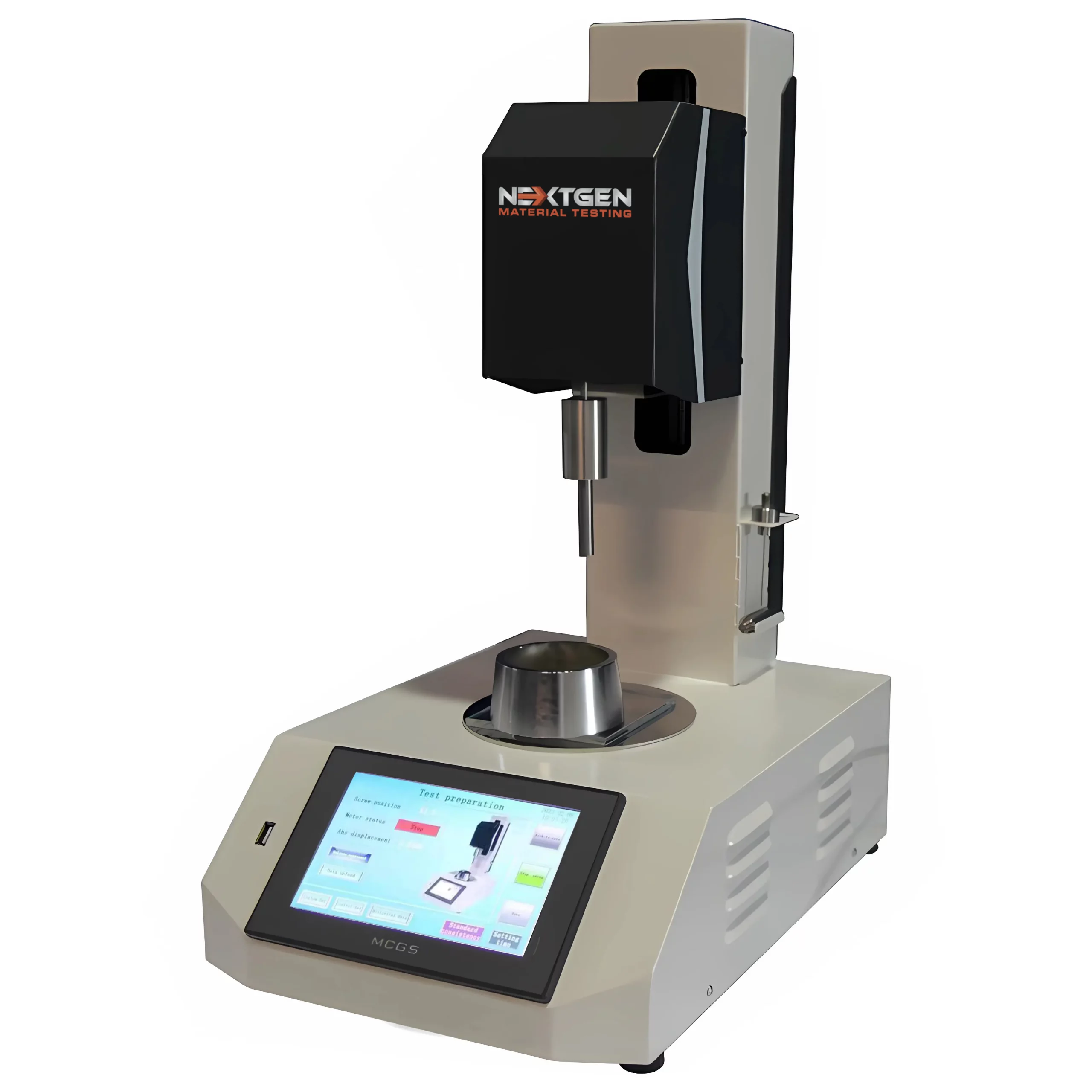
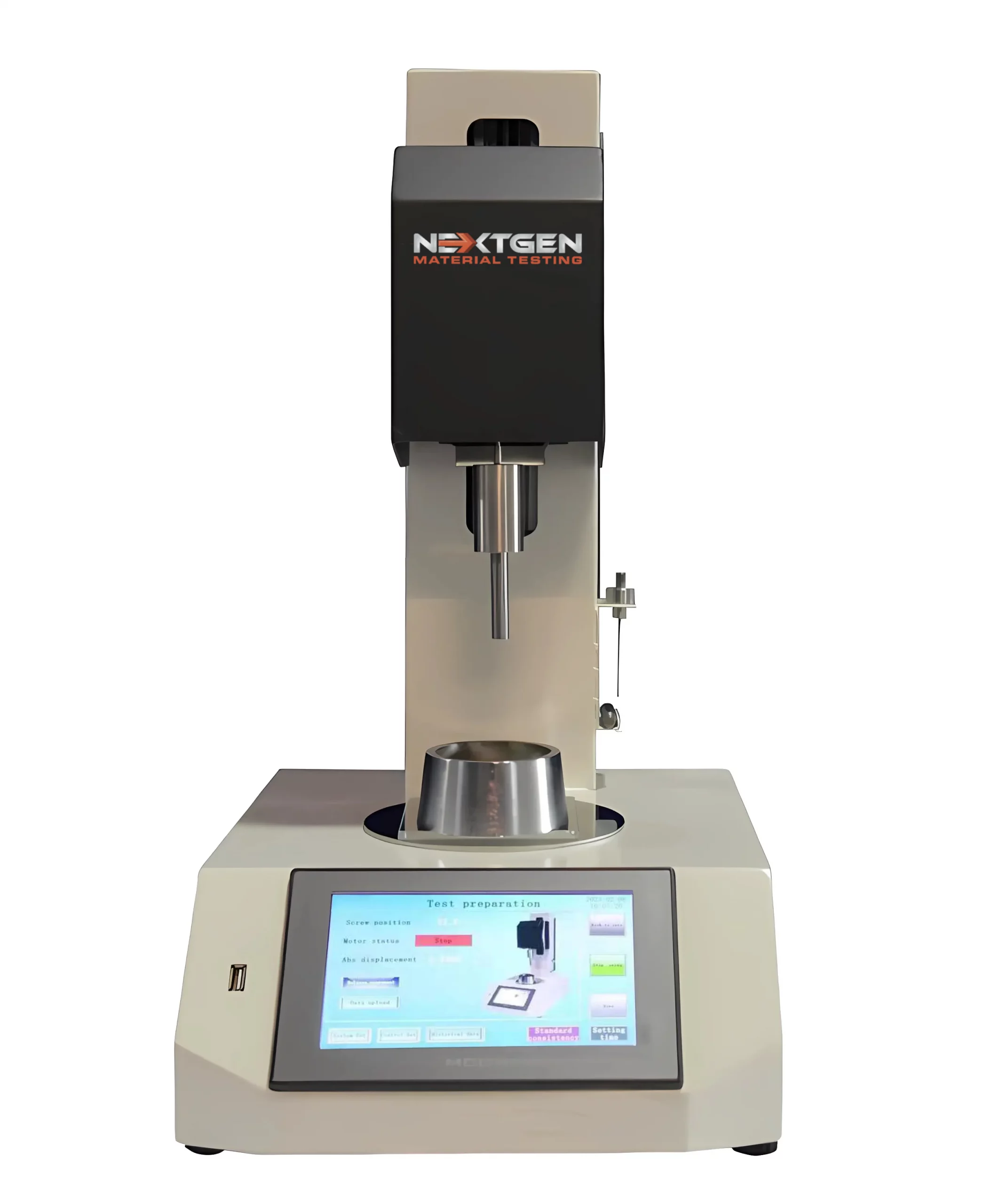
The Automatic Vicat Apparatus, also known as a cement consistency and setting time tester, determines the standard water consistency requirement and the setting time of cement paste. Those two figures decide how a cement behaves on site: how much water it needs to reach a workable paste, and how long that paste stays workable.
The apparatus tests Portland cement, ordinary Portland cement, slag Portland cement, fly ash Portland cement, pozzolanic Portland cement and composite Portland cement, as well as other designated varieties.
The test rests on a simple principle: cement paste at standard consistency offers a specific resistance to the penetration of a standard test rod. By measuring the penetration depth in pastes with different water contents, the instrument determines the amount of water required to produce a paste of standard consistency. It works to EN 196-3 and ASTM C191 among others.
Displacement Range0 to 50 mm
Display Precision0.01 mm
Sliding Component300 g ±1 g
Data Storage200 groups
The clip below shows the apparatus running a consistency and setting time test.
Consistency and setting time testing on the Automatic Vicat Apparatus.
Automatic Vicat Apparatus Features
Everything below exists to take the operator out of the parts of the method where a human hand changes the result: positioning, timing and reading.
One-key position calibration
The calibration process is fully automated. After rough positioning, the system performs precise position calibration on its own.
Position memory
Once a test position has been calibrated the data is stored, so repeated tests at the same position need no recalibration.
Automated measurement
One-key operation runs the measurement and lifts the components when the test is complete.
Accurate time control
The 30 second settling countdown during the test is controlled precisely.
Result evaluation
Results are evaluated and displayed automatically in accordance with the relevant test specification.
Integrated data storage
Standard consistency and setting time data are held in the instrument, up to 200 groups, and can be exported as needed.
Data output
RS485 output, with data import into standard-format test report software on a computer.
Automatic Vicat Apparatus Structural Components
Five assemblies make up the instrument, and each one carries part of the measurement.
Chassis bracket
Carries the whole assembly and holds the needle path square to the mould.
Touchscreen display
Where the test is set up, watched and read.
Screw lifting system
Raises and lowers the components under motor control.
Sliding component
The 300 g ±1 g rod and needle that penetrate the paste.
Displacement measurement system
The LVDT sensor that reports penetration depth.
Automatic Vicat Apparatus Technical Specifications
The displacement sensor is the part that decides what the instrument can resolve, and it is worth reading in full.
| Item | Automatic Vicat Apparatus |
|---|---|
| Displacement measurement | High-precision LVDT displacement sensor, split structure, frictionless needle drop. Range 0 to 50 mm, display precision 0.01 mm, relative displacement accuracy ≤±0.1 mm. |
| Sliding component | 300 g ±1 g including needle and rod |
| Data storage | Up to 200 groups |
| Data interface | RS485, with export into standard-format test report software |
| Dimensions (W × D × H) | 15.35 × 12.20 × 22.65″ (390 × 310 × 575 mm) |
| Voltage | 220 V ±10%, 50 Hz |
| Power consumption | 40 W |
| Net weight | 26.5 lbs (12 kg) |
Have Questions or Need to Confirm a Detail?
Tell us which standard your setting time results are reported against and whether the instrument will run alongside a mortar mixer or a curing cabinet. A quick request online with those details comes back with the accessories included.
For Laboratories
Need Additional Quality Control Equipment to Build Your Laboratory?
Cement and concrete testing is only one part of a complete quality control laboratory. NextGen can help you equip your entire lab with mortar mixers, climatic curing cabinets, Blaine fineness apparatus, Vicat setting-time apparatus, autoclaves, and other supporting solutions, all coordinated as one complete project.
- One partner to equip your complete laboratory
- Installation, training, calibration
- Support for the life of the equipment
FAQs
Displacement readings are displayed to 0.01 mm on this system. It uses a high-precision LVDT displacement sensor, so the screen gives fine visibility for cement penetration checks and setting-time measurements.
The measurement range runs from 0 to 50 mm, and the stated relative displacement accuracy is within ±0.1 mm. That combination suits routine consistency and Vicat-style setting evaluations where repeatable reading of small movement matters.
Looking to confirm the right setup for your cement test method? learn more about the Automatic Vicat Apparatus, then request a quote for your lab or production workflow.
For ongoing Vicat accuracy, the practical approach is to verify the setup at the start of a test series and again whenever the test position or hardware changes. This system’s one-key position calibration and position memory are designed to reduce repeat calibration when you keep testing at the same position.
That means routine rechecking is most relevant after a move, a needle or rod change, service work, or any change in the specimen setup. The built-in calibration workflow and stored position data support repeat testing, so you are not forced to recalibrate for every run at the same station.
To align this with your lab method and QA plan, review the configuration details on the product page or request a quote so we can help confirm the right check routine for your workflow. You can also learn more about the system setup.
The position memory function saves the calibrated test position, so when you run repeated tests at the same location, you do not need to recalibrate each time. In practice, that makes routine cement consistency and setting time work faster and helps keep the test setup more consistent from run to run.
For QC labs and production checks, the main advantage is smoother repeat testing with less operator adjustment. That can reduce setup drift, save time during back-to-back specimens, and support more repeatable results across a batch.
Need to confirm whether this workflow fits your lab? learn more about the system, or request a quote and share your test method and sample volume so we can help confirm the right setup.
Long-term support is built into this system, with stocked consumables and spares highlighted on the product page, along with after-sales technical support and a lifetime product support position. In practical terms, that means replacement items and accessory support are typically handled as part of the ongoing service path for the Vicat workflow.
For a lab that runs cement consistency and setting time testing on a regular basis, the exact long-term supply plan depends on the configuration, the wear items involved, and the accessories your method uses. The page also notes warranty support and general service help, which is useful when you want to keep the instrument in routine production or QC service over time.
For a quick verification of the right support package, review the Automatic Vicat Apparatus page and request a quote. If you share your test method and the spares you want to plan for, the setup can be matched more precisely.
Yes, this tester is built to complete the measurement cycle automatically and lift the components after the test finishes. That makes it a practical choice for cement consistency and setting time work where repeatable handling matters.
The page also notes an automated measurement process with one-key operation, so the operator starts the test and the system carries out the cycle. It is suited to standard consistency determination and setting time testing for cement paste, with the process centered on controlled penetration measurement.
Need to confirm the right setup for your lab workflow? Learn more about this model, or request a quote if you want pricing and configuration details. If you are comparing automation levels, the Manual Vicat Apparatus is a useful alternative to review.
This unit is specified for 220 V ±10% at 50 Hz, so a North American lab should plan around that power requirement before installation. If your facility does not already have that supply, the site electrical setup becomes the main check.
The practical factors are the available circuit, the local utility standard, and whether your lab is set up for imported equipment. NextGen also offers training and installation support, which is useful when you are lining up the bench, power, and startup steps.
Need to confirm the right installation setup for your lab? Review the Automatic Vicat Apparatus details, then request a quote if you want help matching power and installation planning. For setup support, the training and installation page is a good next step.
This automatic setup handles the Vicat workflow with far less operator intervention. It automates calibration, measurement, result evaluation, and data storage for standard consistency and setting time testing, which makes it a practical choice for QC labs and higher-volume cement testing.
A manual Vicat apparatus is the simpler alternative. The frame uses a sliding rod and a graduated scale, so the technician manages the reading and more of the test sequence by hand. That makes it suitable for straightforward lab work, while the automatic model is better when you want faster repeat testing, cleaner traceability, and more consistent day-to-day operation.
If you’re comparing both options for a cement lab or plant QA program, review the Manual Vicat Apparatus alongside this Automatic Vicat Apparatus, then request a quote to match the setup to your test volume, reporting needs, and workflow.
This system measures a displacement travel range of 0 to 50 mm, which is the span used for Vicat penetration measurements on cement paste.
It uses a high-precision LVDT displacement sensor with a frictionless needle drop, plus 0.01 mm display precision and relative displacement accuracy of ≤ ±0.1 mm. That supports repeatable standard consistency and setting time work in cement lab workflows.
Need to confirm the right setup for your cement consistency or setting time workflow? learn more or request a quote for your configuration. If you’re comparing automatic and manual operation, you can also review the Manual Vicat Apparatus.
Review the needle, rod seating, and the screw lift for smooth, repeatable movement. On this system, the drop action is designed to be frictionless and the lift is handled by a screw lifting system, so the main maintenance focus is clean motion, correct alignment, and no play or drag in the moving parts.
A practical check usually includes:
- needle and rod condition
- free travel through the full lift range
- debris or cement residue around the sliding component
- stable reading from the displacement measurement system
If the motion feels uneven or the reading drifts, that is typically the first area to inspect.
Need to verify the right maintenance routine for your lab workflow? Review the Automatic Vicat Apparatus details, or request a quote for help matching service steps to your configuration.
This system uses an RS485 data interface for external communication. It is set up to move test data into standard-format report software on a computer, which makes it practical for lab documentation and QC records.
That interface is a good fit when you want to transfer setting time and consistency results into a broader reporting workflow. In cement testing, the exact computer setup, cable path, and reporting software are usually confirmed as part of the installation plan so the data flow matches your lab procedure.
To align this with your reporting workflow, review the Automatic Vicat Apparatus details and request a quote. If you are matching it to a specific lab software or network setup, share those requirements and we can help confirm the best configuration.
This tester is best suited to routine, standards-based cement quality control and lab acceptance testing. It is designed to measure standard water consistency and setting time, so it fits day-to-day Vicat work where repeatable results matter. In a research lab, it can still be a good fit when the work is centered on standardized cement paste evaluation rather than custom method development.
For most users, the deciding factors are the test method, how much throughput you need, and whether you want an automated workflow. If you are comparing options, the Manual Vicat Apparatus is the simpler bench alternative, while this system is better aligned with automated, repeatable testing.
Need to confirm the right setup for your lab or plant? learn more about this unit or request a quote for the configuration that matches your testing method.
A clean, temperature-stable, draft-free laboratory on a rigid bench is the best setting for reliable Vicat testing. For consistent standard consistency and setting time work, the goal is to keep vibration, airflow, and room-condition swings to a minimum so the paste and the instrument stay in the same condition from test to test.
This system is built for that kind of controlled bench workflow. Its automated position calibration, position memory, and LVDT displacement measurement support repeatable readings, so the surrounding lab should focus on stable ambient conditions, consistent specimen handling, and a dependable test area away from heat sources or heavy traffic.
To align the setup with your method and lab layout, review the Automatic Vicat Apparatus details and request a quote for help confirming the right configuration for your testing workflow.
For automated Vicat testing, treat the instrument as a precision bench-top tester and keep hands clear of the needle path, sliding component, and screw lifting system while the cycle is running. Set it on a stable, dry surface, use the specified 220 V, 50 Hz power supply, and follow your lab’s PPE and dust-control practices when preparing cement paste.
Before each run, confirm the specimen cup, needle, and alignment, then let the automatic calibration and position memory work only after the setup is correct. Keep tools, water, and loose materials away from the test area so the touchscreen and motion system stay unobstructed and repeatable.
Need to align the safety steps with your exact testing method? learn more about the system, or request a quote if you want help confirming the right setup for your operators and workflow.
This system does include installation and operator training support. NextGen’s support information says certified technicians and quality engineers handle the service, with the goal of leaving your team ready to run the equipment confidently for cement consistency and setting time work.
For a Vicat setup, the exact scope usually depends on your lab layout, utilities, and how much hands-on onboarding your operators need. If you are adding this tester to an existing cement workflow, it is smart to confirm the installation plan, operator handoff, and any method-specific setup details before ordering.
Need to confirm the right setup for your lab? Review the Automatic Vicat Apparatus page, then request a quote so NextGen can align the installation and training plan with your testing needs.
This system is a strong fit for ASTM C187 and ASTM C191 workflows, because both standards are listed for the instrument and the page identifies it as a cement consistency and setting-time tester.
In practical lab use, that makes it a good choice for standard consistency checks and setting-time measurement on cement paste, including common Portland and blended cement programs. If your team prefers a hand-operated route, the Manual Vicat Apparatus is the natural comparison point.
Looking to validate the right setup for your cement testing method? Learn more or request a quote so the configuration can be matched to your workflow and reporting needs.
This tester evaluates cement paste specimens. In practice, it is used on prepared paste samples to check standard water consistency and setting time through rod penetration.
The sample form is the cement paste itself, not a hardened concrete specimen. That makes it a good fit for laboratory method work on Portland cement and other designated cement types where consistency and setting behavior need to be measured on a fresh paste sample.
Looking to verify the right setup for your cement method? Review the automatic Vicat apparatus details or request a quote, and share your cement type or test standard if you want help matching the workflow.
This system is specified for a 220 V ±10%, 50 Hz supply and has a 40 W power draw, so it only needs a standard lab utility connection for cement setting time testing.
For most labs, that means the key check is whether your local mains matches the required voltage and frequency before installation. If your site uses a different service standard, the right setup usually depends on the incoming power, any local transformer or adapter plan, and where the unit will be placed in the lab workflow.
Need to confirm the installation details for your lab? learn more or request a quote so we can help verify the correct configuration for your power source and testing setup.
The penetration measurement is handled by a high-precision LVDT displacement sensor, so this system is built for fine Vicat depth readings. The display resolution is 0.01 mm, and the relative displacement accuracy is stated at ≤ ±0.1 mm.
In day-to-day cement consistency and setting time work, the final penetration result still depends on proper calibration, correct sample positioning, and consistent paste preparation. The frictionless needle drop and position memory help support repeatable measurements during routine testing.
To verify the right setup for your cement test method, learn more or request a quote.
This system is listed for AASHTO T131, ASTM C187, ASTM C191, DIN 1168, EN 13279-2, EN 196-3, EN 480-2, NF P15-414, and NF P15-431. In practical cement paste consistency and setting-time work, that covers the main method families labs use for routine QC and compliance testing.
For cement QC, the exact standard to run depends on your regional method, binder type, and reporting format. This tester is positioned for standard consistency and setting-time evaluation, so the selected procedure should match the governing spec for your market or customer requirement.
Need to verify the right method package for your lab or compare automated and manual Vicat workflows? learn more, check the Manual Vicat Apparatus, or request a quote for the setup you need.
Plan for a bench footprint of about 15.35 x 12.20 in, or 390 x 310 mm, for this automatic Vicat apparatus. Since the unit is 22.65 in tall, allow enough vertical clearance above the bench as well, so the touchscreen and sample area stay easy to reach during cement paste testing.
For a practical lab layout, leave a little extra space around the frame for cable routing, specimen handling, and routine access. In a QC or research setup, the published dimensions are best treated as the minimum footprint, then padded slightly to suit your benching and workflow.
Need to confirm the best setup for your lab bench and testing routine? learn more about the system or request a quote to match the layout to your space.
This system determines standard consistency by checking how a standard test rod penetrates cement paste made with different water contents. It automates the Vicat-style penetration check, then identifies the water level that gives the required resistance for standard consistency. For setting time, it runs the timed penetration sequence and records the point where the paste reaches the method-defined set values, so the result comes from measured needle movement, not manual judgment.
It is built to handle the workflow automatically, including position calibration, repeated-position memory, measurement, result evaluation, and data storage. The page lists method coverage for AASHTO T131, ASTM C187, ASTM C191, DIN 1168, EN 13279-2, EN 196-3, EN 480-2, NF P15-414, and NF P15-431, which makes it a practical fit for routine cement paste consistency and setting time work.
Looking to confirm the right setup for your lab method? learn more on the product page, or request a quote if you want help matching the configuration to your test standard and workflow.
The frictionless needle drop helps the needle descend with less drag and less variation from test to test, so penetration readings stay more consistent. In this tester, that controlled motion works with the high-precision LVDT displacement sensor to support stable cement paste measurements.
That is especially useful for standard consistency and setting time checks, where small differences in motion or alignment can affect the result. The stored test positions also help keep repeated runs at the same point more uniform, which is useful in routine QC and laboratory comparisons.
To align this with your method and workflow, review the Automatic Vicat Apparatus details or request a quote for a setup that fits your lab. If you are comparing automated and manual operation, the Manual Vicat Apparatus is a useful reference point.
The sliding component uses a 300 g test load, with a tolerance of ±1 g, and that includes the needle and rod assembly. For Vicat penetration measurement, that is the working weight applied during the test.
That setup matches the standard loading arrangement used for cement consistency and setting time work, so the measurement is taken with the full sliding component mass in place. In practice, that helps keep the penetration result consistent from test to test.
To confirm the right configuration for your cement lab workflow, learn more or request a quote. If you are comparing manual and automatic operation, we can also help you choose the best Vicat setup for your method.
This system includes onboard data storage for up to 200 test groups, which is well suited to routine cement consistency and setting time work in QC and laboratory settings.
The stored results can be managed systematically and exported when needed. It also supports RS485 data output, so the test records can be moved into standard-format reporting software on a computer for review and documentation.
Looking to confirm how this storage setup fits your reporting workflow? learn more about the system, or request a quote to review the right configuration for your lab.
The RS485 output is intended for exactly that workflow. This system can send test data into standard-format report software on a computer, so your cement consistency and setting time results can be transferred for reporting and recordkeeping.
In practice, the import will depend on the reporting software you use, the communication setup on the computer, and how your lab wants the data organized. The unit also stores results internally, which helps when you need to review or export test runs after the measurement is complete.
For a quick verification of compatibility or setup, learn more about the system or request a quote with your software and workflow details. That makes it easier to confirm the right reporting path for your lab.
This system is specified at 40 W during operation, with a power supply requirement of 220 V ±10%, 50 Hz. For a cement lab or QC bench, that is a modest electrical load and is typically straightforward to plan into the workstation setup.
If your site uses a different utility standard, the main items to confirm are supply voltage, frequency, and the outlet arrangement at the instrument location. That helps ensure the Automatic Vicat Apparatus fits your testing area cleanly and runs as intended for consistency and setting time work.
Need to verify the right power setup for your lab? You can learn more about the instrument or request a quote for a configuration review and installation guidance.
This system uses a high-precision LVDT displacement sensor for penetration measurement. It is paired with a split-structure displacement setup and frictionless needle drop, which supports consistent readings during cement consistency and setting time testing.
That sensor choice is practical for routine QC work because it gives fine displacement resolution and stable repeatability when comparing paste consistency across samples. If you are evaluating an automated workflow against a manual setup, the same product family also includes the Manual Vicat Apparatus for a more traditional approach.
Looking to confirm the right setup for your cement lab? Learn more about the system, or request a quote if you want help matching the configuration to your test method and reporting workflow.
This tester is used to determine the standard water consistency of cement paste and to measure setting time in cement testing. It is intended for routine quality control, lab verification, and materials development work on Portland, blended, and other designated cement types, with method support shown for AASHTO T131, ASTM C187, ASTM C191, DIN 1168, EN 13279-2, EN 196-3, EN 480-2, NF P15-414, and NF P15-431.
In practice, it checks how a standard rod penetrates cement paste at different water contents, then uses that penetration depth to identify the water needed for standard consistency. That makes it a practical tool for cement paste penetration measurement and repeatable consistency checks in production and research labs.
Need to confirm the right setup for your cement testing workflow? learn more about this system, compare it with the Manual Vicat Apparatus if you want a hand-operated option, or request a quote with your method and sample details.
Yes, this tester can automatically evaluate and display results in line with the relevant test specifications. It is set up for automated measurement, then raises the components after the test cycle and handles the 30-second settling countdown, which supports a more consistent Vicat workflow for cement consistency and setting time work.
In practice, the exact evaluation flow depends on the method you are running, specimen preparation, and how your lab wants the data handled. The touchscreen interface, LVDT displacement measurement, RS485 output, and storage for up to 200 groups make it well suited to routine QC and method-based reporting.
Looking to verify the setup against your test method? learn more or request a quote so the configuration can be matched to your cement testing workflow.
This tester is intended for Portland cement and common blended cement types used in standard consistency and setting time work. It is described for Portland cement, ordinary Portland cement, slag Portland cement, fly ash Portland cement, pozzolanic Portland cement, and composite Portland cement, so it fits routine cement paste penetration checks in QC and lab settings.
It is built around standard consistency and setting time evaluation, with support for methods such as ASTM C187, ASTM C191, EN 196-3, and related cement test standards. In practice, the best fit still depends on your cement blend, method requirements, and reporting workflow, especially if you need a specific lab setup or automation level.
Need to confirm the right setup for your cement blend or test method? learn more, request a quote, or compare it with the Manual Vicat Apparatus if you want a manual workflow option.
This system automates the core Vicat workflow for cement paste, especially standard water consistency determination and setting time testing. It is built to handle the penetration test cycle, then evaluate and display the result automatically.
In practical use, the automation covers one-key position calibration, stored test positions for repeat runs, automatic measurement with lift-off after the cycle, timed 30-second settling control, result evaluation, and data storage with export support. If you are comparing it with a manual setup, the Manual Vicat Apparatus is the simpler alternative for lab workflows that rely more on operator control.
Looking to match this with your cement testing method or lab throughput needs? Learn more on the Automatic Vicat Apparatus page, or request a quote with your method requirements and sample volume.
This system is suited for a broad range of cement paste setting-time and consistency checks. It can be used with Portland cement, ordinary Portland cement, slag Portland cement, fly ash Portland cement, pozzolanic Portland cement, composite Portland cement, and other designated cement varieties.
That makes it a practical fit for routine QC, incoming verification, and R&D work where standard water consistency and initial or final setting behavior need to be compared across cement formulations. If you are comparing test workflows, the Manual Vicat Apparatus is the simpler alternative for the same general test family.
Need to confirm the best setup for your cement lab? Review the product page and request a quote with your cement type, method, and workflow requirements.
This tester is supplied with a comprehensive warranty package on each order, along with NextGen’s after-sales support. In practical terms, the warranty coverage is tied to the specific purchase and support arrangement, so the final terms are best confirmed with the exact configuration.
For cement consistency and setting time work, the main factors that shape coverage are the unit configuration, any added accessories or spare parts, and whether you want installation or training included with the purchase. That keeps the support package aligned with your lab workflow and purchasing plan.
Need to confirm the right warranty coverage for your Vicat setup? Review the Automatic Vicat Apparatus, then request a quote. If you want help matching the support package to your method or site requirements, contact us.
One-key position calibration speeds up setup by letting the system refine the test position automatically after a rough placement, so the operator spends less time on manual alignment. That makes routine Vicat work faster and more consistent from one test to the next, especially when you are running the same cement paste check across multiple samples.
It also stores the calibrated position for each test point, so repeated runs at the same location do not need a fresh calibration. In practice, that helps labs keep repeated standard consistency and setting-time checks moving with fewer interruptions and less repositioning between tests.
To align the setup with your lab workflow, learn more about this tester or request a quote if you want help confirming the right configuration.
This system uses the standard Vicat penetration method for cement paste, with a rod and needle assembly that enters the sample at set positions and measures penetration depth automatically.
That workflow is used for standard consistency and setting time testing, so it fits routine cement lab work where repeatable penetration readings matter. The exact setup can depend on the test method, specimen preparation, and whether your lab wants an automatic or manual workflow.
To verify the right setup for your cement testing method, review the Automatic Vicat Apparatus details, compare it with the Manual Vicat Apparatus, and request a quote for the configuration that matches your workflow.
This system fits in as the setting-time and consistency station in a cement testing lab, while Blaine equipment handles fineness evaluation. In a complete workflow, the Blaine test helps characterize the powder, then the Vicat test checks how that cement paste behaves with water and how fast it sets.
That pairing is especially useful for QC teams, plant labs, and R&D groups because fineness and setting behavior often need to be reviewed together. A Digital Blaine Apparatus supports the fineness side of the lab, while this unit handles standard consistency and setting time on cement paste. It works well as part of a broader cement bench that also includes mixing, curing, and sample preparation steps.
Need to align this with your lab workflow? Review the Automatic Vicat Apparatus details, then request a quote so the setup can be matched to your method, sample volume, and reporting needs.
Yes, this Vicat tester is set up for computer data transfer. It includes RS485 output, and the stored consistency and setting-time results can be exported for use in standard test report software on a computer.
For cement consistency and setting time workflows, the exact reporting setup depends on the software you use and how your lab wants to capture results. The instrument also stores test groups internally, which makes routine QC and repeat testing easier to manage.
Need to verify compatibility with your reporting workflow? Review the Automatic Vicat Apparatus details, or request a quote and share your computer and software setup.
A lab usually chooses the automatic model when it wants a more repeatable workflow for standard consistency and setting time testing, with less operator handling during each run. The automated calibration, one-key measurement cycle, controlled settling time, and built-in result handling make it a strong fit for routine QC work where consistency between technicians matters.
It is also the better choice when the lab needs digital recordkeeping and easier reporting. This unit stores test data, supports RS485 output, and uses a touchscreen-based process, while the Manual Vicat Apparatus is a simpler bench frame that relies more on hands-on operation and separately ordered accessories.
Need to confirm the right setup for your cement testing workflow? Review the Automatic Vicat Apparatus and request a quote, or compare it with the manual model if you are deciding between automated and fully hands-on testing.
This system is a good fit for EN 196-3 cement setting time work. The product page lists EN 196-3 among its supported standards, and it is described as a cement consistency and setting time tester for determining standard water consistency and setting time of cement paste.
It also appears suitable for related penetration-based methods used in cement labs, including EN 13279-2, EN 480-2, NF P15-414, NF P15-431, ASTM C187, and ASTM C191. For teams comparing automation levels, the Manual Vicat Apparatus is the natural alternative when you want a hand-operated bench setup.
When refining your testing setup, the main things to confirm are the exact standard you need to follow, your sample preparation workflow, and whether you want automatic operation or a manual method. If you’re aligning this with a specific cement mix or lab procedure, learn more or request a quote so the configuration can be matched to your method.
Yes. NextGen lists after-sales technical support for this tester, and it also offers a technical support inquiry path for immediate service by form or phone. That makes it a practical option when you need help with troubleshooting or adjustment during installation or daily cement testing.
For this kind of cement consistency and setting time tester, support questions usually center on calibration, test position setup, and data output handling. This unit includes one-key position calibration, position memory, and RS485 data output, which are useful when you are refining the workflow or checking repeatability.
Need help confirming the setup for your lab? Review the Automatic Vicat Apparatus page and request a quote so NextGen can guide the right troubleshooting or adjustment path for your workflow.
This system controls the 30-second settling time automatically as part of the test cycle. After one-key operation and calibration, the touchscreen-controlled sequence runs the countdown for you, then the apparatus lifts the components when the step is complete.
That timing is tied to the automated workflow, so repeatability depends on using the same test position, specimen setup, and method program each time. The position memory feature helps keep repeated tests consistent at the same location.
To align this with your testing method, learn more about the system or request a quote. If you share your cement type and standard, we can help confirm the right setup.
Related Products
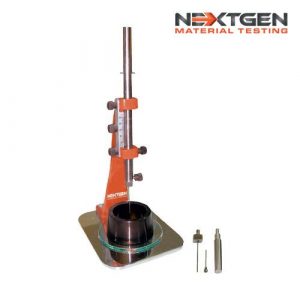
Manual Vicat Apparatus
The Manual Vicat Apparatus is used to determine cement and concrete setting time through controlled penetration of a needle or plunger into a prepared sample. Its metal frame, sliding rod, graduated scale, adjustable indicator, and 300 g test weight provide a straightforward setup for research, quality inspection, and compliance work. Optional EN or ASTM/AASHTO accessories support different laboratory requirements.
Read more