NG-HDT – HDT/Vicat Testing Machine for Plastics

Plastic Testing Equipment
Standards
- ASTM D648
- ASTM D1525
- GB/T 1633
- GB/T 1634
- GB/T 1634.1
- GB/T 1634.2
- GB/T 1634.3
- GB/T 8802
- ISO 75
- ISO 75-1
- ISO 75-2
- ISO 75-3
- ISO 306
- ISO 2507
- ISO 2507-1
Description
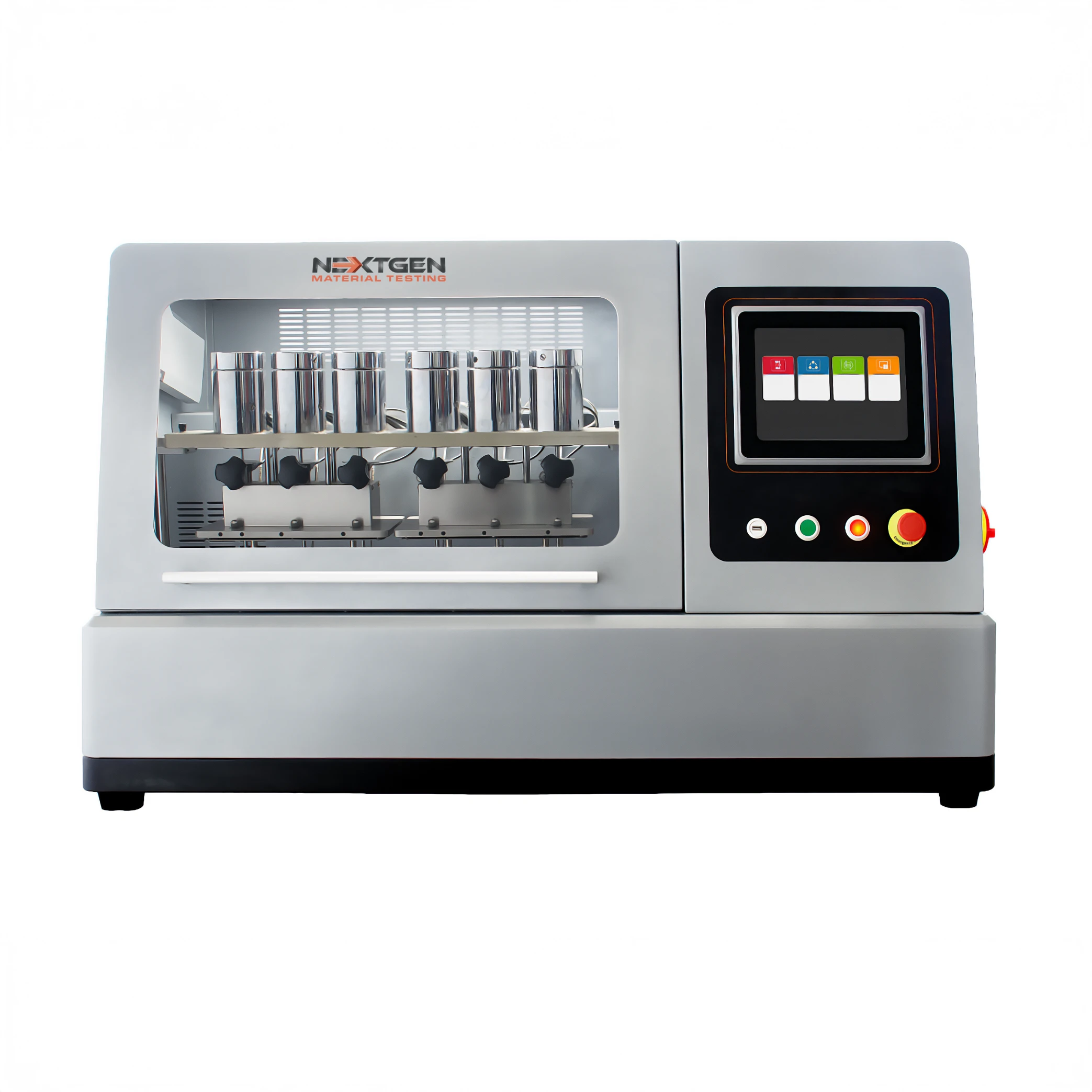
The NG-HDT HDT/Vicat testing machine is designed to measure heat deflection temperature under load (HDT) and Vicat softening temperature (VST) for thermoplastics, including pipes and fittings. It runs these methods under a constant load with a controlled linear heating rate, which fits routine QA/QC work and material development.
The platform is offered in 3-station and 6-station configurations and uses a built-in touchscreen industrial PC to run the test sequence from loading and measurement through unloading and cooling. Measurement is based on Class A PT100 temperature sensing and LVDT displacement measurement, with an oil bath rated up to 300°C. The bath design includes turbulence suppression and cyclic heating functions to support steady heating conditions during the ramp.
Test data can be reviewed, searched, and exported over Ethernet. The system can also be paired with options such as a chiller for faster cooldown, an external oil-vapor extraction and filtration unit for high-temperature operation, and nitrogen protection to help reduce silicone oil consumption in high-usage labs.
```
Materials and Specimen Types This Machine Supports
This system is used for thermoplastic materials, including plastic pipes and fittings, where HDT and Vicat (VST) values are part of product qualification, incoming inspection, or material comparison work. It supports both test types on the same platform, so labs can cover common thermal performance checks without switching equipment.
Supported Specimen Sizes
For Vicat (VST), the maximum specimen size is 50 × 16 × 6.5 mm. For HDT, the maximum specimen size is 5.1 × 0.6 × 0.5″ (130 × 15 × 13 mm). A long-span option is available for ISO 75-3 / GB/T 1634.3 methods and supports specimens up to 10.2 × 0.6 × 0.5″ (260 × 15 × 13 mm), with a maximum span of 8.3″ (210 mm).
Vicat Specimen Size50 × 16 × 6.5 mm max.
HDT Specimen Size5.1 × 0.6 × 0.5″ (130 × 15 × 13 mm) max.
Long-Span Option10.2 × 0.6 × 0.5″ (260 × 15 × 13 mm) max.
Standards and Test Methods You Can Run (ISO / ASTM / GB/T)
 NG-HDT supports a broad set of HDT and Vicat (VST) methods used in plastics testing, including the most commonly referenced standards in North America and internationally, such as the ones listed below:
- ASTM D648: Standard Test Method for Deflection Temperature of Plastics Under Flexural Load in the Edgewise Position - North American reference method for HDT. Used to compare how plastics deform under a specified flexural stress while temperature increases.
- ASTM D1525: Standard Test Method for Vicat Softening Temperature of Plastics - North American reference method for VST. Measures the temperature at which a specified needle penetration occurs under defined load and heating conditions.
- ISO 75-1: Plastics - Determination of temperature of deflection under load - Part 1: General test method - The general ISO framework for HDT style testing, including the overall procedure and common test setup.
- ISO 75-2: Plastics - Determination of temperature of deflection under load - Part 2: Plastics and ebonite - The commonly used ISO part for most plastics, defining standard condition sets.
- ISO 75-3: Plastics - Determination of temperature of deflection under load - Part 3: High-strength thermosetting laminates and long-fibre-reinforced plastics - Used when the material category and setup fall under high-strength laminates or long-fibre reinforced plastics.
- ISO 306: Plastics - Thermoplastic materials - Determination of Vicat softening temperature (VST) - The ISO Vicat method, including standard load and heating-rate condition sets.
- ISO 2507 (series): Thermoplastics pipes and fittings - Vicat softening temperature - Vicat test method and conditions written specifically for pipe and fitting samples.
- GB/T 1634.1, GB/T 1634.2, GB/T 1634.3 - GB/T HDT method references aligned to temperature of deflection under load workflows.
- GB/T 1633 - GB/T Vicat softening temperature reference for thermoplastic materials.
- GB/T 8802 - Vicat softening temperature reference for thermoplastic pipes and fittings.
Automated Test Sequence: Loading, Heating, Measurement, Unloading, Cooling
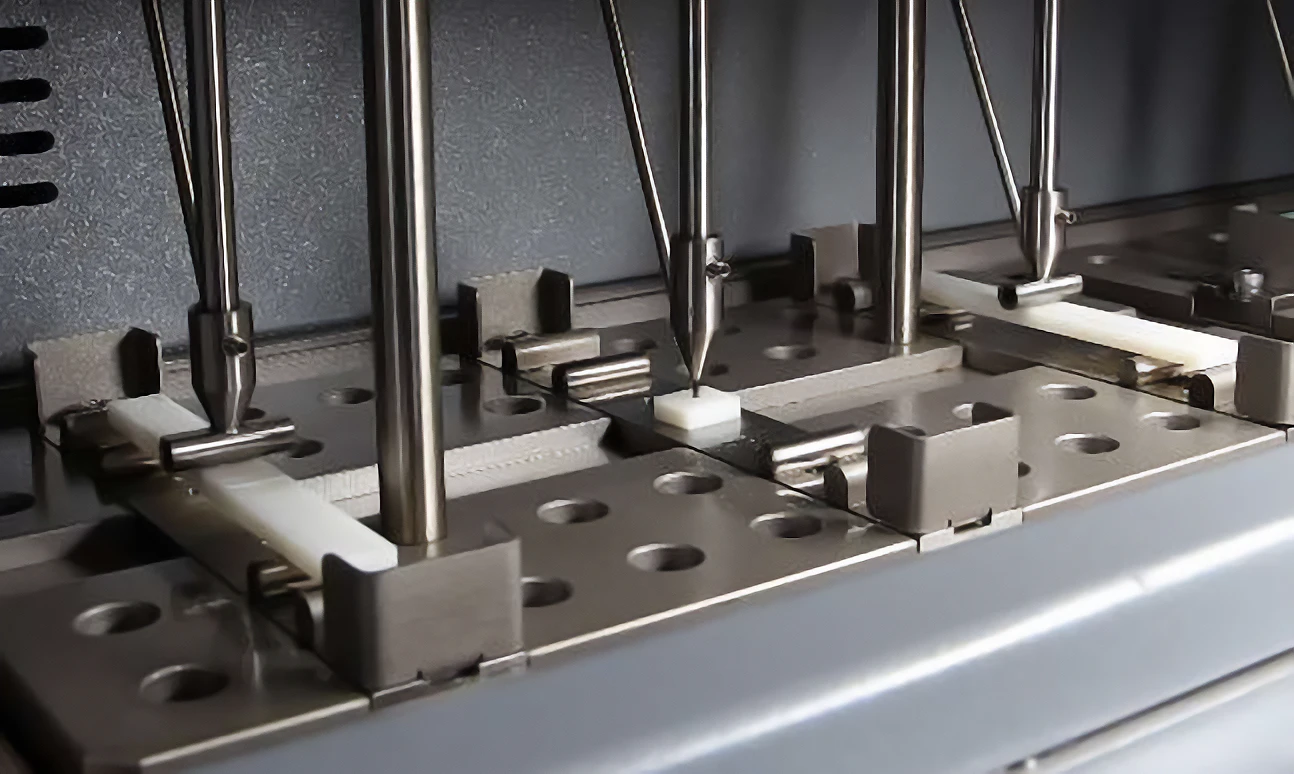
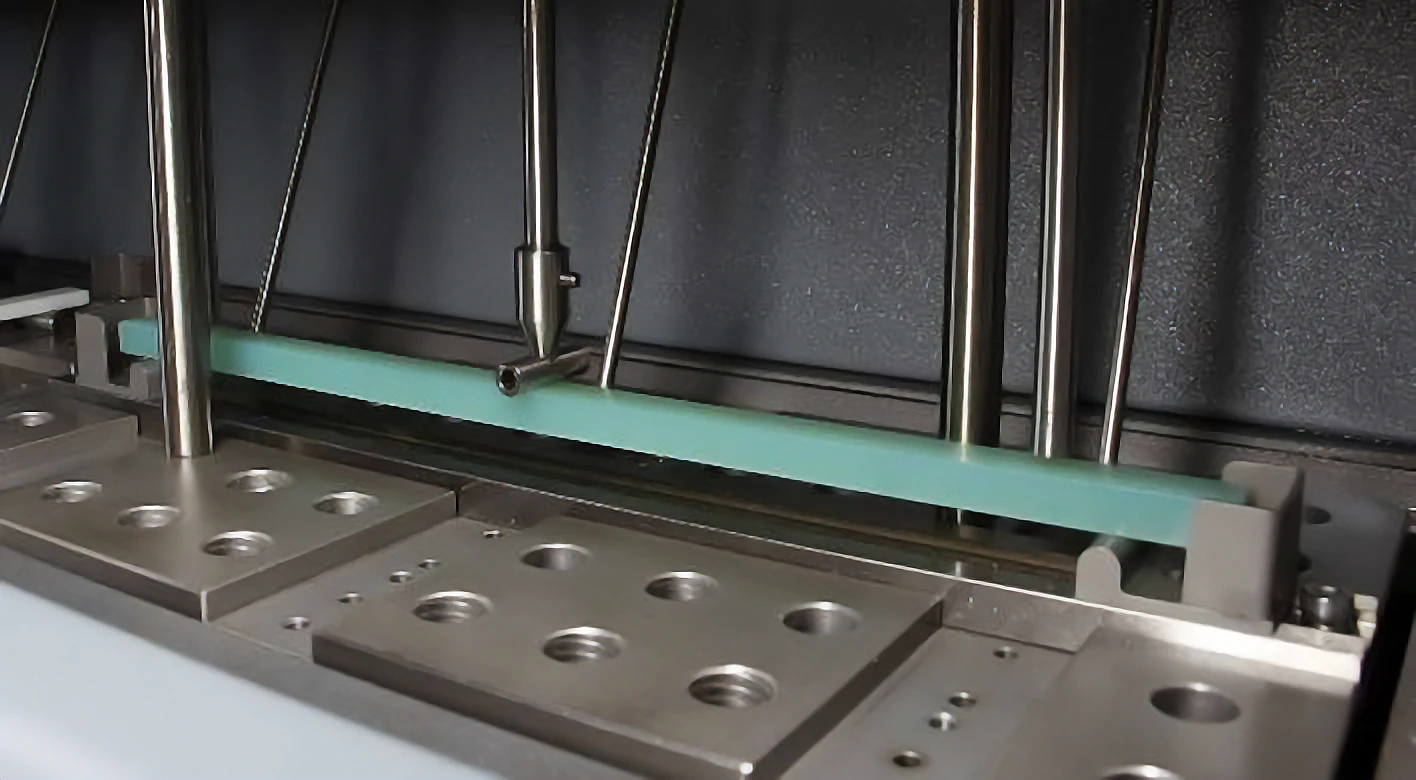
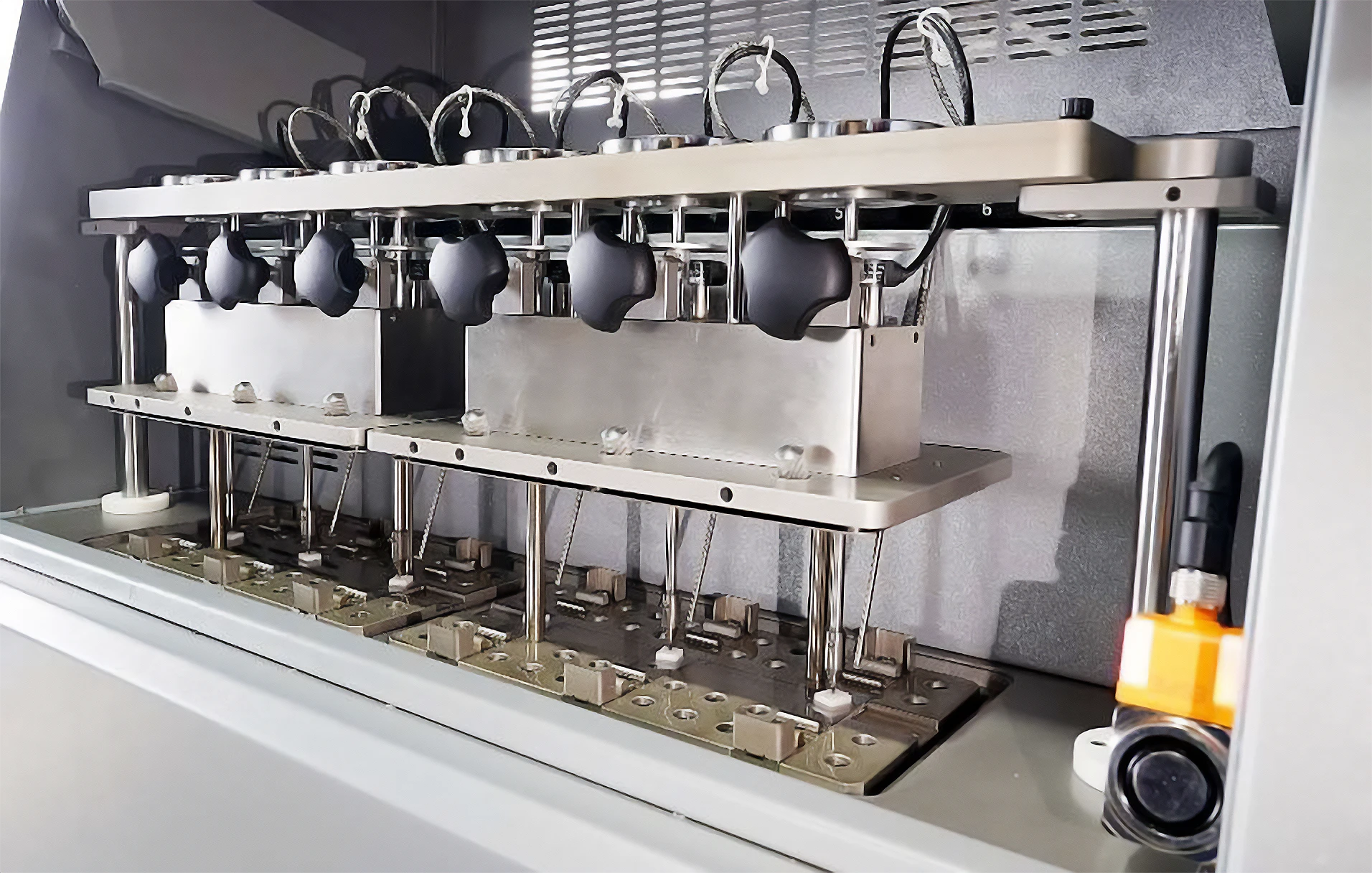 NG-HDT is built around a hands-off test sequence that follows the same order labs run every day: bring the bath to the starting condition, apply the required load, ramp temperature at the selected rate, record displacement or penetration, then unload and cool down. For HDT, the setup uses the support span and loading nose to track deflection under flexural stress. For Vicat, the needle applies the specified load and the system tracks penetration as temperature increases. Once a run is complete, the unit moves into the cooling step so the next test can be set up.
Preset Standards + Custom Methods (Touchscreen Control)
The built-in touchscreen industrial PC lets operators select preset methods based on common ISO, ASTM, and GB/T standards, or create custom methods when a lab needs a specific combination of load and heating rate. During operation, the system monitors key checks at startup such as oil level, sensor status, and door-lock state, and it assumes control of the run without manual step-by-step intervention. Test data can be saved for later review, searched as history, and exported over Ethernet when the unit is connected to a network.
| Method Family | Built-In Preset Examples | Typical Use |
|---|---|---|
| Vicat / VST | ASTM D1525, ISO 306, GB/T 1633, GB/T 8802, ISO 2507 | Softening-temperature testing by needle penetration under defined load and heating conditions. |
| HDT / DTUL | ASTM D648, ISO 75-2, ISO 75-3, GB/T 1634.2, GB/T 1634.3 | Deflection-temperature testing under flexural load using the required support span, loading nose, and stress level. |
| Custom Methods | User-defined load, heating rate, and endpoint settings | Useful when internal lab procedures, customer specifications, or special material programs require non-default settings. |
Measurement Accuracy and Temperature Control
NG-HDT uses a Class A PT100 temperature sensor package and an LVDT displacement sensor system to capture the two signals that define HDT and Vicat testing: bath temperature and specimen movement. Temperature control is tied to the oil-bath layout, turbulence suppression, cyclic heating, and control parameters so the bath remains steady during the ramp, while the displacement system tracks deflection or penetration without relying on operator interpretation.
Displacement Resolution
0.001 mm resolution supports precise endpoint detection for HDT deflection and Vicat penetration measurements.
LVDT Measurement
The displacement system provides better than 0.01 mm accuracy across a 15 mm measurement range.
Class A PT100 Sensing
Class A PT100 temperature sensing supports controlled thermal ramping up to the 300°C bath range.
Cooling Options, Oil-Vapor Control, and Oil-Consumption Reduction
NG-HDT uses an immersion oil bath and supports water cooling as the standard cooling method. For labs that need shorter turnaround between runs, the system can be configured with an external chiller to speed up cooldown after a test. The platform also supports optional nitrogen protection on the oil surface, which helps reduce silicone oil consumption over time in higher-temperature, high-usage workflows.
With a chiller installed, typical cooling time is 45 minutes from 200°C down to 23°C. For laboratories running frequent high-temperature tests, the optional oil-vapor purifier can be used to extract and filter oil vapor from the test area.
Cooling MethodWater cooling, chiller option
Cooling Time45 min from 200°C to 23°C with chiller
Lab Environment OptionsOil-vapor purifier, nitrogen protection
Safety Systems That Prevent Overheat, Spills, and Damage
NG-HDT is designed around a closed test chamber that separates operators from the hot oil bath during a run. The protective shield stays closed for testing, and the door is locked while the program is active to reduce the chance of accidental contact or splashing. The system also checks basic conditions at startup, including oil level, sensor status, and door-lock state, and flags abnormal conditions before the test proceeds.
Closed Shield + Door Lock
A fully enclosed protection shield is used for testing, and the chamber door locks automatically during operation.
Overheat + Oil-Level Protection
Dual overtemperature protection, oil-level monitoring, and overflow protection help reduce the risk of heater damage or oil spill issues.
Lift + Outlet Safeguards
Lift obstruction protection, a relief valve, and a lockable oil outlet valve support safer operation during routine lab use.
Designed for Fast Cleaning and Easy Calibration
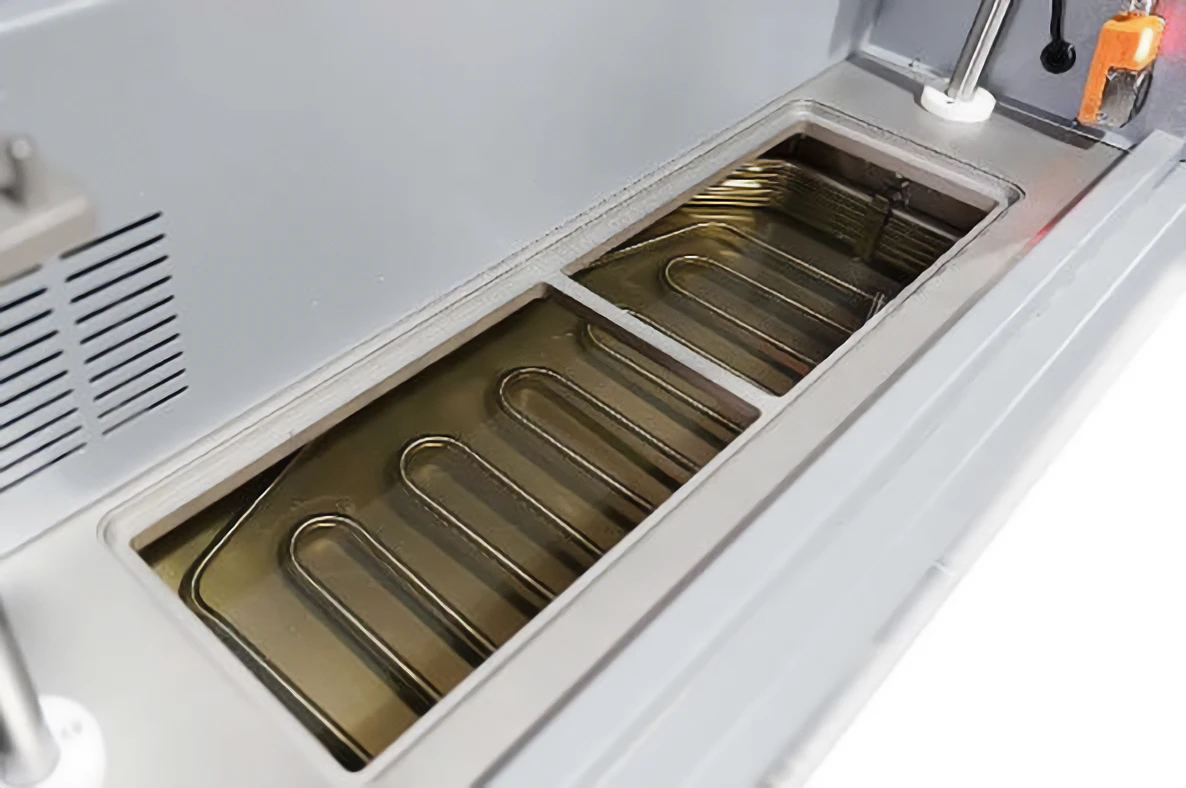 The test area is set up for routine lab maintenance, with a modular specimen rack that can be removed without tools. This makes it easier to clear fragments if a specimen drops and to keep the chamber clean between runs. The open-type oil tank uses quick-release knobs and can be cleaned in about five minutes. A dedicated calibration interface is built in to support quick checks with an external thermometer, without improvised setups.
To protect contact parts during day-to-day handling, the Vicat needle is kept suspended when not in use, and separating pliers are included to help remove specimens without damaging the needle or pin.
Maintenance note: The modular rack, quick-release oil tank, calibration port, and separating pliers are especially useful for labs that run repeated thermal tests and need fast chamber cleanup between batches.
Models and Technical Specifications
In the table below, you’ll find the available model configurations and the full technical specifications for the NG-HDT HDT/Vicat testing machine, including key performance parameters, supported test setups, utilities, and dimensions.
Station Configurations3-station and 6-station
Temperature RangeAmbient to 300°C
Control Interface10.4 in industrial touchscreen PC
| Specification | NG-HDT300 | NG-HDT600 |
|---|---|---|
| Test stations | 3 | 6 |
| Temperature range | Ambient to 300°C (572°F) | |
| Heating rate | 120 ± 10°C/h (216 ± 18°F/h)
50 ± 5°C/h (90 ± 9°F/h) |
|
| Displacement resolution | 0.001 mm | |
| Displacement accuracy | Better than 0.01 mm | |
| Displacement measurement range | 15 mm | |
| HDT test span | 2.52 in (64 mm) (GB/T 1634.2, ISO 75-2)
3.94 in (100 mm), 4.00 in (101.6 mm) (ASTM D648, optional) |
|
| HDT stress | 1.80 MPa, 0.45 MPa, 8.00 MPa (GB/T 1634.2)
0.455 MPa, 1.82 MPa (ASTM D648) Custom (GB/T 1634.3, ISO 75-3) |
|
| VST load | 10 ± 0.2 N, 50 ± 1.0 N | |
| VST maximum specimen size | 1.97 × 0.63 × 0.26 in (50 × 16 × 6.5 mm) | |
| HDT maximum specimen size | 5.12 × 0.59 × 0.51 in (130 × 15 × 13 mm)
9.06 × 0.50 × 0.28 in (230 × 12.8 × 7 mm) (optional for GB/T 1634.3, ISO 75-3) |
|
| Bath volume | 4.76 gal (18 L) | |
| Temperature sensor | PT100 | |
| Cooling time | 45 min (200°C to 23°C / 392°F to 73°F) with chiller | |
| Cooling method | Water cooling | |
| Loading type | Electric | |
| Communication port | LAN + 2 × USB 2.0 | |
| Power consumption | 3.5 kW | |
| Power supply | 1-phase, 220 V AC ± 10%, 50 Hz ± 2% | |
| Weight | 353 lb (160 kg) | |
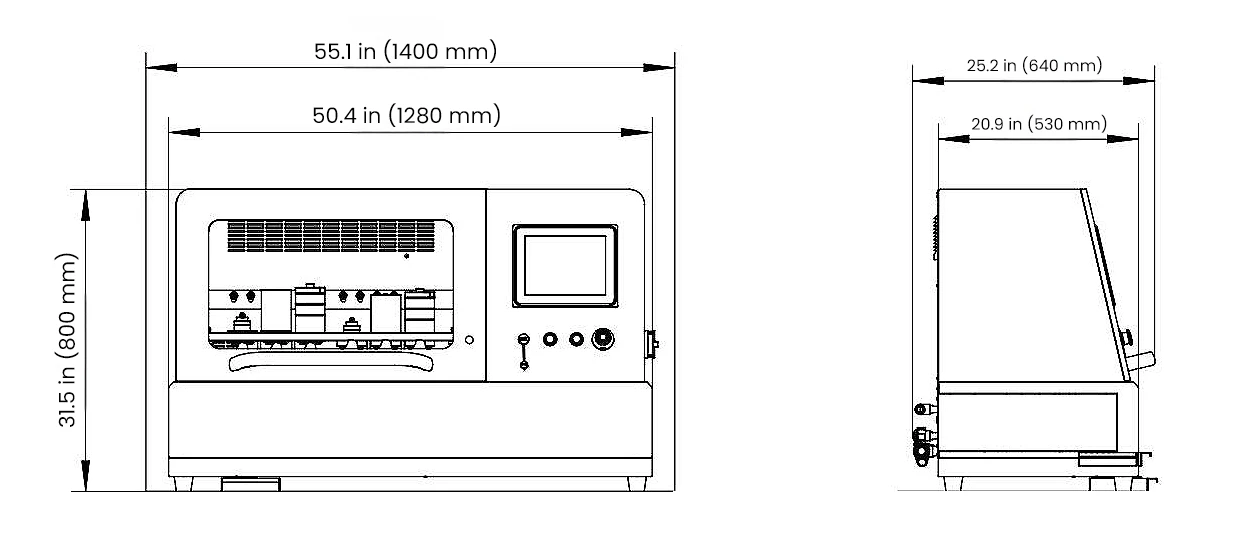
| Dimensions | 50.4 × 20.9 × 31.5 in (1280 × 530 × 800 mm) (L × W × H) | 50.4 × 24.4 × 49.6 in (1280 × 620 × 1260 mm) (L × W door-open × H door-open) |
Standard Configuration and Optional Accessories
Below is an overview of what ships with the NG-HDT system as standard, plus the optional add-ons that can be supplied based on your lab setup. Quantities for station-specific items differ between the 3-station and 6-station configurations.
Standard Configuration
This table lists the components supplied with the system. Items marked 3/6, 4/7, etc. depend on whether the unit is configured with 3 or 6 test stations.
| Name | Description | QTY |
|---|---|---|
| Test stations | Configured by model | 3/6 |
| Support span | 2.52 in (64 mm) (ISO 75)
4.00 in (101.6 mm) (ASTM D648, Method A) 3.94 in (100 mm) (ASTM D648, Method B) |
3/6 |
| Immersion bath | Oil bath assembly | 1 |
| Temperature sensor | PT100, Class A | 4/7 |
| Displacement sensor | LVDT displacement measurement | 3/6 |
| Computer | Built-in 10.4 in industrial PC, capacitive touch screen | 1 |
| HDT loading nose | R = 0.12 in (3.0 ± 0.2 mm) | 3/6 |
| VST needle | Cross-section area 1.000 mm² ± 0.015 mm² | 3/6 |
| Universal weight set | Combined load up to 12.1 lb (5500 g).
All loads from 1 g to 5500 g are possible in 1 g steps. |
3/6 |
| Test software | GenTest, English version | 1 |
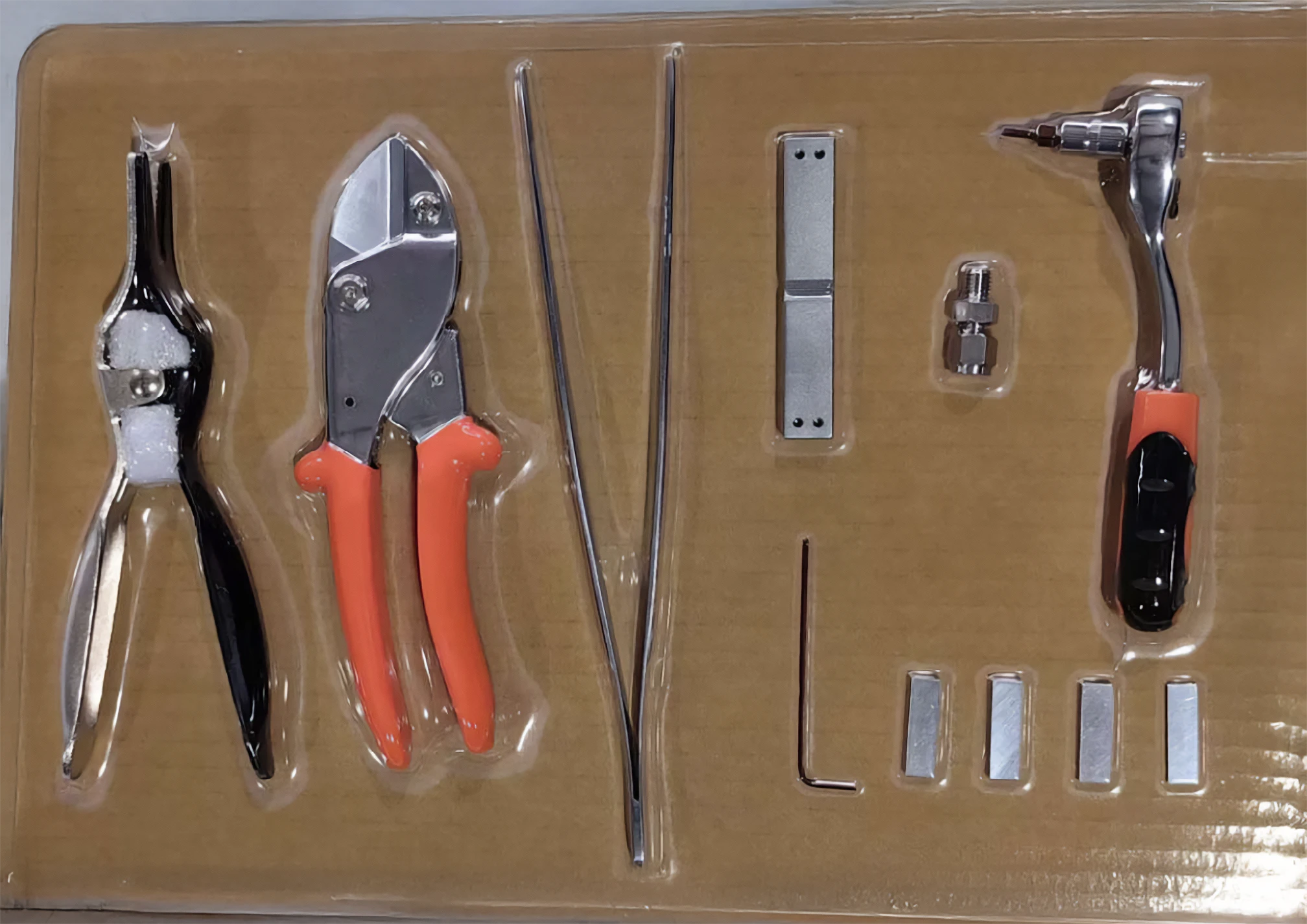
| Test accessories | Tweezers, specimen scissors, specimen separating pliers, specimen box, wrenches (1.5 mm and 2.5 mm), oil filling funnel, inlet and outlet water pipes (rated to 300°C / 572°F), 78.7 in (2 m) length | 1 |
| Calibration accessories | Gauge blocks (2 mm, 3 mm, 2 × 4 mm)
Temperature calibration hole (Φ 3.2 mm) |
1 |
| Quality certificate | Included | 1 |
| Operation manual | USB drive | 1 |
Optional Accessories
Optional items can be supplied to match your workflow, cooling requirements, or test method needs.
| Name | Description |
|---|---|
| Universal weight set | Combined load up to 12.1 lb (5500 g). All loads from 1 g to 5500 g are possible in 1 g steps. |
| Vicat weight set | 10 N and 50 N in accordance with ISO 306 and ASTM D1525 (one set required per measuring station). |
| HDT loading nose | R = 0.12 in (3.0 ± 0.2 mm). |
| VST needle | Cross-section area 1.000 mm² ± 0.015 mm². |
| ASTM support roller | Optional support roller setup for ASTM D648 configurations when required by the selected method setup. |
| Work bench | 55.1 × 25.6 × 29.1 in (1400 × 650 × 740 mm). |
| Chiller | 2.2 kW external cooling option for faster cooldown between test runs. |
| Oil-vapor purifier | 80 W, 3-layer filter, 51.2 in (1.3 m) pipe, 16.7 × 9.8 × 16.1 in (425 × 250 × 410 mm). |
| Filter set (for oil-vapor purifier) | First layer: 5 pcs. Second layer: 2 pcs. Third layer: 1 pc. |
| Nitrogen protection system | Optional oil-surface protection for labs that want to reduce oil oxidation and silicone oil consumption during high-temperature operation. |
| Adjustable-span support | Meets GB/T 1634.3 and ISO 75-3. Maximum span: 8.27 in (210 mm). Maximum specimen: 10.24 × 0.59 × 0.51 in (260 × 15 × 13 mm). |
Have Questions or Need to Confirm a Detail?
If you’re not sure which method you need to run, what station count fits your workload, or whether you need options like a chiller, oil-vapor purifier, nitrogen protection, or an adjustable-span support, send us a quick request online. Share your material type, applicable standard, specimen size, and expected test volume, and we’ll get back to you with the right configuration for your lab.
For Laboratories
Need Additional Quality Control Equipment to Build Your Laboratory?
HDT and Vicat testing is only one part of a complete quality control laboratory. NextGen can help you equip your entire lab with universal testing machines, impact and falling weight testers, melt flow indexers, HDT and Vicat systems, hardness and durometer systems, environmental chambers, and other supporting solutions, all coordinated as one complete project.
- One partner to equip your complete laboratory
- Installation, training, calibration
- Support for the life of the equipment
FAQs
The NG-HDT measures approximately 50.4 × 20.9 × 31.5 in (1280 × 530 × 800 mm). With the door open, the working envelope is approximately 50.4 × 24.4 × 49.6 in (1280 × 620 × 1260 mm). Machine weight is about 353 lb (160 kg).
Power requirement is single-phase 220 V AC ±10%, 50 Hz ±2%, with 3.5 kW rated power. If you need to confirm bench space, power, or installation planning, contact our team.
HDT and Vicat testing is often part of a broader plastics qualification workflow. Depending on the material program, labs may also use a Melt Flow Indexer for flow behavior, impact testing equipment for toughness evaluation, and universal testing machines for tensile or flexural properties.
If you are building a broader plastics lab setup, contact our team to map the equipment path.
The NG-HDT supports common HDT and Vicat workflows including ISO 75-1, ISO 75-2, ISO 75-3, ISO 2507, ISO 2507-1, ISO 306, ASTM D648, ASTM D1525, GB/T 1634.1, GB/T 1634.2, GB/T 1634.3, GB/T 8802, and GB/T 1633.
The final configuration should match the exact method, load, support span, specimen type, and edition required by the test plan. If your purchase specification names one of these standards, send it to our team and we can help match the configuration.
Displacement is measured with an LVDT system. The machine provides 0.001 mm displacement resolution, better than 0.01 mm displacement accuracy, and a 15 mm measurement range. This is important for tracking deflection or penetration behavior during controlled thermal loading.
If measurement range or reporting format is critical for your lab, contact our team.
The NG-HDT supports heating rates of 216 ± 18°F/h (120 ± 10°C/h) and 90 ± 9°F/h (50 ± 5°C/h). These rates support common standards-based HDT and Vicat procedures where temperature ramp control is part of the test method.
If your lab needs a specific method profile confirmed, send us the standard or test plan.
The NG-HDT is used to measure heat deflection temperature (HDT) and Vicat softening temperature (VST) for thermoplastics, pipes, fittings, and related plastic materials. It helps QC and R&D labs evaluate how plastic materials behave under controlled load and rising temperature.
If you are matching a plastics testing requirement to the right equipment setup, contact our team.
The oil bath operates from ambient temperature up to 572°F (300°C). This range supports common HDT and Vicat testing for thermoplastics and related plastic specimens. The system is designed for controlled heating, stable immersion conditions, and repeatable thermal test runs.
If your material program requires high-temperature operation near the upper end of the range, ask us to confirm the setup.
The NG-HDT is available as the NG-HDT300 with 3 test stations and the NG-HDT600 with 6 test stations. The 3-station model is suitable for lower-volume labs and routine checks, while the 6-station model is better for higher sample throughput and batch testing.
For help choosing between them, talk with our team.
HDT testing measures specimen deflection under load as temperature rises. Vicat testing measures softening behavior by tracking needle penetration under a defined load and heating rate. Both are thermal-response tests, but they answer different material-performance questions.
If your specification names both workflows, request a quote for a configuration that supports the complete method set.
The standard package includes the test stations, support spans, HDT loading noses, Vicat needles, weight sets, calibration references, specimen gauges, cleaning and handling tools, software, and network connection accessories needed for routine operation. This gives the lab a practical starting configuration for HDT and Vicat work.
If you want the quote aligned to a specific method package, request a detailed quote.
Yes. The touchscreen control system includes preset method options and supports custom methods for internal procedures or customer-specific requirements. This helps labs run routine standards-based testing while keeping flexibility for special material programs or non-standard evaluation work.
For mixed-method labs, request a quote with the required standards listed.
The system supports water cooling, and an optional chiller is available for faster cooldown. With the chiller option, the bath can cool from 392°F to 73°F (200°C to 23°C) in about 45 minutes, depending on operating conditions.
If faster turnaround is important for your lab, request a configuration quote with the cooling option included.
The system uses Class A PT100 temperature sensing. This supports stable temperature measurement during the controlled heating cycle, which is critical for repeatable HDT and Vicat results.
For labs comparing older equipment against current requirements, ask us to review the setup.
The standard configuration supports common HDT and Vicat specimen formats, including 2.52 in (64 mm), 3.94 in (100 mm), and 4.00 in (101.6 mm) support spans depending on the selected method. It also includes HDT loading noses, Vicat needles, gauges, and related tooling for routine operation.
If your specimens require a non-standard span or fixture setup, send us the details.
Optional accessories include universal weight sets, Vicat weight sets, automatic cooling, oil vapor extraction and filtration, nitrogen protection, computer options, and related items for specific lab requirements.
If you already know your standards, station count, and throughput target, request a detailed quote.
The NG-HDT includes a closed shield, door lock, dual overheat protection, oil-level monitoring, overflow protection, lift obstruction protection, pressure relief protection, and a lockable oil outlet. These features help protect the operator, specimens, oil bath, and mechanical system during heating, testing, unloading, and cooling.
For high-throughput labs, ask about safety and workflow configuration.
Related Products
Class J – Automatic Charpy and Izod Impact Tester (1–50 J)
Class J is an automatic Charpy and Izod impact testing system for low-energy impact evaluation of plastics and related materials. It covers 1–50 J for Charpy tests and 1–22 J for Izod tests, with interchangeable pendulums, adjustable spans, controlled striking velocity, and ASTM D6110, ASTM D1822, ISO 179, GB/T 1043, and ISO 9854.1 support for standardized testing.
Read more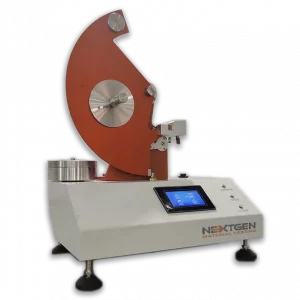
GenElm Series – Elmendorf Tearing Tester (64 N and 128 N)
GenElm Series is an Elmendorf tearing tester for measuring tear resistance of plastic film, sheeting, textiles, paper, board, and other flexible materials. Available with 64 N and 128 N high-capacity pendulum options, it supports ASTM D1922, ASTM D1424, ISO 6383-2, ISO 1974, and related methods. The pendulum-based design helps QC and R&D labs generate clear, repeatable tear-strength data.
Read more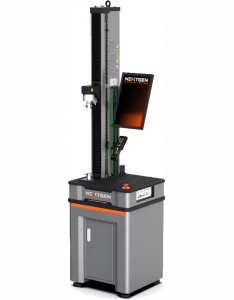
NG-EML Series A – Single-Column Universal Testing Machine (50 N – 5 kN)
NG-EML Series A is a compact single-column benchtop universal testing machine for low-force tensile, compression, and flexural testing. Covering 50 N to 5 kN capacity options, it is suited for rubber, plastics, adhesives, films, foams, wires, metals, composites, and consumer products. Its electromechanical frame, high-speed servo actuation, GenTest software, and standards support make it practical for R&D and routine QC.
Read more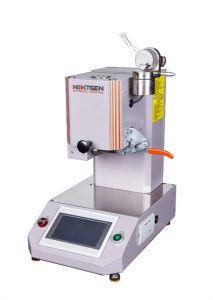
Melt Flow Indexer
The Melt Flow Indexer measures melt flow rate, melt index, and melt volume rate of thermoplastic materials for quality control, research, and material development. With a broad measuring range, 7-inch display, mass or volume method selection, precise temperature control, optical displacement measurement, automatic cutting, microcomputer control, and result printing, it helps labs evaluate viscosity, processability, and batch consistency according to ISO, ASTM, DIN, BS, and JIS methods.
Read more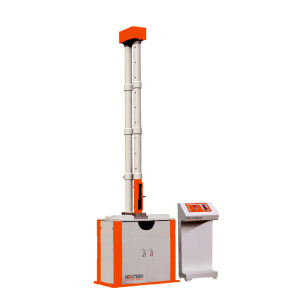
NG-ImpactFall – Falling Weight Impact Tester
NG-ImpactFall is a falling weight impact tester for evaluating external impact resistance of plastic pipes, fittings, boards, and other non-metal materials. Designed around ISO 3127, ISO 4422, and ASTM D2444 methods, it supports controlled drop heights, interchangeable hammer weights, multiple striker noses, and pipe diameters from φ16 to φ4000 mm for reliable QC, durability assessment, and standards-based product validation.
Read more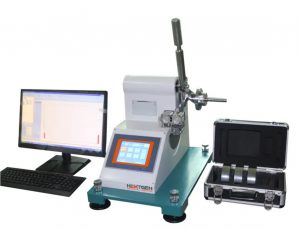
High-Energy Elmendorf Tearing Tester
NG-HE Elmendorf is a high-energy tearing strength tester for plastics, films, textiles, paper, and other flexible materials. It supports tear-force ranges up to 128 N with pneumatic clamping, automatic testing, result calculation, and data reporting. Compliance with standards such as ASTM D1424, DIN 53862, and ISO 13937-1 makes it useful for quality control and material comparison.
Read more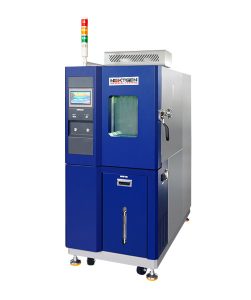
NG-EC Series – Environmental Test Chambers (100–1000 L)
NextGen NG-EC Environmental Chambers provide controlled temperature and humidity conditions for material, product, and quality-control testing. Available in 100, 150, 225, 408, and 1000 L sizes, they feature insulated steel construction, stainless interior walls, mechanical compression refrigeration, circulating air ducts, adjustable sample racks, a viewing window, and 7-inch touchscreen control to support stable, repeatable environmental simulation.
Read more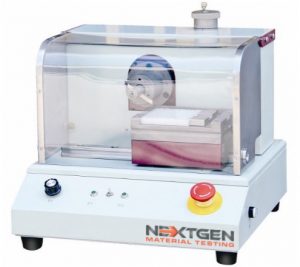
GenNotch 3000 – Motorized Multi-Specimen Notching and Broaching Machine
GenNotch 3000 is a motorized multi-specimen notching and broaching machine for preparing plastic specimens before Charpy and Izod impact testing. It holds up to 20 samples and can process 60 specimens in about 10 minutes, helping laboratories improve throughput. Adjustable feeding, controlled knife movement, ASTM D256, ASTM D6110, ISO 179, and ISO 180 compliance support consistent, standards-ready notches.
Read more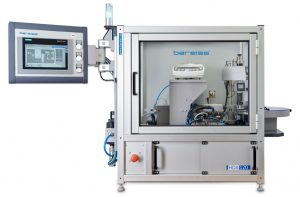
HDA 120 – Hardness and Density Automation System
HDA 120 is a semi-automatic hardness and density automation system for rubber and plastic sample characterization. It can handle up to 20 samples, perform three hardness measurements on a rotary table, and transfer specimens for density determination using a pneumatic gripping system. Data interfaces, touchscreen operation, ISO-compliant methods, and automated handling help improve throughput, traceability, and repeatability.
Read more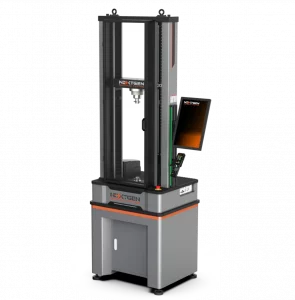
NG-EML Series B – Dual-Column Universal Testing Machine (100 N – 10 kN)
NG-EML Series B is a dual-column benchtop electromechanical universal testing machine for precision testing from 100 N to 10 kN. Built for research and industrial labs, it supports tension, compression, flexural, and component testing of composites, high-strength metals, polymers, films, foams, and rubber. Its compact rigid frame, advanced control accuracy, and GenTest software help deliver repeatable results in limited lab space.
Read more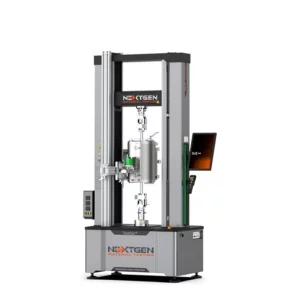
NG-EML Series C – Dual-Column Universal Testing Machine (5–50 kN)
NG-EML Series C is a dual-column electromechanical universal testing machine available in bench-top and floor-standing formats from 5 kN to 50 kN. Built for tension, compression, flexural, shear, and peel testing, it combines Class 0.5 accuracy, a servo direct-drive system, high-rigidity frame, touchscreen control, and GenTest software to support precise testing of metals, composites, rubber, plastics, and polymers.
Read more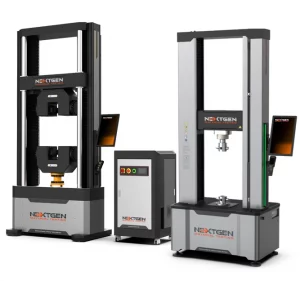
NG-EML Series D – Floor-Standing Universal Testing Machine (50–1000 kN)
NG-EML Series D is a heavy-duty floor-standing electromechanical universal testing machine for high-capacity tensile, compression, and flexural testing. Available from 50 kN to 1000 kN, it is built for high-strength steels, advanced composites, alloys, and challenging research materials. Its rigid dual-column frame, servo direct-drive system, closed-loop control, safety protections, and GenTest software support stable, accurate testing.
Read more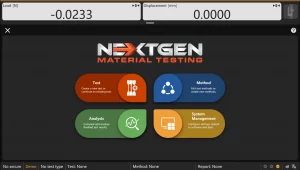
GenTest – Advanced UTM Testing Software
GenTest is NextGen’s advanced UTM testing software for electromechanical universal testing machines, managing test setup, live control, data acquisition, calculations, curves, and reporting from one method-driven environment. Preconfigured ASTM, ISO, DIN, EN, and BS templates help operators load the correct control mode, speeds, gauge length, formulas, and result fields for tensile, compression, and flexural tests.
Read more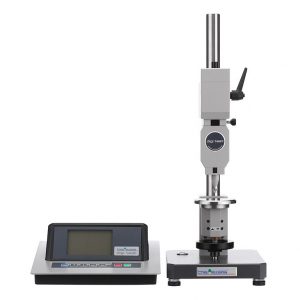
Automatic Shore, IRHD and VLRH Hardness Testing System
Digi Test II is an automatic Shore, IRHD, and VLRH hardness testing system for rubber, plastics, foams, elastomers, O-rings, tubes, hoses, and shaped parts. It combines an electronic control unit, loading module, test stand, and interchangeable measuring heads with automatic range recognition, programmable measuring time, USB output, and low-operator-influence operation. DIN, ISO, ASTM, BS, and DAkkS certificate support strengthen repeatability.
Read more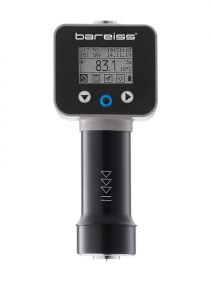
Portable Shore Durometer System with Test Stand
HPE III is an advanced portable Shore durometer system for hardness testing of rubber, plastics, and related materials. It measures hardness while also displaying specimen or environmental temperature and humidity, helping users track conditions during testing. A large LCD display, aluminum casing, patented ergonomic hand grip, USB connection, historical data display, rechargeable operation, and compatible manual or automatic test stands improve repeatability.
Read more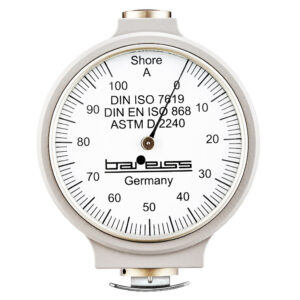
Analogue Shore Durometer with Test Stand
The Classic Analogue Shore Durometer is a German-manufactured hardness tester for rubber and plastic materials, available with manual or automatic test stand options. Known as a long-standing Shore hardness benchmark, it supports portable measurements, ergonomic operation, reference blocks, control rings, calibration accessories, and DAkkS/DKD certificate options. DIN 53505, EN ISO 868, ASTM D2240, and JIS K 6253 compatibility supports reliable verification.
Read more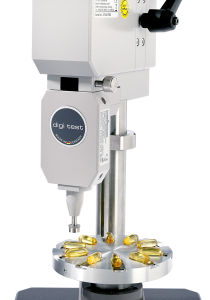
Capsule and Soft Gel Hardness Tester
Gelomat is an automatic capsule and soft gel hardness tester for gelatin capsules, softgels, plasticine, edible gelatin, and similar materials. Available with 0–2 N or 0–20 N measuring heads, it supports non-destructive hardness testing with automatic measurement, clear electronic display, USB data transfer, auto correction, hysteresis function, and optional custom Centrofix holders for precise capsule centering and efficient pharmaceutical-style QC.
Read more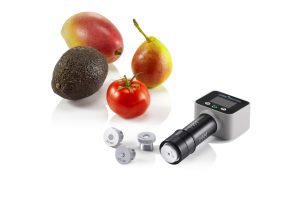
Fruit Firmness Tester
NextGen’s Fruit Firmness Tester is a portable German-manufactured device for measuring firmness in fruits, vegetables, meat, and fish. Interchangeable anvils support applications from berries and tomatoes to apples, avocados, carrots, cucumbers, and other produce. Ergonomic handheld design, digital readout, foam-fitted case, calibration accessories, USB or mobile data options, and objective force-based measurement help growers, distributors, and researchers assess ripeness and quality.
Read more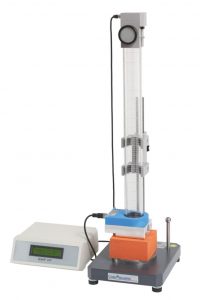
Ball Rebound Tester
The Ball Rebound Tester measures rebound resilience in foam, polyurethane, rubber, and similar materials. Designed for DIN EN ISO 8307 and ASTM D3574 testing, it drops a 16 mm magnetic ball from a controlled 500 mm height and calculates rebound performance through the electronic console. This makes it a practical solution for quality control, material comparison, and repeatable resilience evaluation.
Read more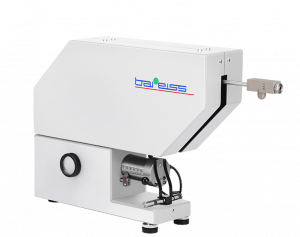
Pendulum Rebound Resilience Tester
NextGen’s Pendulum Rebound Resilience Tester measures the elastic recovery and dynamic behavior of elastomers, foams, and rubber materials. Available in manual and fully automatic versions with a digital display terminal, it supports DIN 53512, ASTM D1054, and ISO 4662 workflows. Optional sample heating up to 100°C helps laboratories compare formulations, aging effects, fatigue changes, and heat-related resilience performance.
Read more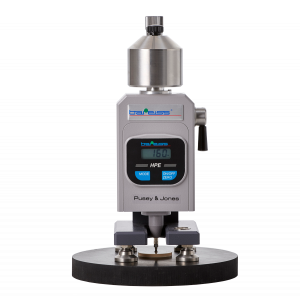
Pusey and Jones Tester
Pusey & Jones Tester is a portable plastometer system for measuring hardness and indentation behavior of rubber and rubber-like materials, especially rubber rollers used in the paper industry. It applies a 9.8 N test load and reads penetration depth after a 60-second test. An electronic dial gauge, zero-setting function, 1 kg load weight, built-in timer, and optional software support repeatable reporting.
Read more