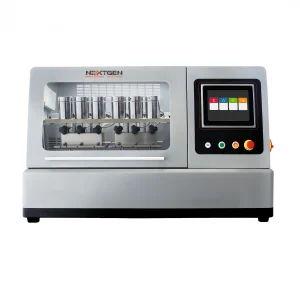
GB/T 8802-2001 is a Chinese national test method for determining Vicat softening temperature (VST) on thermoplastic pipes and fittings. It is commonly used to verify heat-softening performance for plastic piping products as part of material qualification, incoming inspection, or production quality control.
If you need help aligning your pipe or fitting type to the correct VST method, acceptance criteria, and edition requirements, talk with our team before you lock in fixtures or a test system configuration.
GB/T 8802-2001 — Thermoplastics pipes and fitting — Determination of Vicat softening temperature
GB/T 8802-2001 defines a standardized way to measure the Vicat softening temperature of thermoplastic pipe and fitting products. The result is used as a heat-resistance indicator for product design verification and batch-to-batch consistency.
This standard is classified as a test method and is listed as currently in force.
Quick Definition
What it is: A Vicat softening temperature (VST) test method for thermoplastic pipes and fittings.
What it tells you: The temperature at which a heated polymer specimen reaches a defined softening/penetration condition under a specified load and heating rate (details depend on the edition and conditions selected in the standard).
How it’s used: Product qualification, supplier comparison, and routine QC for plastic piping materials and molded/extruded components.
What This Standard Covers
GB/T 8802-2001 covers Vicat softening temperature testing specifically for thermoplastic pipes and fittings. In practice, this typically involves preparing specimens from a pipe wall or fitting body and running a controlled heating cycle while applying a specified penetration load.
It is intended for thermoplastic materials where a rapid softening transition can be measured; it is not intended for crystalline or semi-crystalline polymer materials.
Why This Standard Matters in Testing
For piping products, VST is often used as a practical screening metric for heat-softening behavior that supports material selection and manufacturing control. Many product specifications and procurement documents reference Vicat results to help ensure consistent formulation, extrusion/molding control, and finished-product performance at elevated temperatures.
Revision sensitivity: Test conditions (load, heating rate, specimen details, and reporting requirements) can materially change results and pass/fail decisions, so quoting and test setup should match the exact edition cited by the customer or product standard.
Common Materials, Product Types, or Applications Covered
GB/T 8802-2001 is most commonly applied to thermoplastic piping products and components, such as:
- Extruded thermoplastic pipes used in fluid conveyance or drainage applications
- Injection-molded or fabricated thermoplastic fittings
- Thermoplastic compounds and formulations evaluated through pipe/fitting test coupons
Because this method is written for pipe and fitting geometries, it is frequently referenced alongside broader plastics softening-temperature methods when laboratories handle both general plastics and piping-specific specimens.
Common Test or Verification Workflow
Vicat testing for pipes and fittings is typically run as part of a broader qualification or QC package for plastic piping systems.
Common workflows: (1) select the correct edition and test condition(s), (2) prepare specimens from pipe/fitting material, (3) condition and measure specimens as required, (4) run VST using a controlled heating program and specified load, (5) report VST and required details (test condition, specimen description, and any product identifiers).
Where it fits: Incoming material checks, process validation, periodic product audits, and investigation of formulation or processing changes.
Equipment Commonly Used for This Standard
GB/T 8802-2001 generally points to a Vicat softening temperature test system capable of applying a controlled load and heating profile while monitoring specimen penetration/deflection and temperature.
Common equipment: Vicat softening temperature (VST) tester (often a combined HDT/Vicat platform), temperature-controlled heating bath or chamber (as required by the method), specimen holders/supports, penetration indenter assembly with calibrated mass/loading, and temperature measurement/control hardware.
Practical quoting note: Capacity (number of stations), temperature range, heating-rate control, and data reporting features are usually the key configuration decisions for a GB/T 8802 workflow. If you are comparing multi-station systems or automation options, you can request pricing for a configuration matched to your throughput and reporting needs.
How to Read This Designation or Revision
GB/T: Indicates a recommended (non-mandatory) national standard of China.
8802: The standard number within the GB/T system.
-2001: The publication year for this edition.
Equivalency note: GB/T 8802-2001 is listed as equivalent to ISO 2507:1995; when contracts cite ISO language, confirm the required edition and any specified test condition details before running comparisons.
Related Standards, Methods, or Frameworks
Depending on whether you are testing general plastic specimens or pipe/fitting specimens, the following references are often discussed alongside GB/T 8802:
- ISO 2507:1995 (referenced as the internationally adopted basis for GB/T 8802-2001)
- GB/T 1633 (Vicat softening temperature method for thermoplastic plastics, not limited to pipes/fittings)
- JB/T 12723 (technical specification for HDT/Vicat softening temperature instruments)
Talk with Us About GB/T 8802 Test Setup
If you are setting up VST testing for pipe and fitting products and want to match station count, temperature control, and reporting to the way GB/T 8802 is cited in your product requirements, contact our team to review your standard callout and throughput targets.