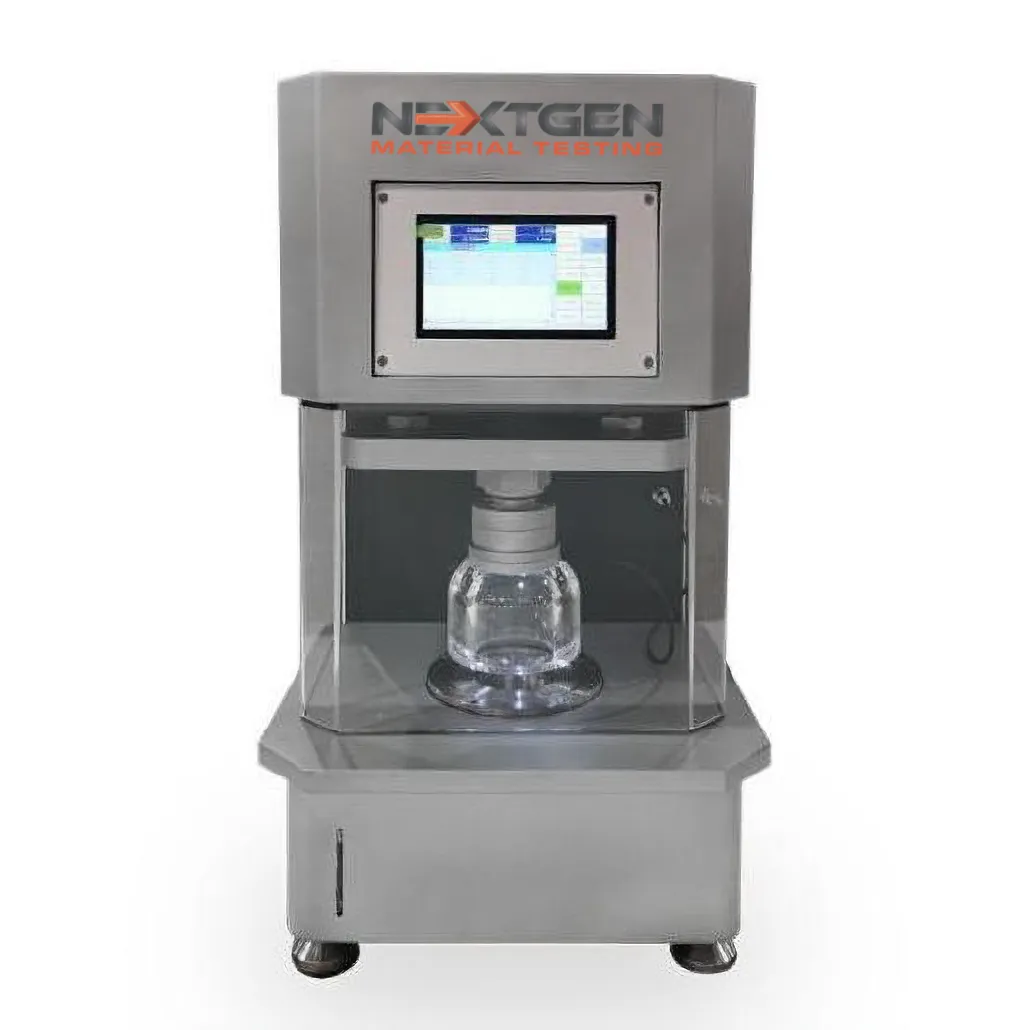
GenBurst Pro – Hydraulic Bursting Strength Tester

Textile Testing Equipment
Standards
- ASTM D751
- ASTM D3786
- BS 4768
- FZ/T 01030
- FZ/T 60019
- ISO 13938.1
- JIS L 1018.6.17
- SATRA TM 170
- Woolmark TM 29


Description
GenBurst Pro is a hydraulic bursting strength tester developed for precise measurement of bursting strength and distension at burst in woven fabrics, knitted fabrics, nonwovens, paper, and board materials. Using hydraulic pressure applied through a rubber diaphragm, it helps laboratories evaluate how materials perform under multidirectional stress in quality control, product development, and standards-based testing. With automated burst detection, servo-controlled loading, multiple test modes, interchangeable test areas, and touchscreen operation, GenBurst Pro is built for reliable day-to-day use in professional lab environments.
Main Features
GenBurst Pro is designed for labs that need dependable bursting strength data, flexible test setup, and a professional workflow that supports routine testing across different material categories.
- Hydraulic Diaphragm Testing: Measures bursting strength and burst distension by applying hydraulic load through a rubber diaphragm, making it suitable for materials tested under multidirectional stress.
- Automated Burst Detection: Detects the burst point automatically to improve test sensitivity and reduce operator dependence during measurement.
- Four Test Modes: Supports Constant Rate Bursting, Constant Expansion, Constant Pressure, and Constant Time Bursting for greater testing flexibility.
- Servo-Controlled Loading: Uses an AC servo drive system to support stable pressure application, low-noise operation, and consistent lab performance.
- Interchangeable Test Areas: Accommodates multiple test area options, allowing the system to adapt to different sample types and testing methods.
- Touchscreen Control: Provides a straightforward operator interface for test setup, execution, and routine use in QC and R&D workflows.
- Protective Transparent Cover with LED Illumination: Improves specimen visibility during testing while supporting safer operation around the test zone.
- Integrated Output and Connectivity: Supports saved results, printed output, and computer connection for documentation and review.
Applications
GenBurst Pro is intended for laboratories and manufacturers that need accurate bursting performance data for flexible materials, sheet products, and engineered substrates. It is especially useful when multidirectional loading provides a more meaningful performance profile than a simple tensile test.
- Woven Fabrics: Bursting strength evaluation for structured textile materials.
- Knitted Fabrics: Performance testing for knit constructions where burst behavior is a key quality indicator.
- Nonwoven Materials: Bursting evaluation for technical nonwovens, disposable products, and industrial sheet materials.
- Paper and Board: Useful for paper-based and board materials where burst resistance is part of product validation or process control.
- Quality Control Programs: Supports incoming inspection, lot comparison, production monitoring, and product qualification testing.
Who This System Is For
GenBurst Pro is a strong fit for organizations that need repeatable bursting strength data as part of a structured testing program. It is well suited for:
- Textile manufacturers
- Knitted and woven fabric producers
- Nonwoven material manufacturers
- Paper and board testing laboratories
- Quality control and quality assurance teams
- R&D and materials engineering groups
- Independent test laboratories
Technical Specifications
For labs planning installation, qualification, or day-to-day operation, the specifications below summarize the main performance parameters, test configuration options, and physical requirements of the system.
| Parameter | Value |
|---|---|
| Model Options | GenBurst Pro 1 / GenBurst Pro 2 |
| Pressure Range | 290 psi (2.00 MPa) / 1,450 psi (10.000 MPa) |
| Minimum Division Value | 0.001 MPa / 0.003 MPa |
| Test Area Options | 7.3 cm2 (Dia. 30.5 mm), 10 cm2 (Dia. 35.7 mm), 50 cm2 (Dia. 79.8 mm), optional 100 cm2 (Dia. 4.4″ (112.8 mm)) |
| Rubber Diaphragm Thickness | ≤ 2 mm |
| Pressure Speed | 100 to 500 mL/min |
| Accuracy | ±1 mm when burst height is up to 70 mm |
| Test Units | kPa, kgf/cm2, lb/in2, bar |
| Test Methods | Constant Rate Bursting; Constant Expansion; Constant Pressure; Constant Time Bursting |
| Output | Printer, display output, computer-connectable |
| Power Supply | AC 220 V, 50/60 Hz, 500 W |
| Dimensions | 21.7 x 17.7 x 27.6 in. (550 x 450 x 700 mm) |
| Weight | 275.6 lb (125 kg) |
Standards
GenBurst Pro supports recognized bursting strength methods used across textile and related material testing programs. The primary supported standards include:
- ISO 13938.1
- FZ/T 60019
- FZ/T 01030
- ASTM D3786
- ASTM D751
- BS 4768
- Woolmark TM 29
- WSP 30.1
- JIS L 1018.6.17
- SATRA TM170
Standard Accessories
GenBurst Pro is supplied with the core components needed for setup, calibration, and routine bursting strength testing in the lab.
- 7.3 cm2 Test Set (Dia. 30.5 mm): 1 set
- 50 cm2 Test Set (Dia. 79.8 mm): 1 set
- Wrench: 1 pc
- Stainless Steel Calibration Plate: 1 pc
- Rubber Diaphragm: 1 pc
- English Operation Software: 1 pc
- PC Connection Cable: 1 pc
Optional Accessories
Additional accessories are available for labs that need alternative test areas, spare consumables, or supporting utilities for their installation.
- Other Test Sets
- Rubber Diaphragm
- Air Compressor
Ready to Review Your Bursting Strength Testing Requirements?
If you are specifying a bursting strength tester for fabrics, nonwovens, paper, or board materials, NextGen Material Testing can help you match the system to your standards, material types, and lab workflow. Send us your testing requirements, target pressure range, and sample details, and our team will help you evaluate the right configuration and prepare a quote for your application.
For Laboratories
Need Additional Quality Control Equipment to Build Your Laboratory?
Fabric strength testing is only one part of a complete quality control laboratory. NextGen can help you equip your entire lab with color fastness testers, abrasion testers, bursting strength testers, tearing testers, flexing testers, and other supporting solutions, all coordinated as one complete project.
- One partner to equip your complete laboratory
- Installation, training, calibration
- Support for the life of the equipment
FAQs
This tester is built to support documentation workflows, so you can retain burst test data, generate a printed record, and connect the unit to a computer for electronic review and recordkeeping.
For labs that need bursting strength documentation for quality control, incoming inspection, or lot comparison, we also include operation software and a PC connection cable with the standard package. That gives you a practical path for keeping test records tied to your internal reporting process.
To align the documentation setup with your lab workflow, learn more or request a quote. If you want to confirm how the system will fit your reporting and traceability process, we can help you review the right configuration.
This hydraulic bursting strength tester supports the recognized bursting strength methods commonly used for woven fabrics, knits, nonwovens, coated materials, and related sheet products. For the standards you named, it is configured to run ASTM, ISO, BS, SATRA, JIS, Woolmark, and WSP bursting strength methods used in textile and material testing programs.
The supported standards include:
- ASTM D3786
- ASTM D751
- ISO 13938.1
- BS 4768
- SATRA TM170
- JIS L 1018.6.17
- Woolmark TM 29
- WSP 30.1
To align this with your test method and specimen type, review the GenBurst Pro hydraulic bursting strength tester or request a quote for a method-specific configuration review.
We provide installation assistance and operator training for this hydraulic bursting strength tester. Our installation services can include system setup, physical and electrical connections, mounting and checking the supplied fixtures or transducers, and verification that the instrument is operating correctly. We also provide introductory system and software training so your team can bring the GenBurst Pro into a consistent bursting strength testing workflow with confidence.
Training is offered as a basic introduction for up to three operators and covers safety, the main system components, basic software use, start-up and shutdown, and the manuals and technical documents needed for routine operation. Because this tester uses touchscreen control, multiple burst test modes, and interchangeable test areas, the training scope can be aligned to your materials, fixtures, and daily QC process. Standard installation does not include on-site calibration.
To match the right installation and training scope to your lab, you can learn more or request a quote. If you share your materials, fixtures, and site requirements, we can help define the best setup for your team.
A hydraulic bursting strength tester evaluates fabric and sheet material performance by clamping the specimen and applying hydraulic pressure through a rubber diaphragm until the material ruptures. That gives you the burst pressure and distension at burst, which is valuable for woven fabrics, knitted fabrics, nonwovens, paper, and board when multidirectional stress is a better representation of real service conditions than a straight tensile pull.
With this system, automated burst detection, servo-controlled loading, four test modes, and interchangeable test areas help you compare materials more consistently across QC and R&D work. If you also need to evaluate tear resistance, that is a different failure mode and is better addressed with the GenTear Pro – Elmendorf Tearing Tester.
To align this with your testing method, you can learn more or request a quote. If you share your material type, test area, and method, we can help match the right configuration.
The touchscreen keeps bursting strength testing fast and consistent for both QC and R&D work. Operators can select the test setup, run the method, and review results from one interface, which helps reduce operator variation during incoming inspection, production checks, and lot-to-lot comparison. For development work, it also makes it easier to move between the available test modes and different test area setups when you need to compare material behavior under different conditions.
It also supports a cleaner documentation flow. This system can save results, provide printed output, and connect to a computer, so labs can organize records for review and reporting while automated burst detection and servo-controlled loading support more consistent day-to-day operation.
To align the interface and test setup with your workflow, learn more or request a quote. If you share your material type and test method, we can help match the right GenBurst Pro configuration to your lab.
This bursting strength tester supports four test modes: constant rate bursting, constant expansion, constant pressure, and constant time bursting. That gives you flexibility to match the test setup to different fabric, nonwoven, paper, and board applications while measuring both bursting strength and distension at burst on the same system.
The right mode usually depends on your test method, specimen behavior, and how you want pressure or expansion controlled during the run. Combined with servo-controlled loading and interchangeable test areas, the system can be configured for routine quality control as well as more method-specific development work.
To align this with your bursting strength testing method, learn more or request a quote. If you share your material type and target standard, we can help match the right mode and test area for your setup.
The transparent protective cover helps create a safer bursting strength testing zone by placing a clear barrier around the active test area while the specimen is under hydraulic load. That added separation is important when fabric, nonwoven, paper, or board samples rupture suddenly at burst. Operators can keep visual control of the test without working directly over the specimen during the critical part of the cycle.
The integrated LED lighting improves visibility at the same time, so the specimen and test area are easier to monitor throughout the run. That supports safer operation and better day-to-day workflow, especially in QC labs where repeat testing is routine and fast visual checks matter.
To match the tester to your material and lab workflow, learn more or request a quote. If you share your sample type and test method, we can help refine the right setup.
Hydraulic bursting strength testers are most commonly used in textile quality control and development labs, especially those working with woven fabrics, knitted fabrics, and nonwovens. They are also widely used in paper and board testing labs, independent test laboratories, and materials engineering groups that need repeatable bursting strength and distension-at-burst data for incoming inspection, production control, lot comparison, and product development.
This type of fabric strength testing is especially useful when a material is loaded in multiple directions and a simple tensile result does not give a complete picture of performance. That makes it a strong fit for labs evaluating flexible sheet materials, technical textiles, and other engineered substrates. If tear resistance is the main property you need to evaluate, GenTear Pro may be a better match.
To align this with your testing method and sample types, learn more or request a quote. If you share your material type and lab workflow, we can help confirm the right setup for your application.
After-sales technical support is available if your system needs troubleshooting. We continue supporting this bursting strength tester after delivery, with technical help for operating issues, service follow-up, and access to spare parts and accessories when needed.
Support can also include installation, calibration, and operator guidance, which is useful when a problem is tied to test setup, control settings, or routine operation rather than the instrument itself.
If you need help diagnosing a setup or service issue, use our technical support portal or contact us page. For system details, you can also learn more.
Automated burst detection improves bursting strength test consistency by identifying the burst point the same way on every run instead of relying on an operator to judge the endpoint. On this tester, that reduces operator influence and improves test sensitivity, which helps you compare woven fabrics, knits, nonwovens, paper, and board materials more reliably across shifts, batches, and repeat tests.
Consistency improves further because automated burst detection works alongside servo-controlled loading, so pressure is applied in a stable, controlled manner during the test. Test mode and test area still matter, especially when you are comparing different materials or following a specific bursting method, but automatic endpoint detection helps keep the measurement step more uniform from sample to sample.
To align this with your testing method, learn more or request a quote. If you share your material type, test area, and preferred bursting method, we can help refine the right setup for your workflow.
Servo-controlled loading is what keeps hydraulic pressure application steady as the test builds toward burst. On this system, the AC servo drive supports stable pressure application and consistent lab performance, which helps reduce pressure fluctuation during the run and improves repeatability from sample to sample. That matters in bursting strength testing because small loading variations can shift both burst value and distension at burst.
It also works with automatic burst detection and selectable test modes, including constant rate bursting, constant expansion, constant pressure, and constant time bursting. Together, those functions help make results less operator-dependent and more consistent across QC and R&D workflows. Repeatability also depends on the selected test area, specimen type, diaphragm condition, and the method you are running.
To align this with your testing method, learn more or request a quote. If you share your material type, target standard, and preferred test area, we can help match the right setup.
For a hydraulic diaphragm bursting tester, the main maintenance items to plan for are replacement diaphragms, inspection of the test area components, and routine performance verification. This system applies hydraulic pressure through a rubber diaphragm and supports interchangeable test areas, so consistent results depend on keeping those wear and contact parts in good condition and checking the tester regularly for repeatable bursting strength and distension measurements.
For the GenBurst Pro, the most practical items to keep in your maintenance plan are spare rubber diaphragms, the test sets used for your selected method, and regular use of the stainless steel calibration plate during verification. If your installation uses the optional air compressor, that should be included in your service schedule as well. We also recommend routine cleaning of the clamping and test area surfaces so specimen seating stays consistent from lot to lot.
If you are building a spare-parts or preventive maintenance plan, learn more about this tester or request a quote with your test area, material type, and method requirements, and we can help you define the right replacement and verification items for your setup.
This tester is built for bursting strength testing of woven fabrics, knitted fabrics, nonwovens, paper, and board, and it also measures distension at burst. Its hydraulic diaphragm test method is well suited for evaluating how these materials respond to multidirectional stress in quality control, product development, and routine lab testing.
Because these materials behave differently, from stable woven constructions to more extensible knits and sheet materials like paper and board, the setup should be matched to the specimen type and method. This system supports multiple test area options, which helps you align the tester with different sample categories and testing workflows. If tear resistance is also part of your program, you can compare it with GenTear Pro for tear resistance evaluation.
If you're validating fit across several material types, learn more or request a quote. Share your material mix and test method, and we can help match the right configuration for your workflow.
During training and startup, we provide operators with the core materials needed to run the GenBurst Pro confidently, including operation manuals, technical documentation, and any applicable training videos. The startup process also includes hands-on guidance tied to those documents, so your team is guided through the system, the controls, and routine operation from day one.
The documentation package follows the equipment supplied with your order. That typically means the training content is matched to the installed system components, included fixtures or accessories, touchscreen operation, safety procedures, and normal power-up and shutdown steps, which helps operators move into daily bursting strength testing with a clear reference set.
To align the startup package with your lab workflow, learn more or request a quote. If you share your sample types, test method, and any planned accessories, we can outline the training and documentation scope for your setup.
Interchangeable test areas directly affect method selection because the test area needs to fit the procedure and the material you are evaluating. This system supports multiple test area options and four bursting modes, so you can configure the setup around the specimen type rather than forcing different materials into one fixed opening. That is valuable when moving between fabrics, nonwovens, paper, and board, or when aligning the tester with different supported bursting methods.
For sample setup, consistency is the key point. GenBurst Pro offers 7.3 cm2, 10 cm2, 50 cm2, and optional 100 cm2 test areas, and it is supplied standard with 7.3 cm2 and 50 cm2 test sets. Once you choose the appropriate area, keep that configuration consistent across your program so the stressed zone, burst strength data, and distension results stay comparable.
When determining the optimal configuration for your samples, you can learn more about the system or request a quote with your material type, target method, and preferred test area, and we will help match the right test set to your workflow.
This system captures both bursting strength and distension at burst. It applies hydraulic pressure through a rubber diaphragm until the specimen fails, so you can record the burst pressure and the material’s expansion at rupture in one test. That makes it well suited for woven fabrics, knitted fabrics, nonwovens, paper, and board materials.
Those two results answer different parts of the same performance question. Bursting strength shows how much pressure the sample can withstand, while distension at burst shows how far it expands before failure under multidirectional stress. For labs that need tighter control over burst height measurement, this tester is specified at ±1 mm accuracy when burst height is up to 70 mm, and automatic burst detection helps support consistent reporting.
To align this with your testing method, learn more about the available setup options or request a quote for the right configuration for your materials and test standard.
Bursting strength testing and a conventional tensile test answer different questions. Bursting strength testing loads the specimen in multiple directions through a diaphragm, so it is often the better choice for flexible materials that deform and fail under multidirectional stress, such as knitted fabrics, nonwovens, coated textiles, paper, and board. A tensile test pulls in one direction, which is useful for strip strength, elongation, and machine-direction or cross-direction comparison, but it does not always reflect how sheet materials fail in real service.
For many flexible materials, bursting gives a more complete view of rupture behavior because it captures both burst pressure and distension at burst. Tensile testing is still valuable when you need directional strength data or want to compare material orientation. In many QA and product development programs, the two methods are complementary rather than interchangeable.
If you’re comparing alternative approaches for your material, learn more about this tester or request a quote. Share your material type and test method, and we can help match the right bursting setup to your workflow.
Choose this tester when you need bursting strength data rather than tear resistance data. This system measures bursting strength and distension at burst by applying hydraulic pressure through a rubber diaphragm, so it is the better fit for woven fabrics, knitted fabrics, nonwovens, paper, and board when the material is evaluated under multidirectional stress. It is also a strong choice when your method requires burst height measurement, multiple burst test modes, or different test area setups in one lab workflow.
An Elmendorf tearing tester answers a different quality question. It is used for tear resistance evaluation, while this system is intended for overall rupture behavior under expanding pressure. If your product tends to fail by bulging and breaking instead of by tear propagation, bursting strength is usually the more meaningful result. GenTear Pro is the better route when tear resistance is the property you need to compare.
If you’re comparing alternative approaches, review GenBurst Pro or request a quote with your material and test method. We can help match the right tester to your samples, workflow, and reporting needs.
Calibration and ongoing performance verification should be built into your normal bursting strength testing workflow, not treated as a one-time setup item. This tester is supplied with a stainless steel calibration plate, which supports initial setup checks and routine verification. For day-to-day control, keep a documented schedule for pressure-system checks, confirmation of the selected test area, diaphragm condition, and repeatability review against your internal procedure.
The right interval depends on your quality system, test frequency, material type, and traceability requirements. A solid approach is to verify performance at regular intervals, inspect the rubber diaphragm as a wear item, and keep records of any adjustments, replacements, and comparison results. We also provide annual calibration support through accredited ISO laboratories for instruments that require formal calibration control.
To align this with your lab workflow, learn more about the system or contact us to review your calibration plan and service needs.
This bursting strength tester includes a minimum 12-month warranty starting on the day of delivery, and the coverage applies to the complete instrument. We also support the system with ongoing after-sales service plus long-term spare parts and accessory support.
Warranty coverage is intended for normal use and proper maintenance. Claims may be declined if a failure is caused by buyer modification, improper maintenance, misuse, or abuse, and consumables are excluded from the lifetime service portion of support.
To review the GenBurst Pro in more detail or confirm the warranty package for your order, you can learn more or request a quote.
This tester is built for bursting strength testing on woven fabrics, knitted fabrics, nonwovens, paper, and board. It is intended for materials that are better evaluated under multidirectional pressure, while also measuring distension at burst when that result is part of the method.
That makes it a strong fit for textile and paper testing workflows where you need repeatable burst data for incoming inspection, lot comparison, production checks, or development work. If your main requirement is tear resistance instead of burst performance, GenTear Pro – Elmendorf Tearing Tester is the better companion method.
Looking to validate this against your application requirements? learn more or request a quote, and share your material type, construction, and test method so we can match the right setup to your workflow.
Before installing this system, review your electrical service, available bench space, the materials and test areas you plan to run, and how results will be handled. This tester runs on AC 220 V, 50/60 Hz, 500 W, and its footprint is 550 x 450 x 700 mm with a machine weight of 125 kg, so the lab should be ready for placement and safe handling from day one.
For textile and paper testing, also confirm whether the included 7.3 cm2 and 50 cm2 test sets match your routine work or whether you should add other test areas, spare diaphragms, or the optional air compressor. The installation plan should also account for your operator workflow, since the system supports touchscreen operation, software use, computer connection, and display or printer output.
To align the installation with your sample mix and reporting setup, learn more or request a quote. If you share your materials, preferred test area, and lab workflow, we can help confirm the right configuration before delivery.
Related Products
Fabric Burst Strength Tester
GenBurst is a burst strength tester for measuring the rupture resistance of fabric, leather, paper, and similar sheet materials under hydraulic pressure. Available in manual and automatic models, it uses a hydraulic diaphragm system with pressure transducers, capacity up to 100 kgf/cm², and ISO 2759 and ASTM D2210 compliance to support standardized durability, packaging, textile, and quality-control testing.
Read more
GenTear Pro – Elmendorf Tearing Tester
GenTear Pro is a digital Elmendorf tearing tester for measuring tear propagation resistance in textiles, nonwovens, paper, paperboard, and thin films. Pneumatic clamping, automatic sample cutting, touchscreen and PC control, built-in reporting, and 16 N, 32 N, and 64 N force ranges support repeatable QC and R&D testing. ASTM D1424, ISO 13937-1, TAPPI T414, and related methods make it versatile across flexible sheet materials.
Read more