GB/T 1634 is a Chinese national multipart standard used to determine the temperature at which a plastic test specimen deflects under a specified flexural load as the temperature increases at a controlled rate. It is widely used for material qualification, supplier comparison, and product design verification where heat resistance under load is a key requirement.
If you need help aligning your material, specimen geometry, and cited edition/part to the correct test setup, talk with our team about your application.
GB/T 1634 — Plastics: Determination of temperature of deflection under load (series)
GB/T 1634 is commonly cited in test reports and material datasheets as an HDT/DTUL method family. In practice, the exact requirements depend on the part number (for example, Part 1 vs. Part 2) and the year/edition referenced by your customer, drawing, or internal specification.
The method is based on three-point bending under a defined load condition, while the specimen is heated at a controlled rate until a defined deflection criterion is reached. The result is reported as a temperature value used to compare heat resistance under load across materials or formulations.
Quick Definition
GB/T 1634 defines how to measure the temperature of deflection under load for plastics: the temperature at which a specimen reaches a specified deflection while carrying a specified flexural load during controlled heating.
What This Standard Covers
GB/T 1634 covers the determination of deflection temperature under load for plastics using flexural loading (three-point bending) during heating. It is typically used as a comparative thermal-mechanical property for plastics and related polymeric materials.
Because GB/T 1634 is published as a multipart series, the exact scope (materials covered, specimen considerations, and part-specific requirements) should be taken from the cited part of the standard in your requirement.
Document type: Method (test method series).
Why This Standard Matters in Testing
HDT/DTUL is frequently used when a plastic part must carry load while exposed to elevated temperature—such as housings, structural supports, under-hood components, electrical enclosures, and fixtures near heat sources. The GB/T 1634 result is often used for:
- Material selection and benchmarking across resin grades, reinforcements, or additives
- Incoming QA/QC checks for lot-to-lot consistency (when correlated to internal baselines)
- Design verification where a minimum heat-resistance-under-load target is specified
- Supplier qualification and datasheet validation workflows
For procurement and lab planning, the key practical point is that different GB/T 1634 parts and editions can affect configuration details (fixtures, loading conditions, and reporting expectations), so the equipment should be selected to cover the full range of your cited requirements.
Common Materials, Product Types, or Applications Covered
GB/T 1634 is commonly applied to thermoplastics and thermosets used in molded or machined forms, including unfilled and filled formulations. It is also used in workflows involving rigid polymer products where heat-related stiffness loss under load is a concern.
Typical application areas include plastic components in appliances, consumer products, automotive and transportation, electrical products, and industrial equipment—especially where a quick, repeatable comparative heat-performance indicator is required.
Common Test or Verification Workflow
Most GB/T 1634 workflows follow a similar sequence: prepare and condition specimens, measure dimensions, mount the specimen on a three-point bending support, apply the specified load condition, heat at the specified rate, and record the temperature when the specified deflection is reached.
Common workflow elements: Specimen conditioning, dimensional measurement, three-point bending setup, controlled heating, deflection monitoring, temperature reporting and documentation.
Practical caution: HDT/DTUL results are sensitive to specimen preparation, thickness, conditioning, and the exact loading/heating conditions. For consistent comparisons across suppliers or plants, keep the part/edition consistent and standardize specimen preparation and conditioning.
Equipment Commonly Used for This Standard
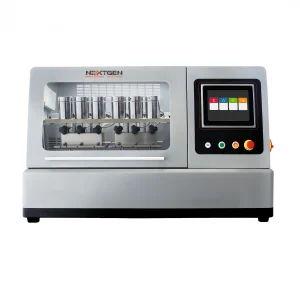
GB/T 1634 testing is typically performed on a dedicated HDT/DTUL (deflection temperature under load) tester that provides controlled heating and a multi-station three-point bending fixture with a defined loading system and deflection measurement.
Common equipment: HDT/DTUL test frame(s), three-point bending supports and loading noses, calibrated loading weights or force application system (per the cited part), temperature-controlled heating bath or chamber, specimen deflection measurement (dial indicator or displacement sensor), temperature measurement and controller, and specimen measurement tools.
Common options that affect quoting: Number of test stations, maximum temperature capability, heating medium (oil bath vs. other approaches), automated temperature ramp/control, deflection measurement resolution, and fixtures sized for your specimen dimensions.
If you are comparing station count, temperature range, or automation level for an HDT/DTUL system, you can request a detailed quote matched to your throughput and reporting needs.
How to Read This Designation or Revision
GB/T indicates a recommended (non-mandatory) Chinese national standard. 1634 is the standard number for the temperature of deflection under load method family, and the series is published in parts.
In specifications and purchase orders, GB/T 1634 is often cited as GB/T 1634.X-YYYY (part number and year/edition). For equipment selection and test setup, the part number and year matter—especially when you must match customer or regulatory documentation.
Revision sensitivity: Always match your test setup, fixtures, and reporting format to the exact part and year cited in your requirement.
Related Standards, Methods, or Frameworks
GB/T 1634 is aligned with the ISO 75 series for temperature of deflection under load, and it is commonly used alongside plastics conditioning and specimen preparation practices referenced in plastics test programs.
Often referenced alongside: ISO 75 (corresponding international method family) and plastics conditioning standards used to define pre-test atmosphere and conditioning time (when required by the cited part and your internal procedure).
Get help selecting an HDT/DTUL setup for GB/T 1634
When you share the exact GB/T 1634 part and year cited in your requirement (plus specimen thickness range and target temperature range), it becomes much easier to size the bath/chamber, fixtures, and station count for your lab. To discuss a configuration for your workflow, contact our team.