ISO 306 is an ISO test method used to determine the Vicat softening temperature (VST) of thermoplastic materials under a specified load and heating rate.
It is commonly used for material comparison, incoming material checks, and product qualification when a quick, repeatable thermal softening indicator is needed. If you need help selecting the right method variant or matching your requirement to the correct edition, you can talk with our team.
ISO 306: Plastics — Thermoplastic materials — Determination of Vicat softening temperature (VST)
ISO 306 defines standardized laboratory approaches for determining the Vicat softening temperature of thermoplastics using defined loading and controlled heating conditions.
The reported VST value is typically used as a comparative thermal-softening indicator for thermoplastic formulations, grades, and production lots, rather than a direct prediction of long-term service temperature.
Quick Definition
What it is: A thermoplastic softening test that determines the temperature at which a standard indenter reaches a specified penetration under a specified load while the specimen is heated at a controlled rate.
What you get: A Vicat softening temperature (VST) result for a defined method condition (load and heating rate).
Common outcome: A comparable thermal “softening” benchmark used in material datasheets, QC checks, and qualification documents.
What This Standard Covers
ISO 306 specifies multiple method conditions for determining VST of thermoplastic materials, based on defined combinations of applied force and heating rate.
Method variants: The standard identifies method conditions commonly cited as A50, B50, A120, and B120 (indicating different load and heating-rate combinations). Labs should run the exact variant specified by the customer, drawing, datasheet requirement, or internal specification.
Why This Standard Matters in Testing
Vicat softening temperature is widely used as a fast, practical comparison point across thermoplastic grades—especially when evaluating formulation changes, supplier changes, or process shifts that may influence softening behavior.
Because results depend on the method condition selected (including load and heating rate), clear designation control is important for meaningful comparisons and for aligning results with purchasing or design requirements.
Common Materials, Product Types, or Applications Covered
ISO 306 is applicable to thermoplastic materials and is commonly applied to materials supplied as molded plaques, molded parts, or machined specimens when a controlled VST comparison is required.
Common users: Resin producers, compounders, injection molders, extruders, and QA/QC teams supporting material release, lot comparison, and customer reporting.
Common Test or Verification Workflow
A typical ISO 306 workflow includes preparing suitable test pieces, placing the specimen in a Vicat test station, applying the specified force through the indenter, heating at the required rate, and recording the temperature associated with the required penetration criterion for the chosen method condition.
Specification control: Many organizations treat ISO 306 as a method referenced inside a broader internal or customer specification. In those cases, the controlling document usually defines the specific method condition (A50/B50/A120/B120), any conditioning requirements, and reporting expectations.
Equipment Commonly Used for This Standard
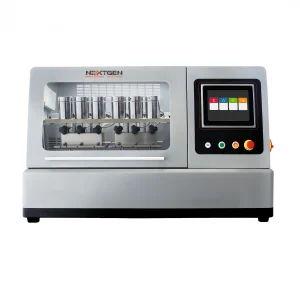
ISO 306 is most often run on a dedicated Vicat softening temperature tester (often combined as an HDT/Vicat system) that can control the heating rate, apply the required load, and measure indenter penetration while recording temperature.
Common equipment elements: Temperature-controlled heating chamber or bath (as provided by the instrument design), calibrated temperature measurement, standardized indenter, defined loading mechanism, specimen supports, and displacement/penetration measurement with appropriate data capture.
If you are comparing multi-station throughput, temperature range, or control/reporting options for an ISO 306 setup, you can request a detailed quote for a configuration aligned with your lab’s method condition and sample volume.
How to Read This Designation or Revision
Typical citation: ISO 306:2022.
Why the year matters: ISO standards are commonly referenced by edition year. For procurement documents, test plans, or customer reporting, the cited year/edition should match the requirement to avoid method-condition or reporting mismatches.
Method condition matters: Results should be reported with the specific method condition (for example, A50 vs B120) because the load and heating rate affect the reported VST value.
Related Standards, Methods, or Frameworks
ASTM D1525: Commonly referenced alongside ISO 306 for Vicat softening temperature of plastics. When a customer cites “Vicat,” confirm whether the requirement is ISO 306, ASTM D1525, or a product specification that references one of them.
HDT methods: In plastics testing programs, Vicat softening and heat deflection temperature (HDT) are often paired in qualification or datasheet reporting, but they are distinct tests with different loading and measurement principles.
Talk to a Test Equipment Specialist
Need an ISO 306-capable Vicat (or HDT/Vicat) system, or support matching the correct method condition to your customer requirement? Share your material type, target temperature range, and throughput goals, and ask for a quote on an equipment package built around your workflow.