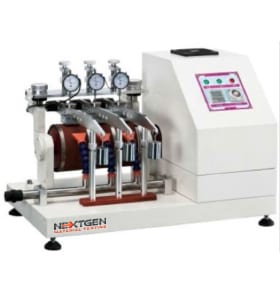
ASTM D1630 is a standard test method used to evaluate abrasion resistance for vulcanized rubber and similar rubber materials commonly used in footwear soles and heels.
This method is frequently used for material comparisons, incoming QA checks, and compound development when a lab needs a controlled, repeatable abrasion benchmark using a footwear abrader-style instrument. If you need help determining whether D1630 is appropriate for your compound type or product thickness, talk with our team.
ASTM D1630 Standard Test Method for Rubber Property—Abrasion Resistance (Footwear Abrader)
ASTM D1630 describes a laboratory abrasion test using a footwear abrader to generate a comparative abrasion result for footwear rubber compounds.
The standard is commonly referenced for rubber outsole and heel materials where abrasion resistance is a key performance requirement, while still recognizing that lab abrasion results may not directly predict real-world wear in every case.
Quick Definition
Document type: Test method.
Property measured: Abrasion resistance (comparative result from a footwear abrader setup).
Typical use: Comparing rubber compounds used for soles and heels under standardized abrasion conditions.
What This Standard Covers
ASTM D1630 covers determination of abrasion resistance for vulcanized rubber (and other rubber materials that are similar to the standard reference compound) used for the soles and heels of footwear.
Thickness limitation: The method is not recommended for materials thinner than 2.5 mm (0.1 in.).
Units: SI units are the standard (with inch-pound values typically shown in parentheses for reference).
Why This Standard Matters in Testing
Footwear abrasion performance is often a key acceptance criterion for outsole and heel compounds. ASTM D1630 provides a controlled way to screen materials and compare formulations using consistent abrader conditions.
Practical caution: D1630 is a predictive comparison test, and results may not correlate directly to in-service wear for every material type. The standard also cautions against using the method as a general abrasion measure for compositions that differ markedly from the standard reference compound (as misleading comparisons can occur for some polymers).
Common Materials, Product Types, or Applications Covered
ASTM D1630 is most commonly applied to:
- Vulcanized rubber outsole compounds
- Heel rubber compounds
- Footwear components where abrasion exposure is a functional requirement (for example, high-wear tread regions)
It may also be used for other rubber-like materials when the intent is comparative screening under D1630 conditions and the material behavior is appropriate for comparison to the standard reference compound concept used by the method.
Common Test or Verification Workflow
ASTM D1630 is often used as part of a footwear materials qualification or compound development workflow where abrasion is one of several required physical-property checks.
Common workflow: Prepare test specimens (often cut from molded sheets or product), run the footwear abrader procedure, and report abrasion performance as a comparative result (commonly expressed as a relative index versus a reference compound tested under the same conditions).
Common decision points: Pass/fail against an internal spec, ranking of candidate compounds, or lot-to-lot monitoring for production materials.
Equipment Commonly Used for This Standard
ASTM D1630 is equipment-specific in the sense that it is built around a footwear abrader (often referred to in industry as an NBS-style footwear abrader setup) and controlled abrasive media.
Common equipment families: Footwear abrader / NBS abrasion tester, specimen cutting dies and a die press for repeatable specimen preparation, thickness preparation tools (as needed to meet the method’s suitability limits), and basic lab measurement tools for mass and dimensional checks when required by the lab’s reporting practice.
If you are matching an abrader, consumables, and specimen preparation tools to your throughput and sample type, you can request a detailed quote for a configuration aligned to your lab workflow.
How to Read This Designation or Revision
ASTM standards are cited by the base designation plus a suffix that identifies the publication year of that edition (for example, D1630-16).
You may also see a reapproval year shown in parentheses (for example, ASTM D1630-16(2021)) or a shorthand that indicates reapproval (for example, “R21”). When quoting equipment, writing procedures, or comparing historical results, it is good practice to match the exact cited edition because details such as reporting, reference material expectations, and procedural notes can change between versions.
Need help selecting an ASTM D1630 test setup?
If you’re planning abrasion testing for footwear compounds and want to align the abrader configuration and specimen preparation path to the way D1630 is typically run in production and R&D labs, contact our team to discuss your samples, throughput, and reporting needs.