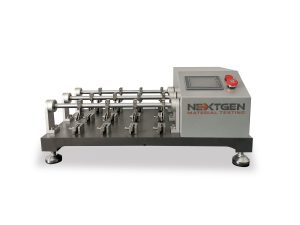
AS/NZS 2210.2 Section 6.6.2.8 is a clause within the occupational protective footwear test-methods standard that defines the required pre-flexing apparatus used when preparing upper-material specimens for the water vapour permeability (WVP) test setup.
This clause is most relevant when you are equipping or auditing a footwear lab for comfort-related evaluations (breathability) where the standard expects a controlled, repeatable flexing action prior to cutting the final circular test piece. If you need help matching the clause to your edition or test scope, talk with our team.
AS/NZS 2210.2 Section 6.6.2.8 — Pre-flexing apparatus (for the WVP method)
Section 6.6.2.8 sits inside the WVP method’s “apparatus” requirements. Rather than being a standalone test method, it describes a specific piece of equipment used to pre-flex a folded specimen in a defined motion before the final test piece is taken.
Quick definition
What it is: A dedicated pre-flexing machine with an upper reciprocating clamp and a fixed lower clamp, designed to flex a folded test sample through a specified angle at a controlled cycling rate.
What it’s used for: Conditioning/pre-flexing an upper-material sample prior to cutting the circular specimen used in the water vapour permeability procedure.
What this standard section covers
This clause focuses on the mechanical configuration and motion of the pre-flexing apparatus used in the WVP method, including the clamp arrangement, the flexing motion, and the need to record cycle count.
Key elements addressed: Upper clamp design intent (secure, repeatable folding position), a fixed lower clamp aligned to the upper clamp, controlled oscillation through a defined angle, cycling rate, and a means to count cycles.
Why this section matters in testing
For WVP testing, results can be sensitive to specimen history and surface condition. A standardized pre-flexing step helps make specimen preparation more consistent across materials (leather, coated textiles, synthetic uppers), improving comparability between lots, suppliers, and product designs.
From an equipment standpoint, this clause is often the difference between using an improvised flexing approach and using a purpose-built fixture that can reproduce the same flex geometry and cycle count run after run.
Common materials, product types, or applications covered
This apparatus requirement commonly comes up when evaluating upper materials used in occupational and safety footwear where breathability/comfort performance is being assessed alongside protective requirements.
Common specimen types: Leather uppers, synthetic leather, coated fabrics, laminated textiles, and other flexible upper constructions intended for workplace footwear.
Common test or verification workflow
Section 6.6.2.8 supports a preparation workflow inside the WVP test method rather than a complete test by itself.
Typical workflow impact: Cut an upper-material sample → mount it in the pre-flexing clamps in the required folded configuration → run a defined number of flex cycles while recording count → remove the sample and cut the circular test piece from the specified region → proceed to the WVP jar/desiccant procedure defined in the main method.
Equipment commonly used for this section
The equipment implied by Section 6.6.2.8 is a pre-flexing apparatus (often referred to in labs as a Bally-type flexing unit or pre-flex fixture) with cycle counter and controlled motion.
Common equipment features to plan for:
- Reciprocating/oscillating upper clamp driven by a motor at a controlled cycling rate
- Fixed lower clamp aligned in the same plane as the upper clamp
- Defined flexing angle control and stable repeatability over long runs
- Cycle counter suitable for long cycle counts used in specimen preparation
If you are specifying equipment for a lab buildout (or replacing an older flexing unit), the important practical check is that the clamp geometry and motion range can be configured to match the clause requirements for your cited edition, and that the counter/control is suitable for the pre-flex cycle total used in your procedure.
If you are comparing flexing frames, fixtures, or control packages, you can request pricing for a configuration matched to the pre-flexing requirement and your expected specimen throughput.
How to read this designation or revision
Section numbering is edition-specific. “AS/NZS 2210.2 Section 6.6.2.8” points to a specific subclause inside the standard’s Clause 6.6 (water vapour permeability method). If you are working from a supplier specification, purchase order, or customer test plan, make sure the cited edition matches what your lab is using so the apparatus definition and pre-flex preparation details align.
Australia vs New Zealand use: In some programs, AS/NZS 2210.2 may be cited for New Zealand use while Australia may cite an AS-only edition. When a contract mixes references, treat clause numbering as a controlled requirement and align on one governing document before purchasing or qualifying equipment.
Related standards, methods, or frameworks when useful
This clause is part of the broader AS/NZS 2210 series used to specify and test occupational protective footwear. In practice, WVP testing is typically run alongside other upper-material and whole-footwear evaluations (mechanical durability, water resistance, and comfort-related properties) as required by the cited footwear specification or procurement requirement.
Get help selecting a compliant pre-flexing setup
If you need to align a pre-flexing unit, clamps, and cycle control to AS/NZS 2210.2 Section 6.6.2.8 (and the associated WVP method in your edition), contact our team with the exact standard edition and your material type so we can help you select a practical, test-ready configuration.