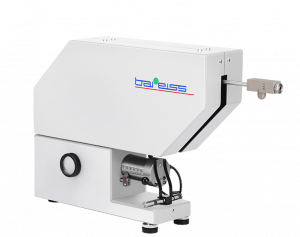
ASTM D1054 is a rubber resilience test method that uses a Goodyear‑Healey rebound pendulum to determine impact resilience and related penetration behavior.
This standard is commonly referenced when comparing elastomer formulations or verifying that incoming rubber materials meet a target “rebound” performance range. If you need help matching your product type and conditioning requirements to the correct setup, talk with our team.
ASTM D1054 — Test Method for Rubber Property—Resilience Using a Goodyear‑Healey Rebound Pendulum
ASTM D1054 is a test method focused on pendulum rebound behavior of rubber and rubber-like materials. It is typically used as a comparative QC/R&D tool to track resilience changes due to formulation, cure state, and material structure.
The standard is instrument-specific: results are generated using a Goodyear‑Healey style rebound pendulum, so equipment condition and verification practices are important for meaningful comparisons.
Quick Definition
Measures impact resilience of rubber using a Goodyear‑Healey rebound pendulum, and also addresses penetration behavior associated with the pendulum impact.
What This Standard Covers
ASTM D1054 covers determination of impact resilience and penetration of rubber using the rebound pendulum approach.
Within the method’s scope, “rubber” is used broadly and includes thermoplastic elastomers, vulcanized (thermoset) rubber, elastomeric materials, and cellular materials.
Why This Standard Matters in Testing
Rebound resilience is often treated as a practical proxy for “liveliness” or energy return in elastomers. Labs use it to compare batches, monitor process/cure consistency, or screen material options when a fast, instrument-based resilience metric is needed.
Because this is a dynamic impact-style measurement, results can be sensitive to specimen condition, temperature, and the specific pendulum instrument condition. When D1054 is called out on a purchase spec, the edition cited and the exact instrument configuration can matter.
Common Materials, Product Types, or Applications Covered
ASTM D1054 is commonly applied to elastomer materials and products where rebound behavior is a useful comparator, including:
- Vulcanized rubber compounds and molded rubber parts
- Thermoplastic elastomers (TPEs)
- Cellular or foam-like elastomeric materials (when permitted by the specified material category and buyer requirement)
- Incoming material checks and formulation benchmarking in rubber processing
Common Test or Verification Workflow
Most labs use ASTM D1054 as a controlled, repeatable comparison method rather than a full “design allowables” characterization.
Common workflow: prepare and condition specimens as required by the controlling test plan, verify instrument condition, run rebound pendulum impacts, and report resilience (and any specified penetration-related observations/results) in the format required by the purchase specification or internal SOP.
Equipment Commonly Used for This Standard
ASTM D1054 is directly tied to a Goodyear‑Healey rebound pendulum setup. Typical lab needs include the pendulum instrument itself plus supporting tools that keep the measurement repeatable.
Common equipment: Goodyear‑Healey rebound pendulum (resilience tester), specimen support/anvil components supplied with the instrument, basic dimensional measurement tools for specimen checks, and environmental conditioning capability when the controlling requirement specifies a test temperature.
If you are comparing pendulum options, verification accessories, or conditioning add-ons for a D1054 workflow, you can request a detailed quote for a configuration matched to your throughput and reporting needs.
How to Read This Designation or Revision
“ASTM D1054” is the base designation. The suffix (for example, “D1054‑02”) identifies the year of a specific edition.
Because resilience methods can be sensitive to instrument details and reporting format, it is good practice to match the edition stated on your customer or internal requirement (or document the edition used in your report when no edition is specified).
Related Standards, Methods, or Frameworks when useful
Rebound resilience is only one way to compare elastomer performance. Depending on what your specification is trying to control, buyers sometimes pair resilience with hardness, tensile, tear, compression set, or dynamic mechanical style measurements.
If your requirement references ASTM D1054 but the product spec also includes other rubber test methods, align specimen conditioning and lot definition across the full test plan to avoid conflicting acceptance decisions.
Talk with us about ASTM D1054 testing setup
If you need help selecting a rebound pendulum system, clarifying what to document in a D1054 report, or aligning equipment verification to a customer callout, contact our team.