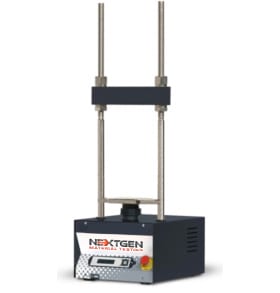
ASTM D1559 is a withdrawn ASTM test method that was used with the Marshall apparatus to evaluate the resistance to plastic flow of compacted bituminous (asphalt) paving mixtures. It is commonly associated with “Marshall stability and flow” style testing used in asphalt mixture design and quality control.
Because ASTM D1559 was withdrawn in 1998 (with no direct ASTM replacement listed on the ASTM record), buyers and labs should confirm what a project specification is truly asking for (for example, an updated Marshall method or agency-specific equivalent). If you need help mapping a cited requirement to today’s equipment and method options, talk with our team.
Test Method for Resistance of Plastic Flow of Bituminous Mixtures Using Marshall Apparatus (ASTM D1559-89, Withdrawn)
ASTM D1559 is a historical (withdrawn) test method that describes a Marshall-apparatus approach for loading a compacted asphalt mixture specimen and capturing results used to compare mixture “strength/stability” and deformation behavior under the specified loading conditions.
Even when D1559 is cited in older documents, many organizations now reference newer ASTM Marshall standards for specimen preparation and stability/flow testing. The key for equipment selection is understanding which current method (and specimen size, instrumentation, and conditioning requirements) the purchaser is expected to follow.
Quick Definition
ASTM D1559 (Withdrawn) is a Marshall-apparatus test method historically used to assess the resistance to plastic flow of compacted bituminous paving mixtures by applying a compressive load through a Marshall breaking head and observing peak load and deformation behavior.
What This Standard Covers
This withdrawn method is centered on testing compacted cylindrical asphalt/bituminous mixture specimens with the Marshall apparatus. In practical terms, it was used to generate performance-like numbers for mixture comparison and for Marshall-type mix design and control programs.
Because ASTM D1559 is not active, the applicable scope, specimen geometry, conditioning steps, and calculation/reporting requirements should be taken from the exact edition cited in the contract documents (or from the updated standard the spec owner intends to use today).
Why This Standard Matters in Testing
Marshall-apparatus testing is widely recognized in asphalt mixture work because it provides a repeatable, equipment-based way to compare mixtures and monitor consistency. When a legacy specification cites ASTM D1559, it often indicates the project expects Marshall-style stability/flow-type results and the associated specimen preparation and conditioning workflow.
For laboratories and production facilities, the biggest risk is edition or method mismatch: “Marshall testing” can differ by agency, specimen size, compaction approach, and whether measurements are taken with traditional gauges or automated load/deformation acquisition.
Common Materials, Product Types, or Applications Covered
This method is associated with compacted asphalt (bituminous) paving mixtures used in roadway and airfield pavement construction and similar hot-mix asphalt applications where Marshall mix design or Marshall-style acceptance/control testing is specified.
It is typically encountered in older project specifications, legacy agency test manuals, and historical mix design documentation.
Common Test or Verification Workflow
Most Marshall-apparatus workflows based on the D1559 approach include preparing compacted cylindrical specimens, conditioning them as required by the procedure, loading the specimen in a Marshall breaking head at the specified loading condition, and recording the peak resistance and the deformation response used for “flow”-type reporting.
Common outputs (program-dependent): Peak load (stability-style value), deformation at/near peak (flow-style value), and frequently companion volumetric properties when the Marshall method is used for mix design.
Equipment Commonly Used for This Standard
ASTM D1559 points to the Marshall apparatus ecosystem. Depending on whether you are only testing supplied specimens or performing full specimen preparation and mix design work, a typical equipment path includes the items below.
- Marshall stability testing machine / loading frame with a suitable force measurement system (traditional load ring/dial approach or load cell-based measurement, depending on the procedure used).
- Marshall breaking head sized for the specimen geometry required by the referenced method.
- Deformation measurement (flow meter/dial gauge or displacement transducer such as an LVDT for automated systems).
- Specimen preparation tooling when required (molds, base plates/collars, compaction hammer or compaction system referenced by the governing method).
- Conditioning equipment commonly used in Marshall workflows (temperature-controlled water bath and/or oven) to meet the method’s conditioning requirements.
- General lab metrology (balance and dimensional measurement tools) used for specimen checks and companion calculations when part of the program.
Equipment selection caution: Match the system to the exact method being enforced (legacy D1559 language vs an updated ASTM Marshall method), including specimen size, measurement approach (manual vs automated), and any required temperature conditioning.
How to Read This Designation or Revision
ASTM D1559-89: The “-89” indicates the year of the edition shown on the ASTM record (1989).
Withdrawn 1998: ASTM lists D1559 as withdrawn in 1998 and indicates no replacement on the ASTM record. When D1559 is cited, it is good practice to clarify whether the purchaser intends a current ASTM Marshall standard (or an agency standard) and which specimen size and instrumentation are required.
Related Standards, Methods, or Frameworks
When ASTM D1559 is encountered in specifications, current ASTM Marshall references are often used to define the active, detailed procedures for specimen preparation and Marshall stability/flow testing.
Common current ASTM Marshall references include: ASTM D6927 (Marshall Stability and Flow of Asphalt Mixtures), ASTM D6926 (Preparation of Asphalt Mixture Specimens Using Marshall Apparatus), and ASTM D5581 (Marshall apparatus testing using 6 in. diameter specimens).
Get Help Selecting a Marshall Testing Setup
If you are equipping a lab for Marshall-style testing and need to match a quote to the method your customer will enforce (legacy D1559 wording versus current ASTM Marshall standards, specimen size, and manual vs automated measurement), you can request a detailed quote for a configuration that fits your workflow.