ASTM D3877 describes laboratory test methods used to evaluate one-dimensional expansion, shrinkage, and uplift pressure behavior of compacted soil–lime mixtures under controlled loading and moisture conditions.
It is commonly used in geotechnical and pavement-related work to support lime treatment decisions for expansive or moisture-sensitive soils and to compare performance at different lime contents. If you need help mapping this standard to your lab setup and sample-prep workflow, talk with our team.
ASTM D3877-96 — Standard Test Methods for One-Dimensional Expansion, Shrinkage, and Uplift Pressure of Soil-Lime Mixtures
ASTM D3877 is a geotechnical laboratory standard focused on volume-change behavior of compacted soil–lime mixtures when moisture increases or decreases under one-dimensional restraint and applied surcharge loads.
These methods are typically applied during mix design and verification for lime stabilization where controlling swell/shrink is a key performance objective.
Quick definition
Document type: Standard test methods.
What it measures: One-dimensional expansion, shrinkage, and uplift pressure response of compacted soil–lime mixtures as moisture conditions change under defined loading.
Typical use: Comparing candidate lime contents and assessing how moisture-driven volume change may be reduced by lime treatment.
What this standard covers
ASTM D3877 provides procedures for laboratory testing intended to quantify how compacted soil–lime mixtures change in height (swell or shrink) in a one-dimensional condition while subject to controlled loads and moisture change.
In addition to the magnitude of expansion/shrinkage, the methods are commonly used to evaluate the rate of volume change and the uplift pressure that can develop as moisture increases. The scope also allows permeability to be determined under various load conditions when needed.
Why this standard matters in testing
Moisture-driven volume change is a major driver of distress in slabs-on-grade, lightly loaded pavements, and earthwork systems built on expansive or moisture-sensitive soils. ASTM D3877 provides a standardized way to generate comparative, decision-support data in the lab before field construction.
For many projects, the goal is not only to document swell/shrink behavior, but to support selection of a lime treatment level that reduces problematic volume change under anticipated moisture and loading conditions.
Common materials, product types, or applications covered
ASTM D3877 is used with compacted soil–lime mixtures prepared for laboratory evaluation.
Common applications: Lime-treated subgrades, lime modification/stabilization studies for expansive soils, pavement and building subgrade evaluation, and lab comparison of candidate lime contents for volume-change control.
Common test or verification workflow
In practice, ASTM D3877 is most often run as part of a geotechnical mix-design or confirmation program where multiple formulations are compared.
Common workflows: (1) prepare and compact soil–lime specimens at defined conditions, (2) apply one-dimensional restraint and selected surcharge loads, (3) drive moisture increase/decrease as required by the method, (4) record deformation versus time and loading, and (5) report expansion/shrinkage behavior and uplift pressure response for comparison across lime contents.
Equipment commonly used for this standard
ASTM D3877 is equipment-oriented in the sense that it requires controlled one-dimensional loading and accurate deformation measurement while moisture conditions are changed. Exact configuration details depend on the edition cited and the specific test(s) being run under the standard.
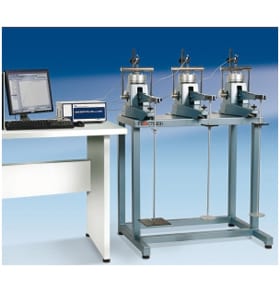
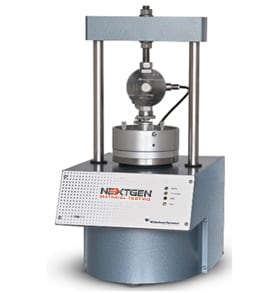
Common equipment: Oedometer/consolidation-style load frames or equivalent one-dimensional loading apparatus, specimen rings/cells, deadweight or lever-arm loading components (or other controlled loading approach), displacement measurement (dial indicators or electronic displacement transducers), moisture conditioning hardware (soaking/reservoir components as applicable), and basic specimen preparation equipment for compacted soil–lime samples (molds/compaction tools, balances, moisture determination tools).
If you are selecting a one-dimensional loading frame, displacement package, and cells for soil–lime volume-change testing, you can request a detailed quote with options matched to your load range, specimen size, and data-collection needs.
How to read this designation or revision
Base designation: ASTM D3877 identifies the standard test methods for one-dimensional expansion, shrinkage, and uplift pressure of soil–lime mixtures.
Year suffix: A designation such as “D3877-96” indicates the year associated with that version of the standard. Project specifications may require a particular edition, so quotes, procedures, and reporting should be aligned to the exact cited year/version.
Status note: ASTM may list some standards as historical; when a historical edition is specified, make sure the required version is clearly identified in the contract documents and test plan.
Related standards, methods, or frameworks (when useful)
ASTM D3877 is often used alongside broader geotechnical investigation and soil treatment programs where compaction conditions, moisture conditioning, and performance targets are defined by project specifications.
Because supporting standards vary widely by agency and application, the safest approach is to confirm the exact companion references listed in the project specifications and the referenced documents within the cited edition of ASTM D3877.
Need equipment or lab setup guidance for ASTM D3877?
For help selecting a one-dimensional loading apparatus, deformation measurement, and specimen cells that align with your cited ASTM D3877 edition and reporting requirements, request pricing and configuration options.