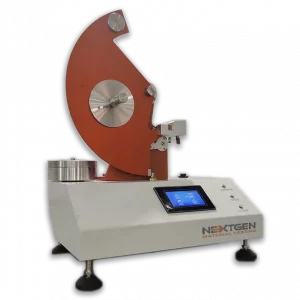
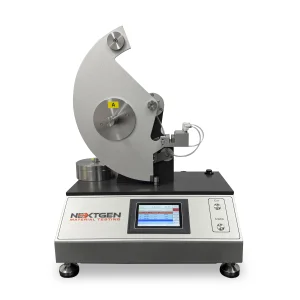
ASTM D5734 is a standard test method for measuring the average force required to propagate a tear in a nonwoven fabric using a falling-pendulum (Elmendorf) tearing tester. It is commonly used to compare tear resistance between materials, processes, or lots where a controlled tear-propagation value is required.
This designation has been listed by ASTM as withdrawn (with the last published historical version commonly cited as D5734-95(2001)). If you are working from a purchase specification, customer drawing, or regulatory file that still references D5734, it is important to confirm what edition (and what replacement method, if any) is acceptable for your program—contact our team for help scoping the right approach for your lab.
ASTM D5734 — Standard Test Method for Tearing Strength of Nonwoven Fabrics by Falling-Pendulum (Elmendorf) Apparatus
ASTM D5734 describes an Elmendorf (falling-pendulum) approach to tear testing for nonwoven fabrics. The reported result is based on the force required to continue (propagate) a tear that starts from a pre-cut slit.
This method is typically selected when users want a fast, repeatable tear-propagation metric for nonwovens and when the Elmendorf instrument type is already established in internal procedures or legacy specifications.
Quick Definition
Document type: Test method (tear propagation by falling-pendulum / Elmendorf apparatus).
Property: Average force required to propagate a single-rip tear from a cut in a nonwoven fabric.
Primary equipment family: Elmendorf (falling-pendulum) tear tester with appropriate pendulum capacity.
What This Standard Covers
ASTM D5734 covers measurement of the average force required to propagate a single-rip tear in a nonwoven fabric using a falling-pendulum (Elmendorf) apparatus.
The scope is intended for most nonwoven fabrics, including treated and untreated materials (for example, heavily sized, coated, or resin-treated) as long as the material tears in the expected direction under the applied test action. Materials that do not tear in the direction of the applied force may be considered “untearable” by this specific method for that direction.
Why This Standard Matters in Testing
Elmendorf-style tear results are widely used as a practical durability indicator for nonwovens that may be snagged, nicked, or initiated by a small cut during manufacturing or end use. The result is often used for lot release, supplier comparison, and process change validation where tear propagation resistance is a key performance attribute.
Because instrument capacity and pendulum selection can materially affect whether results fall in a usable measurement range, tear testing is also a “fit-for-purpose” decision that ties directly to equipment configuration.
Common Materials, Product Types, or Applications Covered
ASTM D5734 is associated with nonwoven fabrics across many product categories where tear resistance is part of performance characterization.
Common examples include: Wipes and wipers, medical and hygiene nonwovens, filtration and media nonwovens, protective and industrial nonwoven sheet goods, coated or resin-treated nonwovens, and other roll-goods where tear propagation resistance is specified.
Common Test or Verification Workflow
Most labs implement this method as a straightforward bench test built around consistent specimen preparation and instrument setup.
Typical workflow elements: Condition specimens as required by the controlling procedure, prepare test pieces in defined directions (often machine direction and cross direction), introduce a controlled starter cut/slit, clamp the specimen in the Elmendorf tester, release the pendulum to propagate the tear, and calculate an average tear force from multiple specimens.
Reporting focus: Average tear force for each tested direction, along with enough setup detail (instrument type/capacity and specimen direction) to make results comparable between labs and over time.
Equipment Commonly Used for This Standard
ASTM D5734 points primarily to a falling-pendulum (Elmendorf) tear tester configured for nonwoven fabrics.
Common equipment: Elmendorf tear tester with interchangeable pendulums (and/or a high-capacity configuration where higher tear forces are expected), specimen cutting tools/templates for consistent sizing, a controlled slit/cut tool, and basic lab conditioning capability for textiles/nonwovens when required by the broader test plan.
Capacity considerations: This method is commonly associated with Elmendorf systems covering tear strengths up to about 6400 grams-force using interchangeable pendulums, with high-capacity options available for higher-force materials.
If you are selecting a tester or comparing pendulum ranges for your expected tear-force window, you can request a detailed quote for an Elmendorf configuration matched to your material range and throughput.
How to Read This Designation or Revision
ASTM designations commonly include a year date after the standard number (for example, “-95”), which indicates the year of original adoption or the most recent revision for that edition. A year in parentheses (for example, “(2001)”) indicates a reapproval year when applicable.
ASTM identifies D5734-95(2001) as withdrawn (withdrawal shown as 2008 in ASTM committee listings). For procurement documents or test plans that cite D5734 without a year date, align the requirement to the exact referenced edition and clarify whether a current replacement method is permitted.
Related Standards, Methods, or Frameworks
Nonwoven tear testing may also be specified using other historical ASTM nonwoven tear procedures (for example, alternative tear geometries or instrument types). Where a legacy document references multiple nonwoven tear methods, confirm that the cited standard(s) are still active and that results are comparable across methods before substituting test procedures.
Talk with a testing specialist
If you need help interpreting a legacy ASTM D5734 callout, aligning the cited edition, or selecting an Elmendorf system with the right capacity range for your nonwoven product, talk with our team and we’ll help you map the requirement to an equipment and workflow plan.