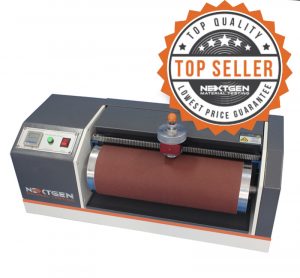
ASTM D5963 is a rubber abrasion-resistance test method that uses a rotary drum abrader to compare how different vulcanized rubbers and thermoplastic elastomers resist frictional/abrasive wear.
It is widely used for comparative screening, quality control, and specification compliance when product performance depends on controlled, repeatable wear measurements rather than a direct simulation of real service conditions. If you need help determining whether this method fits your rubber compound or product, talk with our team.
ASTM D5963 — Standard Test Method for Rubber Property—Abrasion Resistance (Rotary Drum Abrader)
ASTM D5963 defines a standardized rotary-drum abrasion approach for rubber materials where wear is reported as volume loss and/or as an abrasion resistance index.
Because abrasion in the field depends on many variables (surface, pressure, contamination, motion, temperature), this method is best treated as a controlled laboratory comparison tool for materials and compounds, not a direct predictor of service life.
Quick Definition
ASTM D5963 measures the abrasion resistance of rubber by running a prepared test piece against an abrasive sheet mounted on a rotating drum and then quantifying material loss.
Typical reported results: Volume loss and/or abrasion resistance index (as defined by the standard).
What This Standard Covers
This standard covers abrasion testing for rubbers subject to abrasive/frictional wear in service, including vulcanized thermoset rubbers and thermoplastic elastomers.
The test setup uses an abrasive sheet on a revolving drum and a controlled motion/force arrangement to generate repeatable wear so different materials can be compared under consistent lab conditions.
Why This Standard Matters in Testing
Abrasion is a key performance driver for many rubber products, but comparing compounds without a controlled method can lead to inconsistent, non-repeatable conclusions.
ASTM D5963 is commonly selected when teams need a practical, repeatable way to rank materials, support incoming/outgoing QC, or document conformance to a purchasing requirement that calls out a drum-type abrasion method.
Common Materials, Product Types, or Applications Covered
ASTM D5963 is commonly applied to rubber and elastomer materials used where sliding contact and grit/rough surfaces can drive wear.
Common examples: Tires, conveyor belts, power transmission belts, hoses, footwear, and floor-covering materials.
Common Test or Verification Workflow
Most labs use ASTM D5963 as a comparative method to track material changes (compound adjustments, supplier changes, cure changes) and to demonstrate repeatable abrasion performance at the material level.
Common workflow: Prepare test pieces from the rubber material (often from molded or cut samples), run the specified drum abrasion sequence, and report abrasion as volume loss and/or abrasion resistance index along with key test conditions required by the standard.
Equipment Commonly Used for This Standard
ASTM D5963 is primarily an equipment-driven method. Consistent results depend on a stable abrader setup, repeatable specimen preparation, and reliable measurement of the wear outcome.
Common equipment: Rotary drum abrader (with abrasive sheet mounting system and specimen holder/arm), standardized abrasive media as required by the method, specimen cutting tools or molds (as applicable), and a laboratory balance suitable for pre- and post-test measurements.
If you are comparing abrader configurations, specimen handling options, or abrasive-media workflows for your lab, you can request a detailed quote for an ASTM D5963-ready setup.
How to Read This Designation or Revision
Designation: “ASTM D5963” identifies the ASTM standard number for this rotary drum abrasion test method for rubber property evaluation.
Revision year: A suffix such as “-22” (for example, ASTM D5963-22) indicates the year of the referenced edition. Test conditions, reporting details, and acceptance language can vary by edition, so equipment setup and documentation should match the exact revision cited in your contract, drawing, or internal specification.
Related Standards, Methods, or Frameworks when useful
Rubber abrasion testing is also commonly specified using ISO rotary drum abrasion methods. When requirements reference both ASTM and ISO documents, it is important to confirm the exact method, conditioning, and reporting format being requested before running comparisons or quoting equipment.
Commonly cross-referenced document: ISO 4649 (rotating cylindrical drum abrasion for rubber).
Get Help with ASTM D5963 Testing and Equipment Selection
If you need to align a rotary drum abrader, specimen prep approach, and reporting outputs to the exact ASTM D5963 edition cited in your requirements, contact our team to discuss your material, throughput, and compliance needs.