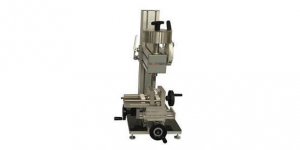
ASTM D7625-10 is a standard test method for determining the abrasiveness of rock using the CERCHAR Abrasiveness Index (CAI). It is commonly used to help estimate cutter wear and maintenance demands for mechanical excavation and tunneling equipment when rock abrasivity is a cost driver.
If you need help matching the cited edition to your project requirement (including withdrawn vs. active editions) or aligning sample preparation and reporting to your QA plan, you can talk with our team.
ASTM D7625-10 — Standard Test Method for Laboratory Determination of Abrasiveness of Rock Using the CERCHAR Method
This standard describes a laboratory procedure for measuring rock abrasiveness by scratching a prepared rock surface with a hardened steel stylus over a fixed distance, then evaluating stylus tip wear to determine a CAI value.
ASTM identifies ASTM D7625-10 as withdrawn (withdrawn year shown on the ASTM product page). Some projects and specifications still cite the 2010 edition, so it is important to follow the exact edition referenced in your contract documents.
Quick definition
What it is: A lab abrasivity test where a conical steel stylus is scratched across a fresh rock surface for a prescribed distance, and stylus wear is used to calculate the CERCHAR Abrasiveness Index (CAI).
What it’s used for: Comparing rock abrasiveness for mechanical excavation planning, including expected cutting tool wear (for example, disc cutters on tunnel boring machines).
What this standard covers
ASTM D7625-10 covers determination of rock abrasiveness by the CAI method using either a freshly broken rock surface or, when a suitable fresh surface cannot be obtained, a saw-cut surface. The test involves scratching the rock surface with a cone-shaped steel stylus of known Rockwell hardness over a prescribed 10 mm travel and measuring the resulting wear on the stylus tip.
The standard also recognizes that stylus Rockwell hardness can significantly affect results, and it emphasizes controlling and documenting stylus hardness for comparability.
Why this standard matters in testing
Rock abrasiveness is a practical, performance-driven property that strongly influences cutting tool wear, replacement frequency, downtime, and overall excavation cost. A standardized CAI workflow supports more consistent comparison of abrasiveness results across projects, rock types, and testing labs.
For equipment owners and project teams, CAI results are often used alongside other rock characterization data to reduce uncertainty in tool selection and anticipated consumable usage during excavation.
Common materials, product types, or applications covered
Common materials: Intact rock specimens where a representative fresh surface (broken) or saw-cut surface can be prepared for scratching.
Common applications: Tunneling and underground construction, mining, quarrying, and mechanical excavation projects where abrasive wear of cutting tools is a key design and cost consideration.
Common test or verification workflow
In typical use, the lab prepares an acceptable rock surface (freshly broken when feasible, or saw-cut where needed), then performs controlled scratches using a CERCHAR-style apparatus and a hardened conical stylus. After each scratch, the stylus tip wear is measured using an appropriate inspection method, and the CAI is calculated and reported.
Common workflow decisions that affect results: Surface condition (broken vs. saw-cut), stylus hardness, scratch travel control (10 mm), and how stylus wear is measured and documented.
Equipment commonly used for this standard
ASTM D7625-10 points to a specialized, fixture-based abrasivity setup rather than a universal testing machine. Most labs performing CAI work build the workflow around a CERCHAR abrasivity tester or equivalent apparatus designed to control stylus alignment, normal load, and scratch travel.
Common equipment elements: CERCHAR abrasivity tester (manual or semi-instrumented), hardened conical steel stylus/indenters with controlled Rockwell hardness, rock specimen holding/clamping hardware, and an optical inspection system (often a microscope or camera-based measurement package) for evaluating stylus tip wear.
If you are selecting a CAI tester configuration, indenter packs, and an inspection approach to fit your throughput and reporting needs, you can request a detailed quote for a system matched to your lab workflow.
How to read this designation or revision
Designation: “D7625” is the ASTM standard number.
Revision year: The “-10” suffix indicates the 2010 edition (the year associated with that version’s approval/publication cycle in ASTM’s designation format).
Status sensitivity: ASTM D7625-10 is listed by ASTM as withdrawn, and later versions of D7625 exist. When a project specification cites D7625-10 explicitly, test execution and reporting should follow that cited edition unless the contract documents allow substitution.
Related standards, methods, or frameworks
Practice D3740: Commonly referenced for minimum requirements for agencies engaged in testing and/or inspection of soil and rock (often cited as a general competency/quality framework).
Practice D6026: Commonly referenced for guidance on significant digits and rounding practices used in geotechnical reporting.
Talk with us about ASTM D7625-10 testing equipment
If you need a CERCHAR abrasivity (CAI) testing setup for rock—along with guidance on specimen fixturing, indenter/stylus options, and inspection packages—please request pricing and include the rock type(s), expected specimen dimensions, and the edition cited in your procedure.