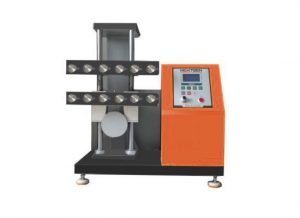
ASTM D813 is a rubber durability test method used to evaluate crack growth in vulcanized rubber under repeated bending or flexing. It is commonly applied when a material may resist crack initiation in flexing, yet still fail in service because small cuts or punctures grow rapidly during cyclic flexing.
If you need help determining whether ASTM D813 is the right flex-fatigue approach for your rubber compound or product, talk with our team about your application and the edition you are working to.
ASTM D813-07(2025) Standard Test Method for Rubber Deterioration—Crack Growth
ASTM D813 defines a laboratory procedure for assessing crack growth behavior using a pierced rubber specimen subjected to repeated bending or flexing. The result is used as an estimate of a vulcanizate’s resistance to crack growth under cyclic strain, with the understanding that laboratory rankings do not directly predict every service environment.
This method is often selected for synthetic rubber compounds that can appear strong in crack-initiation style flex tests, yet are vulnerable to cut-growth once damage exists.
Quick Definition
In simple terms: A pierced vulcanized-rubber specimen is repeatedly flexed, and the growth of the crack from the pierced region is monitored to compare compounds or constructions.
What it helps answer: “If this rubber already has a small defect (puncture/cut), how well does it resist crack growth under repeated bending?”
What This Standard Covers
ASTM D813 covers the determination of crack growth in vulcanized rubber under repeated bending strain or flexing. The method uses an artificially pierced specimen to evaluate fatigue-cracking behavior where pre-existing damage can drive rapid crack extension.
Material focus: Vulcanized rubber (including many synthetic rubber compounds).
Damage focus: Crack growth from an intentionally introduced puncture in the flexing area.
Why This Standard Matters in Testing
Many real rubber components fail from damage growth rather than first-crack initiation. ASTM D813 is used to screen materials and compare formulations when service conditions involve repeated flexing and the possibility of small cuts, tears, or punctures.
It is also useful when a compound performs well in initiation-focused flex tests but still experiences cut-growth failures in the field.
Common Materials, Product Types, or Applications Covered
ASTM D813 is commonly associated with rubber compounds and rubber components that see cyclic bending or flexing in use, especially where incidental damage can occur.
- General evaluation of vulcanized rubber compound durability under repeated flexing
- Applications where small defects can propagate under cyclic strain (cut-growth sensitivity)
- Comparative material screening for fatigue-crack-growth resistance
Common Test or Verification Workflow
Exact specimen geometry, piercing details, flexing conditions, and reporting requirements depend on the cited edition of ASTM D813. In most lab workflows, the standard is used for comparative evaluation across candidate compounds or process conditions.
Typical workflow: Prepare vulcanized rubber specimens → pierce the defined flex area → repeatedly flex/bend the specimen on a flexing machine for a defined program → track crack growth over time/cycles and report results per the standard.
Practical caution: Results are highly sensitive to how the puncture is introduced, the flexing amplitude/rate, and how crack growth is measured and recorded, so test setup should match the purchaser’s cited edition and reporting expectations.
Equipment Commonly Used for This Standard
ASTM D813 is typically run on a cyclic flexing system designed for rubber flex-fatigue and crack-growth evaluation. The equipment configuration should support repeatable flexing motion and consistent specimen handling across multiple stations when higher throughput is needed.
Common equipment families: De Mattia–type flex cracking / flexing-fatigue testers (or equivalent repeated-flexing machines), specimen molds/dies for consistent sample preparation, and a controlled piercing tool appropriate for the standard’s puncture requirement.
Common accessories: Cycle counters and controls for repeatable test programming, fixtures/clamps matched to the specimen type, and measurement tools for tracking crack growth during or after cycling (method depends on the lab’s procedure and the cited edition).
If you are selecting a flexing tester configuration (stations, controls, guarding, counting, and documentation needs), you can request a detailed quote matched to your ASTM D813 workflow.
How to Read This Designation or Revision
ASTM standards are commonly cited using the letter-number designation plus a year date. For example, ASTM D813-07(2025) indicates ASTM D813 with a 2007 year date, and a parenthetical year indicating a later reapproval.
Revision sensitivity: Conditioning, puncture details, flexing settings, and reporting expectations may vary by edition, so purchasing documents and test plans should reference the exact year designation used in your customer, internal, or regulatory requirement.
Related Standards, Methods, or Frameworks
ASTM D813 is commonly referenced alongside other rubber deterioration and fatigue standards when a lab needs both crack initiation and crack growth perspectives.
Often paired reference: ASTM D430 (Method B) is specifically referenced in the ASTM D813 scope in the context of compounds that resist crack initiation under flexing.
Get Help Choosing a Setup for ASTM D813
When you are aligning equipment and accessories to a customer-specified ASTM D813 edition (stations, controls, piercing approach, and documentation), we can help map the standard’s intent to a practical lab setup. To compare configurations and pricing, ask for a quote.