BS 1377-5:1990 is a British Standard covering laboratory methods used in geotechnical testing to evaluate how soils compress under load, how water flows through soils (with emphasis on sands), and how soils behave under durability-related mechanisms such as internal erosion and freezing conditions.
It is commonly used to support ground investigation programs, earthworks design, and construction verification where settlement risk, drainage behavior, or frost susceptibility affects the engineering decision. If you need help mapping your project requirement to the right apparatus and instrumentation, talk with our team.
BS 1377-5:1990 — Methods of test for soils for civil engineering purposes: Compressibility, permeability and durability tests
This document is part of the BS 1377 series for soils testing in civil engineering. It focuses on laboratory evaluation of consolidation (compressibility), permeability behavior, and selected durability-related soil responses that can affect performance in the field.
Because this standard is frequently cited alongside other parts of BS 1377 for classification, compaction, and general preparation requirements, the exact test plan and reporting package is usually defined by the project specification and the cited parts/clauses.
Quick Definition
Standard focus: Laboratory test methods to characterize soil consolidation behavior, permeability characteristics (including sands), and susceptibility to durability-related mechanisms such as internal erosion and frost heave.
Typical decisions supported: Settlement/compressibility assessment, drainage and seepage behavior checks, and screening for soil behaviors that can create instability or damage under water flow or freezing conditions.
What This Standard Covers
BS 1377-5:1990 describes methods used to determine consolidation characteristics when effective stress changes, permeability characteristics of sands, susceptibility of clays to internal erosion by water, and susceptibility of soils to heave in freezing conditions.
In practice, it is often used with other BS 1377 parts for referenced classification tests, compaction-related preparation where relevant, and the general requirements and specimen preparation framework that apply across the series.
Why This Standard Matters in Testing
Many soil risks are not captured by index classification alone. Consolidation and permeability characteristics influence settlement, construction staging, pore pressure dissipation, and seepage performance—directly affecting design assumptions, construction methods, and acceptance decisions.
Where frost action or dispersive behavior is a concern, durability-focused methods help teams avoid unexpected heave, erosion, or loss of stability that can show up after construction, particularly in water-retaining earthworks, embankments, and foundations exposed to seasonal temperature changes.
Common Materials, Product Types, or Applications Covered
BS 1377-5:1990 is used for natural soils and engineered fills assessed in geotechnical investigations and earthworks programs.
Common applications: Foundations and settlement assessment, embankments and cut/fill earthworks, drainage and seepage evaluations, and frost-susceptibility screening where freezing conditions may affect pavement subgrades, shallow foundations, or near-surface soils.
Common Test or Verification Workflow
Programs that cite BS 1377-5:1990 typically follow a workflow that links sampling and preparation requirements to one or more lab methods within the standard, then packages the results into design parameters or compliance reporting.
Common workflow: Select representative samples → prepare specimens per project requirement → run consolidation/compressibility testing and/or permeability testing as specified → perform durability-related checks where required (e.g., internal erosion/dispersibility or freezing behavior) → calculate and report results in the format required by the contract or design team.
Equipment Commonly Used for This Standard
The equipment package depends on which methods in BS 1377-5:1990 are invoked. Many labs configure a core consolidation/permeability setup and add accessories for temperature control, hydraulic head control, and deformation measurement as needed.
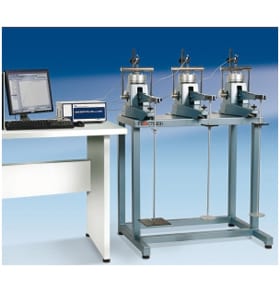
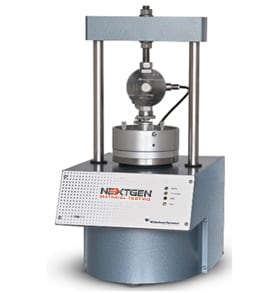
Common equipment families: Oedometer (consolidation) frames and cells, load application systems with displacement measurement, permeability apparatus suitable for constant-head testing (commonly used for sands), controlled water supply/head measurement components, and temperature-control equipment for freeze/thaw or frost-heave type evaluations when specified.
Common supporting equipment: Specimen trimming and preparation tools, balances, ovens/moisture conditioning tools, de-aired water/saturation accessories where applicable, and data acquisition or gauges appropriate for deformation and flow measurements.
If you are configuring a consolidation/permeability setup and need to align frame capacity, cell sizes, sensors, and head-control components to your lab throughput, you can request a detailed quote for a configuration matched to your test plan.
How to Read This Designation or Revision
Designation: BS 1377-5 refers to Part 5 within the BS 1377 series (Methods of test for soils for civil engineering purposes).
Date suffix: “:1990” identifies the publication year for this edition. Where project documents cite this standard, test requirements can be sensitive to the exact edition and any referenced clauses, so match the cited designation exactly in your quality documentation.
Related Standards, Methods, or Frameworks
BS 1377-5:1990 is commonly referenced alongside other BS 1377 parts for general requirements and specimen preparation, classification tests, and compaction-related methods where those steps affect the lab testing plan.
For newer specifications, projects may also reference ISO-based laboratory soil testing standards that supersede or partially replace methods historically cited under BS 1377-5, depending on the parameter and method being requested.
Talk with us about a BS 1377-5 test setup
If you need help selecting consolidation/permeability equipment, matching cell sizes to sample types, or aligning instrumentation and control options to the version of the method your project cites, contact our team and share your requirement.