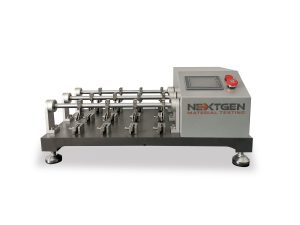
BS 3144 Clause 13 is a leather physical test method focused on flexing endurance for light leathers and their surface finishes. It is commonly referenced when a buyer or specification needs a repeatable way to compare how a leather upper material behaves under repeated bending.
If you need help matching a legacy “BS 3144 Clause 13” callout to a modern equivalent (or confirming what your customer means by “Part 13”), contact our team and share the exact wording from the purchase spec.
BS 3144 Clause 13 — Measurement of the flexing endurance of light leathers and their surface finishes
This clause is part of BS 3144, a British Standard covering sampling and physical testing of leather. Clause 13 addresses flexing endurance, which is often used to screen materials for cracking, finish failure, or visible damage caused by repeated bending.
In practice, this method is typically used for comparative evaluation (material-to-material, batch-to-batch, or supplier-to-supplier) and for checking that a leather and finish system can tolerate the expected flexing in service.
Quick definition
What it is: A flexing endurance method for light leathers and their surface finishes.
What it measures: Flex durability performance expressed through observed damage and/or endurance to a specified number of flex cycles (as required by the cited specification).
Common outcome: A pass/fail decision or a comparative ranking based on damage severity after flexing.
What This Standard Covers
BS 3144 Clause 13 covers repeated flexing of prepared test pieces to evaluate how light leather and its surface finish withstand bending. The emphasis is on flex-induced deterioration that can show up as cracking, splitting, delamination, or other visible surface/finish damage.
This clause is not a complete leather quality specification by itself; it is a specific method that is typically invoked by a material or product requirement (for example, a footwear upper requirement) that defines acceptance criteria.
Why This Standard Matters in Testing
Flexing endurance is a practical predictor of how a leather/finish system may behave in real wear conditions where repeated bending is unavoidable. For many finished leathers, the finish layer is the first to show defects, so flex testing is often used as an early indicator of durability risk.
Because “flex endurance” requirements can be highly application-dependent, equipment configuration and reporting expectations usually need to be aligned with the purchase specification (cycles, inspection criteria, and how damage is graded).
Common Materials, Product Types, or Applications Covered
Clause 13 is most commonly associated with light leathers used in products where repeated bending occurs during use.
- Footwear upper leather and finished upper materials
- Light garment leathers and fashion leathers
- Finished leathers where surface appearance is critical (coated, pigmented, or polished finishes)
Common Test or Verification Workflow
Flex testing to this clause is typically run as a controlled lab check against a customer or internal requirement.
Common workflow: Condition specimens as required → mount specimens in a flexing device → run for the required number of cycles → inspect specimens at defined intervals or at the end of the test → record damage observations and test conditions.
Practical reporting focus: Many purchase specs care as much about how damage is judged (what counts as a crack or failure) as they do about the cycle count itself, so it is important to align inspection criteria with the cited edition and any customer-specific wording.
Equipment Commonly Used for This Standard
BS 3144 Clause 13 is commonly associated with a Bally-type flexing endurance tester (often referred to as a Bally flexometer / flexing resistance tester) configured for light leather specimens.
- Bally-type flexing endurance tester with appropriate specimen clamps/grips
- Cycle counter and controls for repeatable test duration
- Conditioning environment and basic measuring/inspection tools for documenting damage
If you are matching a tester to a purchasing requirement (cycle capacity, number of stations, and how the specimen is clamped), you can request a detailed quote with the key details of your cited clause and acceptance criteria.
How to Read This Designation or Revision
In specifications and lab scopes, this method is often cited in several legacy formats, such as “BS 3144 Clause 13,” “BS 3144/13:1968,” or “BS 3144 (Part 13).” In these cases, the intent is the flexing endurance method contained within BS 3144.
Revision sensitivity: Because BS 3144 is a legacy reference that may be superseded by newer ISO/EN methods in many specifications, it is important to confirm the exact cited wording (including any year/date) and any customer-specific acceptance criteria before finalizing equipment setup and reporting.
Related Standards, Methods, or Frameworks
Flexing endurance requirements for leather and footwear materials are also commonly specified using ISO/EN or industry methods. When a purchase spec includes both an older BS reference and a newer ISO/EN reference, the acceptance criteria should be applied to the correct method.
Commonly encountered alternatives: ISO 5402-1, ISO 17694, and SATRA TM55 (flexing resistance / endurance methods used in footwear and leather applications).
Talk to us about clause-matched flex testing equipment
If you are upgrading from an older Bally-style unit, adding stations, or standardizing flex testing across sites, talk with our team about a configuration that fits your specimen type, throughput, and documentation needs.