BS 903-A26 is a British Standard test method for determining the hardness of vulcanized or thermoplastic rubber using the IRHD scale (International Rubber Hardness Degrees) in the 10 to 100 IRHD range.
If you need help matching an IRHD method (normal, micro, or curved-surface approaches) to your part geometry and thickness, contact our team to talk through setup and equipment options.
BS 903-A26:1995 — Physical testing of rubber — Method for determination of hardness (hardness between 10 IRHD and 100 IRHD)
This standard is used when rubber hardness needs to be stated in IRHD for specification, incoming inspection, process control, or product release of rubber components and molded parts.
It is a published British Standard edition that was later withdrawn, so purchasing and quality documentation should always cite the exact edition and designation being required.
Quick Definition
What it is: A hardness test method for rubber using IRHD, covering the 10–100 IRHD hardness range.
What it applies to: Vulcanized rubber and thermoplastic rubber materials where indentation-based hardness measurement is required.
What it outputs: A reported hardness value in IRHD (with the method and conditions tied to the cited procedure).
What This Standard Covers
BS 903-A26 specifies multiple procedural options (methods) for determining rubber hardness by indentation in IRHD units. These methods are used to handle different specimen sizes, thicknesses, and part geometries, including cases where a standard flat specimen is not available.
The standard is commonly referenced anywhere a rubber hardness requirement is written in IRHD (rather than Shore A/D), including product specifications, engineering drawings, and QA documentation for elastomer parts.
Why This Standard Matters in Testing
Hardness is one of the fastest ways to screen rubber compound consistency and detect batch-to-batch variation. In production environments, an IRHD hardness check often acts as a release gate alongside other property checks (for example, dimensional inspection and selected mechanical properties).
Because hardness readings are sensitive to method selection, sample support, and part geometry, the cited IRHD procedure can affect whether results are comparable across suppliers, plants, or inspection labs.
Common Materials, Product Types, or Applications Covered
BS 903-A26 is commonly used for elastomer products and components where hardness is part of acceptance criteria.
Common product types: Seals, gaskets, O-rings, molded rubber components, rubber linings, and general industrial elastomer parts.
Common material families: Vulcanized rubbers and thermoplastic rubbers/elastomers where IRHD reporting is specified.
Common Test or Verification Workflow
Hardness testing to BS 903-A26 is typically used as a controlled, repeatable indentation measurement with defined contact conditions and timing. The workflow often depends on whether testing is performed on a standard test piece versus a finished part.
Common workflows: Incoming material verification (compound or sheet), in-process checks (molded parts), final inspection of finished rubber components, and supplier qualification where hardness is part of a property set.
Practical caution: Curved surfaces, thin sections, and small parts can require a specific IRHD approach and careful fixturing to avoid support effects and misleading readings.
Equipment Commonly Used for This Standard
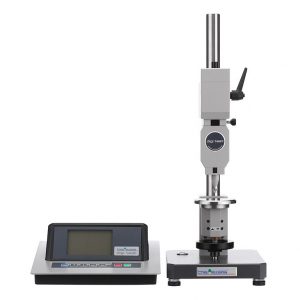
BS 903-A26 points to IRHD indentation hardness equipment rather than a universal testing machine. Equipment selection is typically driven by specimen thickness, part size, and whether testing is done on flat slabs or finished parts.
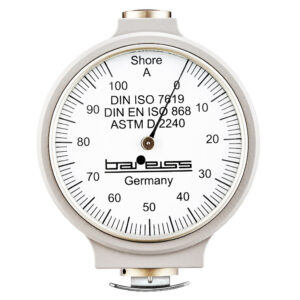
Common equipment: IRHD hardness testers (appropriate to the required IRHD method), indenters and controlled loading arrangements, stable sample support anvils/tables, and reference items used for routine performance checks.
Common accessories: Positioning/support fixtures for small parts or curved surfaces, thickness measurement tools where relevant to sample suitability, and laboratory conditioning capability when hardness needs to be measured under defined environmental conditions.
If you are configuring a tester for small parts, thin sections, or curved components, you can request a detailed quote for an IRHD setup matched to your sample geometry and throughput.
How to Read This Designation or Revision
Designation: “BS 903-A26” identifies Part A26 within the BS 903 physical testing of rubber series.
Edition and status: The 1995 edition is published as BS 903-A26:1995 and is recorded as withdrawn (withdrawal date: 31 August 2007). Procurement documents, customer specifications, and audit trails should cite the exact edition being required.
International relationship: This document is identified as identical to ISO 48:1994 (including Amendment 1:1999). Where an ISO designation is referenced instead of BS 903-A26, method alignment should still be confirmed against the contract or drawing callout.
Related Standards, Methods, or Frameworks
Hardness testing requirements are often paired with material or product specifications that define target hardness ranges and tolerances for a specific rubber grade or component type.
Common related reference: ISO 48:1994 (and ISO 48 amendment history) for IRHD hardness testing alignment when an international designation is used in place of the BS reference.
Talk with us about IRHD hardness testing to BS 903-A26
If you need IRHD results that hold up across production lots and suppliers, we can help you select the right IRHD method, fixture approach, and verification routine for your rubber parts. Start by talking with our team about your material, geometry, and reporting requirements.