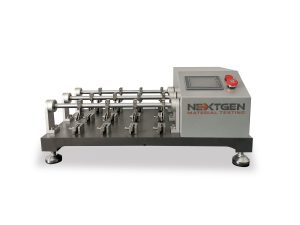
DIN 53351 is a DIN test method used to evaluate how leather, artificial leather, and similar flexible sheet materials hold up under repeated folding using a flexometer (commonly called a Bally flex tester).
It is commonly used for durability checks on surface finishes and coated layers where cracking, creasing damage, or coating breakdown can occur during service. If you need help matching specimen size, clamp style, or cycle-count requirements to your product, you can talk with our team.
DIN 53351: Testing of leather, artificial leather and similar sheet materials — behaviour at permanent folding (flexometer method)
DIN 53351 describes a repeated-folding (flexing) procedure intended to stress a test piece in a controlled, cyclic way. The outcome is typically used as a comparative durability indicator for materials and surface constructions subjected to frequent bending in real use.
This standard is published by DIN and is commonly referenced alongside “Bally flexometer” style equipment in leather and coated-material test labs.
Quick Definition
Standard type: Test method (flexing / folding endurance using a flexometer).
What it evaluates: Resistance of leather, artificial leather, and similar sheet materials to damage during repeated folding (for example, cracking, finish breakdown, or visible deterioration after cycling).
Primary output: A pass/fail or graded condition assessment after a defined number of flex cycles, using the standard’s evaluation approach.
What This Standard Covers
DIN 53351 focuses on cyclic folding using a flexometer apparatus with clamped specimens. The method is designed to create a repeatable flexing crease and repeated deformation, allowing you to compare materials, coatings, and constructions under consistent mechanical stress.
Because flexing performance can depend strongly on specimen geometry, thickness, surface finish, and conditioning, results are most meaningful when you follow the standard’s specimen and evaluation details for the cited edition.
Why This Standard Matters in Testing
Flex-induced damage is a common real-world failure mode for leather and coated sheet goods. A controlled flexometer method supports:
- Material and supplier comparisons for durability
- Incoming inspection and lot qualification
- Finish/coating development and change control
- Benchmarking before and after environmental exposure (when required by an internal or customer specification)
Common Materials, Product Types, or Applications Covered
DIN 53351 is commonly applied to flexible sheet materials such as:
- Leather and finished leather
- Artificial leather (synthetic leather) and coated fabrics
- Similar flexible coated sheet constructions where a surface layer must remain intact under repeated bending
Typical use cases: Footwear and leather goods components, upholstery materials, coated textiles, and other products where repeated bending during use can cause cracks or surface failure.
Common Test or Verification Workflow
DIN 53351 is typically used as a durability screen or qualification check rather than a single-point mechanical strength test.
Common workflow: Prepare specimens per the standard (including any required conditioning) → mount in the flexometer grips → run to a specified number of cycles (or to a defined endpoint) → evaluate and record the material condition using the standard’s criteria.
Practical caution: Cycle count, inspection intervals, and evaluation criteria are often contract-sensitive. When quoting testing or equipment, the cited edition and the customer’s acceptance criteria should be confirmed up front.
Equipment Commonly Used for This Standard
DIN 53351 points to a flexometer-based setup designed for repeatable folding cycles.
Common equipment: Bally flexometer / Bally flex tester style flexing machine with the appropriate specimen clamps and a cycle counter or programmable controller.
Common configuration considerations: Number of test stations, clamp/specimen capacity and thickness range, stroke and frequency control, guarding and safety interlocks, and how the machine holds the specimen crease geometry over long runs.
If you are selecting a multi-station flexometer or need a configuration aligned to your throughput and reporting needs, you can request pricing for a flexometer setup matched to your lab workflow.
How to Read This Designation or Revision
DIN standards are often cited with a publication date. For this standard, a common citation format is DIN 53351:1983-01, where the suffix indicates the year and month of issue (January 1983).
Revision sensitivity: Older DIN methods are frequently referenced inside internal specifications and buyer requirements. Always match the test setup and evaluation to the exact edition cited in the purchase specification or test plan.
Related Standards, Methods, or Frameworks
Flexing and folding durability for leather and coated sheet materials is also commonly specified using other regional or international methods depending on the industry (for example, footwear, upholstery, or coated textiles). When multiple standards are listed on the same requirement, confirm whether they are intended as alternatives or cumulative tests with different acceptance criteria.
Talk to a testing equipment specialist
If you need help aligning a Bally flexometer configuration, specimen holding approach, and cycle counting/control features to DIN 53351 (and to your customer’s acceptance criteria), contact our team and share the material type, thickness range, and required cycles per test.