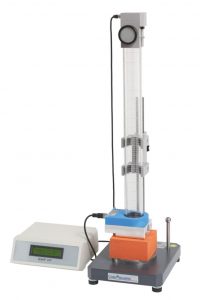
DIN EN ISO 8307 is a standardized test method for determining resilience of flexible cellular polymeric materials using a ball rebound approach. It is commonly used to compare “springiness” and energy return of flexible foams in production control and product development.
If you need help determining whether ball rebound resilience is the right check for your foam type, sample geometry, or internal specifications, talk with our team about your application and the edition you are working to.
DIN EN ISO 8307: Flexible cellular polymeric materials — Determination of resilience by ball rebound
This standard defines a ball rebound method to measure resilience for flexible cellular polymeric materials (i.e., flexible foams). It provides a consistent way to generate comparable resilience values between materials, batches, and suppliers when the same apparatus and conditioning approach are used.
Quick Definition
What it is: A test method for quantifying foam resilience by measuring the rebound response of a dropped ball.
What it’s used for: Routine QA/QC comparisons, incoming inspection, and R&D screening of flexible cellular polymeric materials.
What it does not do: It does not replace full cushioning characterization (e.g., compression set, indentation hardness, or fatigue testing) when those properties are required by a product specification.
What This Standard Covers
DIN EN ISO 8307 specifies a procedure to determine resilience using a ball rebound principle on flexible cellular polymeric materials. The output is a resilience result derived from the rebound behavior observed with the defined test setup.
Because foam behavior can be sensitive to specimen condition and test setup, results are best used as a comparative metric when the same preparation and apparatus approach are maintained across lots and labs.
Why This Standard Matters in Testing
Ball rebound resilience is often used as a fast, practical indicator of how “lively” or “dead” a flexible foam feels, which can correlate with perceived comfort and performance in certain end uses. In manufacturing environments, it can provide a quick check for formulation drift, mixing variability, curing changes, or density-related shifts that affect energy return.
When you are troubleshooting differences between foam lots, a standardized rebound method helps reduce ambiguity compared with informal drop tests.
Common Materials, Product Types, or Applications Covered
DIN EN ISO 8307 is typically applied to flexible cellular polymeric materials, including flexible foam products used in cushioning and comfort-focused components where resilience is a relevant comparative property.
Common use cases: Incoming inspection of foam buns/sheets, routine batch-to-batch comparison, supplier qualification testing, and R&D screening of candidate foam formulations.
Common Test or Verification Workflow
A typical DIN EN ISO 8307 workflow is set up to produce repeatable rebound results and to support comparisons across time and between lots.
Common workflow steps: Condition specimens as required by the lab procedure, place the specimen on the specified support/base, perform the ball rebound measurement using the defined apparatus arrangement, and report the resilience result per the standard’s calculation/reporting approach.
Practical caution: Foam resilience results can shift with differences in specimen thickness, surface condition, support/base characteristics, and conditioning environment, so the most useful implementation is a controlled, repeatable internal procedure aligned to the cited edition of the standard.
Equipment Commonly Used for This Standard
DIN EN ISO 8307 points to a dedicated ball rebound resilience test setup designed to release a ball in a controlled manner and measure rebound response consistently.
Common equipment elements: Ball rebound resilience tester (controlled release and guidance), measurement system for rebound height/response, rigid support/base, and basic specimen measuring tools used to document the test piece.
If you are standardizing this test across multiple lines or sites, the biggest equipment decisions are typically the rebound measurement approach, how the apparatus controls repeatable release, and how the setup integrates with your lab’s conditioning and documentation workflow.
How to Read This Designation or Revision
DIN EN ISO: Indicates the document is adopted in Germany (DIN) and aligned with the European adoption (EN) of the ISO standard.
ISO 8307: The underlying ISO designation for the ball rebound resilience method for flexible cellular polymeric materials.
Revision sensitivity: Apparatus details, conditioning references, and reporting requirements can vary by edition. For procurement, inter-lab comparisons, or customer reporting, confirm the exact cited year/edition in your contract or drawing notes before locking a procedure.
Related Standards, Methods, or Frameworks
DIN EN ISO 8307 is commonly used alongside other foam test methods when a program requires a broader picture than resilience alone (for example, methods focused on hardness/indentation behavior, compression behavior, or durability). Selection of companion methods is typically driven by the product specification and the end-use performance requirement.
Get help selecting a DIN EN ISO 8307 test setup
If you are equipping a lab for foam resilience testing or aligning multiple sites to one procedure, you can request a detailed quote for a ball rebound resilience setup matched to your specimen sizes, throughput needs, and documentation requirements.