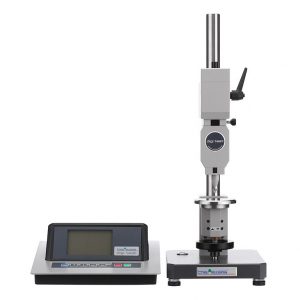
DIN ISO 48 is a rubber hardness test method used to determine International Rubber Hardness Degree (IRHD) values for vulcanized rubber and thermoplastic elastomers across the 10 to 100 IRHD range.
If you need help matching your purchase specification to the right hardness method (IRHD vs Shore, and which instrument range fits your parts), talk with our team about your material, geometry, and reporting requirement.
DIN ISO 48:2016-09 — Rubber, vulcanized or thermoplastic — Determination of hardness (10–100 IRHD)
This standard describes an IRHD hardness determination approach for elastomeric materials (vulcanized rubber and thermoplastic elastomers). It is commonly referenced when a procurement document, drawing, or compound specification requires an IRHD hardness value rather than a Shore hardness value.
Because hardness results depend strongly on method details (instrument type, specimen thickness, contact time, and temperature), DIN ISO 48 is typically used to keep results comparable between incoming inspection, production QA, and supplier verification.
Quick Definition
What it is: A standardized method for determining rubber hardness in IRHD units over the 10–100 IRHD range.
What it measures: Indentation-based hardness response of vulcanized rubber or thermoplastic elastomers under defined conditions, reported as IRHD.
Common output: A single IRHD hardness value (often used as a material acceptance or lot-release criterion).
What This Standard Covers
DIN ISO 48 focuses on hardness determination for elastomeric materials within a defined IRHD range. It is typically applied to test pieces and flat areas of finished products where an indentation-style hardness reading is practical.
In many rubber programs, IRHD is selected when tighter comparability is needed across labs, or when the part geometry and hardness range are better served by an IRHD approach than a handheld durometer check.
Why This Standard Matters in Testing
Hardness is one of the fastest checks for compound consistency and cure state. When it is specified as IRHD, the intent is usually to control variability from operator technique and instrument differences that can influence hardness readings.
For QA/QC teams, DIN ISO 48 supports pass/fail decisions for incoming rubber goods and in-process production checks by tying results to defined test conditions instead of informal shop-floor practice.
Common Materials, Product Types, or Applications Covered
DIN ISO 48 is commonly used for elastomeric materials and products such as:
- Vulcanized rubber compounds (general elastomer formulations)
- Thermoplastic elastomers (TPEs) where IRHD reporting is specified
- Gaskets, seals, molded rubber parts, and rubber sheeting when IRHD is required on the drawing or specification
Actual suitability depends on the part geometry and whether the surface and thickness allow a valid indentation reading consistent with the standard’s conditions.
Common Test or Verification Workflow
Most DIN ISO 48 workflows follow a practical pattern:
Common workflows: Condition specimens/parts to a defined test environment, verify instrument readiness, take multiple readings at specified locations, and report an IRHD value (often with averaging and basic identification of test conditions).
When results are used for supplier acceptance, it is common to control key variables such as sample temperature, time between production and testing, and whether the measurement is taken on a test slab versus a finished product surface.
Equipment Commonly Used for This Standard
DIN ISO 48 testing is typically performed with a dedicated IRHD hardness tester configured for the required range and specimen type.
Common equipment: Bench IRHD hardness testers (with controlled force application and a defined indenter), stable test stands to minimize vibration, specimen supports/anvils appropriate to the part, and reference materials or checks used for routine performance monitoring.
For quoting and configuration, the main practical selection drivers are the IRHD method/range required by the purchase specification, the smallest part size to be tested, and whether testing will be performed on test slabs, O-rings/seals, or finished components.
If you are comparing IRHD systems, fixtures, or part-holding options for your product geometry, you can request a detailed quote with the instrument setup matched to your workflow.
How to Read This Designation or Revision
DIN ISO 48 indicates a DIN adoption of an ISO standard numbered 48. The version commonly referenced as DIN ISO 48:2016-09 uses the issue date format (year-month) as part of the designation.
Revision sensitivity: Hardness results can vary if the cited edition, instrument type, or test conditions differ. When a customer document calls out “DIN ISO 48” without a year/date, it is best practice to confirm which edition (and any customer-specific test conditions) governs reporting.
Status note: This DIN document is listed as withdrawn. When compliance is required, confirm whether the customer intends a withdrawn edition or a newer replacement within the ISO 48 series.
Related Standards, Methods, or Frameworks
Hardness requirements for elastomers are often written interchangeably as IRHD or Shore hardness depending on the industry and drawing conventions. When aligning requirements across suppliers, it is important to treat IRHD and Shore as distinct methods rather than assuming direct equivalence.
If a contract or drawing references an ISO 48 part number (for example, an ISO 48-x document) instead of DIN ISO 48, test planning and equipment configuration should follow the exact cited document.
Talk with us about DIN ISO 48 equipment and test setup
If you need an IRHD hardness setup for production QA or supplier acceptance testing, we can help you choose an appropriate bench tester configuration and accessories for your sample size and reporting needs—request pricing for a system matched to your application.