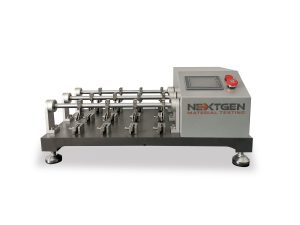
EN 13512 is a European test method used in the footwear industry to evaluate the flex resistance of upper and lining materials, regardless of material type. It is commonly used to screen materials for cracking, surface damage, or other flex-related deterioration during repeated bending.
This standard is typically referenced during incoming material approval, product development, supplier qualification, and comparative benchmarking of alternative materials. If you need help matching your material and end-use conditions to the right edition or successor document, talk with our team.
EN 13512: Footwear — Test methods for uppers and lining — Flex resistance
EN 13512 specifies a laboratory procedure for repeatedly flexing footwear upper and lining materials and evaluating their resistance to flex-induced damage. It is structured as a test method with defined apparatus, sampling/conditioning, procedure, and test reporting.
Quick Definition
In one line: A standardized flexing test for footwear upper and lining materials to assess suitability for end use under repeated bending.
Document type: Test method.
What This Standard Covers
EN 13512 focuses on flex resistance of materials used in shoe uppers and linings. The method applies across a wide range of material constructions and is used to compare performance and identify flex-related degradation mechanisms.
Typical outcomes evaluated: Visible damage, cracking, surface breakdown, or other changes observed after a specified flexing exposure (as defined by the cited edition).
Why This Standard Matters in Testing
Footwear materials experience repeated bending in wear, especially across vamp and forefoot regions. A standardized flex resistance method supports practical decisions such as approving materials for a given shoe category, comparing suppliers, or validating a process change (coating, lamination, finishing, adhesive systems) that may affect durability in flex.
Common Materials, Product Types, or Applications Covered
EN 13512 is commonly applied to upper and lining materials used in finished footwear.
- Upper materials (including coated or finished constructions)
- Lining materials
- Material combinations where flex performance is a qualification risk (e.g., changes in finish, backing, or adhesive layers)
Common Test or Verification Workflow
EN 13512 is most often used as a comparative or acceptance-style durability check rather than a single “pass/fail” indicator on its own.
Common workflow: Define material and end-use intent → sample and condition test pieces → run repeated flexing exposure → inspect and record damage → compare to internal criteria, historical performance, or a reference material.
Practical note: Conditioning environment and the chosen inspection criteria can strongly influence comparability between labs, so quoting and setup should be aligned to the exact edition and customer acceptance language.
Equipment Commonly Used for This Standard
Because EN 13512 is a flex resistance method, equipment selection typically centers on controlled repeated flexing plus consistent specimen holding and inspection.
Common equipment: Flex resistance tester (repeat flexing apparatus), appropriate specimen clamps/holders for upper/lining materials, cycle counter and controls, and a conditioning environment appropriate to the test plan.
If you are outfitting a lab for footwear flex resistance screening and need help selecting a configuration (station count, controls, conditioning approach, and documentation package), you can request a detailed quote for an EN 13512-style workflow.
How to Read This Designation or Revision
EN 13512 is commonly cited with a year, such as EN 13512:2001, and may also appear as a nationally adopted version (for example, NF EN 13512).
Revision sensitivity: Test conditions, apparatus details, and reporting expectations can vary by edition or national adoption. Always align your lab procedure and customer requirements to the exact designation cited in the purchase specification or test request.
Status note: Many catalogs list EN 13512 as superseded or withdrawn and point to EN ISO 17694:2016 as the replacement for the flex resistance method.
Related Standards, Methods, or Frameworks
EN ISO 17694:2016 is commonly referenced as the successor document to EN 13512 for footwear upper/lining flex resistance testing. When comparing results over time, confirm whether historical data was produced under EN 13512 or EN ISO 17694 and whether acceptance criteria were updated accordingly.
Get help selecting an EN 13512-style flex testing setup
If you need to build or update a footwear materials durability workflow (upper/lining flex resistance) and want equipment matched to your throughput and reporting needs, ask for a quote.