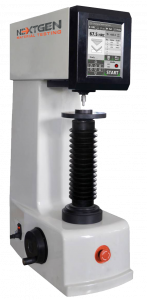
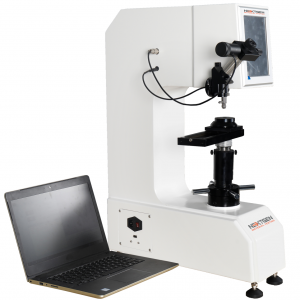
EN ISO 6508 is the European adoption of the ISO 6508 series for Rockwell hardness testing of metallic materials. It is widely used for production and incoming inspection, heat-treat verification, and material/process control where a fast, repeatable indentation hardness number (for example HRC or HRB) is needed.
Because ISO 6508 is published as multiple parts (test method, machine/indenter verification, and reference block calibration), the correct part and edition matter for test results, calibration records, and equipment configuration. If you need help matching your requirement to the right part and setup, talk with our team.
EN ISO 6508 — Metallic materials: Rockwell hardness test
EN ISO 6508 is a standards series that defines how Rockwell hardness is determined on metallic materials and how Rockwell hardness testing systems are confirmed using reference equipment and reference blocks.
In many labs, “EN ISO 6508” is used as a shorthand reference to the Rockwell method, but purchase orders, quality plans, and accreditation scopes typically need the specific part number (and edition year) that applies to the work being performed.
Quick Definition
EN ISO 6508 is the ISO-based framework for Rockwell and Rockwell superficial hardness testing of metals, including the test method and the verification/calibration elements used to maintain confidence in results.
What This Standard Covers
EN ISO 6508 is associated with Rockwell hardness measurements taken by applying a minor load and a major load through a standardized indenter, then determining hardness from indentation depth under load.
What it typically includes across the series: Requirements for performing the test (test forces and scales, general execution and reporting expectations) plus requirements for verifying the hardness testing machine, the indenter, and the reference blocks used for indirect checks.
What it typically does not do: It does not set product acceptance criteria by itself. Acceptance limits (for example “minimum HRC”) are usually defined by the product specification, drawing, heat-treat standard, or customer requirement that calls up EN ISO 6508.
Why This Standard Matters in Testing
Rockwell hardness is commonly used because it is fast, requires minimal sample preparation compared with some optical indentation methods, and is practical for routine QC. EN ISO 6508 matters because it ties day-to-day hardness numbers to a defined method and to verification practices that support repeatability across shifts, machines, and sites.
For audits and customer compliance, the most common failure points are not the hardness tester itself but the controllables around it: correct scale selection, indenter condition, support/anvil setup, surface condition, and whether machine verification and reference block use are aligned to the cited EN ISO 6508 part and edition.
Common Materials, Product Types, or Applications Covered
EN ISO 6508 is broadly used for metallic materials where Rockwell scales are suitable, including steels (often HRC/HRB), many alloy systems, and a wide range of finished or semi-finished products.
Common application examples: Heat-treated steel parts, fasteners, tooling, shafts, gears, bearing components, cast/forged parts, and general metal QC where a hardness number is used as a proxy for strength, wear resistance, or process consistency.
Where superficial Rockwell is often considered: Thinner sections, shallower hardened layers, or cases where a lower-force, shallower indentation is preferred to limit damage or avoid breakthrough effects.
Common Test or Verification Workflow
EN ISO 6508 is commonly applied as a combination of (1) running the Rockwell test method on parts and (2) maintaining confidence in the hardness tester through verification practices.
Common workflows: Select the appropriate Rockwell scale for the material/condition; confirm the correct indenter and anvil/support; perform routine checks with reference blocks; run test impressions with appropriate spacing and location control; report results in the specified Rockwell scale (for example HRC or HRB) with any required traceability details.
When formal compliance is required, the cited EN ISO 6508 part for verification/calibration drives what evidence is needed (for example direct/indirect verification expectations, indenter verification, and reference block control), and this can directly affect lab documentation and service intervals.
Equipment Commonly Used for This Standard
EN ISO 6508 typically points to Rockwell hardness testing systems and the supporting items needed to run specific scales and maintain checked performance over time.
Common equipment: Rockwell hardness tester (regular and/or superficial), standardized indenters (diamond cone and/or ball indenters as required by the scale), appropriate anvils and part supports, and certified Rockwell reference blocks used for routine indirect checks.
Common accessories and options: Fixtures/supports for irregular geometries, part staging to improve repeatability, and data capture/reporting tools when results must be traceable to job numbers, operators, and verification status.
If you are selecting a tester or configuring indenters, anvils, and reference blocks for the scales you run, you can request a detailed quote for a Rockwell setup matched to your material range and verification expectations.
How to Read This Designation or Revision
“EN ISO 6508” indicates a European (EN) adoption of an ISO Rockwell hardness standard. In practice, purchase orders and quality documents usually specify the full designation with a part number and an edition year.
Typical citation pattern: EN ISO 6508-1:YYYY, EN ISO 6508-2:YYYY, and EN ISO 6508-3:YYYY.
Practical tip: When a requirement only says “EN ISO 6508” without a part number, it is worth clarifying whether the intent is the test method (Part 1), the verification/calibration requirements for the machine and indenter (Part 2), the calibration of reference blocks (Part 3), or a combination of these.
Related Standards, Methods, or Frameworks
Rockwell hardness requirements are often used alongside other hardness methods or conversion guidance, depending on the product standard and customer reporting needs.
Common related references: ASTM E18 (Rockwell hardness testing of metallic materials) and ISO 18265 (principles for conversion of hardness values between scales and to estimates of tensile strength).
Other ISO hardness method families frequently seen in metal testing programs include ISO 6506 (Brinell) and ISO 6507 (Vickers), especially when Rockwell is not suitable due to section thickness, microstructure, surface condition, or required indentation size.
Talk with us about EN ISO 6508 equipment and setup
If you need help choosing Rockwell scales, indenters, reference blocks, or verification approach to match the exact EN ISO 6508 part and edition on your drawing or quality plan, contact our team and we will help you align the workflow and equipment configuration.