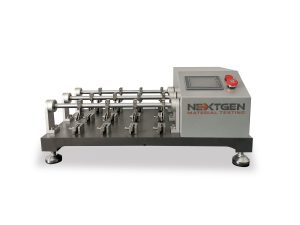
GB/T 20991 Section 6.6.2.8 is a clause within the GB/T 20991 footwear test-methods standard that addresses the pre-flexing apparatus used ahead of water vapour permeability (WVP) testing for footwear upper materials.
If you are matching a buyer or compliance requirement to a specific GB/T 20991 edition (and the exact clause numbering), contact our team and we can help you align the test workflow to the cited document revision.
GB/T 20991 Section 6.6.2.8
This clause sits inside the GB/T 20991 method for determining water vapour permeability (WVP) of upper/lining/tongue-related materials used in protective footwear. Section 6.6.2.8 focuses specifically on the pre-flexing device used to mechanically condition test pieces before the WVP measurement step.
Because this is a subsection (not a standalone test method), it is typically referenced when a lab is configuring equipment and fixtures for the full WVP procedure under GB/T 20991.
Quick Definition
What it is: An apparatus requirement (pre-flexing device) referenced within GB/T 20991’s WVP test setup.
What it’s used for: Controlled flexing of upper-material specimens to simulate creasing/flexing before measuring moisture transfer performance.
Why it matters: Pre-flexing can change how moisture passes through coated, laminated, or finished upper materials, so equipment selection and fixture geometry need to match the cited procedure.
What This Standard Covers
GB/T 20991 Section 6.6.2.8 covers the pre-flexing apparatus used as part of the WVP determination for footwear upper materials. It describes the type of clamping/flexing arrangement needed to repeatedly flex a defined test piece in a controlled and repeatable way.
In practice, buyers encounter this clause when a lab must demonstrate that WVP specimens were preconditioned using the specified style of pre-flexing setup (rather than an improvised bend or hand-crease approach).
Why This Standard Matters in Testing
WVP performance claims for protective footwear uppers are often used in product development, supplier qualification, and incoming material control. Where pre-flexing is required, it helps make the test more representative of in-use creasing and can improve comparability between labs.
For equipment planning, this clause matters because the flexing mechanism, clamp alignment, and repeatable cycling are typically what drives whether a flexometer-style unit (with the correct grips) is required for the cited workflow.
Common Materials, Product Types, or Applications Covered
Section 6.6.2.8 is most commonly applied when testing upper-area materials used in protective or occupational footwear, including materials that may be sensitive to flex-induced cracking or micro-damage (for example, coated textiles, laminates, and finished leathers).
This clause is not a whole-shoe test. It is tied to specimen-level preparation as part of a broader breathability-related measurement.
Common Test or Verification Workflow
Most labs encounter this clause in a workflow like the following:
Common workflows: Specimen selection and conditioning → controlled pre-flexing using the specified apparatus → WVP determination using the GB/T 20991 WVP method → reporting aligned to the cited edition.
When a purchase spec or factory audit cites “GB/T 20991 Section 6.6.2.8,” it usually means the buyer expects the lab to have an appropriate pre-flexing device and the correct grips/fixtures for that specific preconditioning step.
Equipment Commonly Used for This Standard
Section 6.6.2.8 points primarily to pre-flexing equipment rather than a full mechanical strength test system.
Common equipment: Flexometer-style pre-flexing apparatus (often supplied as a Bally-type resistance flexing unit or equivalent pre-flex device with the required clamps/grips), specimen cutting tools/dies (as required by the parent method), and basic lab controls (conditioning environment and timing/control accessories) used alongside the WVP method.
If you are selecting a flexing unit for this clause (including grip style and station count), you can request a detailed quote for a configuration matched to your specimen throughput and reporting needs.
How to Read This Designation or Revision
“GB/T 20991 Section 6.6.2.8” is a clause reference, not a complete standard designation by itself. For purchasing, audit, or lab-scoping purposes, it should be paired with the full standard number and edition year (for example, GB/T 20991-2024), because clause numbering and required apparatus details can change between revisions.
GB/T 20991 has been revised over time (for example, GB/T 20991-2024 replaces earlier editions), so equipment scope should be confirmed against the exact revision cited in your customer or regulatory documentation.
Related Standards, Methods, or Frameworks when useful
GB/T 20991 is closely aligned with international footwear test-method frameworks that include WVP and pre-flexing steps within breathability testing. If you work across multiple markets, it is common to see WVP and pre-flexing requirements referenced under ISO/EN-based footwear test methods as well.
Where cross-references are used in procurement documents, the safest approach is to match equipment capability to the exact clause and edition cited, rather than assuming clause equivalency across different standards families.
Get help choosing the right pre-flexing setup
If you need to align grips, cycle control, and specimen handling to the specific GB/T 20991 clause your customer cites, talk with our team about your material type, throughput, and the edition year you are working to.