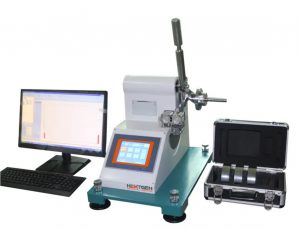
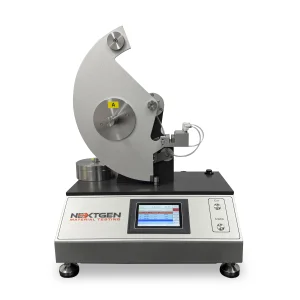
GB/T 3917.1-2009 is a Chinese national test method for measuring fabric tear force using a ballistic pendulum (Elmendorf) tearing instrument. It is commonly used to quantify how readily a tear propagates after a small slit is introduced and a rapid tearing action is applied.
If you need help confirming whether the Elmendorf approach is appropriate for your fabric construction (or whether a trouser, tongue, or trapezoid method is a better match), talk with our team about your material and reporting requirements.
GB/T 3917.1-2009 — Textiles — Tear properties of fabrics — Part 1: Determination of tear force using ballistic pendulum method (Elmendorf)
This standard describes an Elmendorf-style pendulum tear procedure for textile fabrics, where a pre-slit specimen is clamped and torn by a fast, pendulum-driven action. The result is reported as tear force, supporting material qualification, supplier approval, and ongoing QC testing.
Because tear behavior can vary strongly by fabric structure and finishing, labs typically control specimen direction (e.g., warp/fill) and conditioning to maintain comparability across lots and suppliers.
Quick Definition
What it is: A fabric tear-force test using a ballistic pendulum (Elmendorf) tear tester.
What it measures: The force associated with propagating a tear from a defined starter slit under a rapid tearing action.
Typical use: Comparing tear performance across fabric styles, directions, finishing treatments, or production lots.
What This Standard Covers
GB/T 3917.1 focuses on tear propagation measured on a pendulum instrument rather than a slow-speed tensile frame. In practice, it is used to characterize how a cut or snag may continue to open under a sudden force event.
This method is primarily associated with woven fabrics and can also be used for certain other fabric technologies when the tear path remains stable and the specimen can be clamped and torn cleanly.
Why This Standard Matters in Testing
Tear performance is often a go/no-go property for textile products that see snagging, puncture initiation, or field damage (for example, workwear, outdoor fabrics, technical textiles, and many industrial fabric constructions). GB/T 3917.1 provides a repeatable way to benchmark tear resistance for incoming inspection and product development.
For buyer–supplier agreements, it is also a practical audit tool: the same fabric can show acceptable tensile strength but poor tear propagation resistance, especially after certain resin, coating, or finishing processes.
Common Materials, Product Types, or Applications Covered
GB/T 3917.1 is commonly specified for textile fabrics where tear propagation is a performance risk, including many woven constructions used in apparel, uniforms, bags, covers, and technical fabric components.
When a fabric is highly elastic, very loose, or tends to redirect the tear path away from the intended direction, laboratories often evaluate whether another tear method within the GB/T 3917 family is more suitable.
Common Test or Verification Workflow
Most labs run GB/T 3917.1 as a controlled, repeatable tear-propagation check on conditioned specimens.
Common workflows: Condition specimens as required; cut specimens to the required geometry; introduce the starter slit; mount in the pendulum tear tester clamps; release the pendulum to propagate the tear; record tear force results; repeat in required fabric directions and report averages and variability as required by the test plan.
Equipment Commonly Used for This Standard
GB/T 3917.1 points most directly to an Elmendorf (ballistic pendulum) tear testing instrument and the supporting specimen preparation and conditioning tools.
Common equipment: Elmendorf / ballistic pendulum tear tester with appropriate pendulum capacity range; specimen clamping jaws and a controlled slit-start device (as provided by the instrument design); cutting dies or templates for repeatable specimen geometry; conditioning room or environmental chamber when standard atmosphere conditioning is required by your lab protocol.
For quoting and configuration, the key practical decisions are typically capacity selection (so results fall in the instrument’s recommended measurement window), clamp/specimen compatibility for the fabric weight and construction, and whether your lab needs manual or digital data capture for traceability.
How to Read This Designation or Revision
GB/T: Recommended (non-mandatory) Chinese national standard designation.
3917: Tear properties of fabrics standard series number.
.1: Part 1 of the GB/T 3917 series (ballistic pendulum / Elmendorf tear method).
-2009: The published edition year for this part. If a customer specification cites “GB/T 3917.1” without the year, confirm the edition expected before finalizing test conditions and reporting format.
Related Standards, Methods, or Frameworks
GB/T 3917.1 is one part within a broader tear-testing family where the chosen method depends on fabric structure and how tears are expected to initiate and propagate in service.
Common related parts: GB/T 3917.2 (trouser / single-tear method) and GB/T 3917.4 (tongue-shaped / double-tear method) are often used when a tensile-testing-machine style tear method is preferred or when the pendulum tear approach is not suitable for the fabric behavior.
Get the right Elmendorf tear test setup
If you are equipping a lab for GB/T 3917.1, we can help you select the pendulum capacity range and configuration that fits your fabric weights and target tear-force levels—request a detailed quote for an Elmendorf tear tester package matched to your workflow.