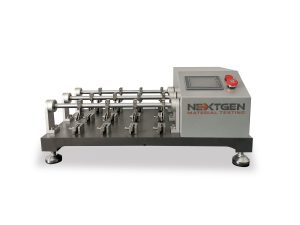
GE-24 is a brand-owned adidas laboratory method commonly used in footwear and soft-goods quality programs to evaluate how upper materials hold up under repeated flexing (bending) in a Bally-style flexometer.
If you need help matching the cited GE-24 requirement to the right flexing tester configuration (stations, grips, counter range, and temperature capability), talk with our team about your material and test conditions.
GE-24 (adidas) Flexometer Test
GE-24 is typically specified when a buyer or brand program needs a controlled, repeatable flex-durability screen for materials such as natural leather, synthetics, and coated or laminated structures used in footwear uppers and related components.
Because GE methods are proprietary, the exact acceptance criteria and test severity (cycles, inspection intervals, conditioning, and pass/fail rules) are usually defined by the program documentation and the edition cited in your purchase specification.
Quick definition
Standard type: Proprietary brand test method (adidas).
In simple terms: A cut specimen is repeatedly flexed in a Bally-style flexometer, then evaluated for visible damage such as cracking, creasing failure, or coating breakdown under defined conditions.
What this standard covers
GE-24 is used to assess resistance to flex-related damage in flexible sheet materials commonly found in footwear. It is generally focused on surface and structure durability under cyclic bending rather than tensile strength or peel strength.
Programs may include room-temperature flexing as well as cold-temperature flexing, depending on the product category and end-use environment defined by the brand requirement.
| Commonly controlled items | What they influence |
|---|---|
| Flexometer motion (angle and cycles/min) | Severity of bending fatigue and comparability between labs |
| Specimen geometry and fold orientation | Where stress concentrates and how cracks initiate |
| Conditioning (including cold testing when specified) | Material stiffness/embrittlement and failure mode at low temperature |
Why this standard matters in testing
Flex durability is a practical predictor of how a footwear upper (or a coated/laminated layer within it) may perform at flex lines during wear. GE-24 is often used as a gate test in material approval workflows where consistent appearance and surface integrity are critical.
When GE-24 is cited, the biggest lab-to-lab differences usually come from conditioning temperature, grip alignment, and how “first damage” is interpreted during visual evaluation. Keeping those items consistent is key for meaningful comparisons.
Common materials, product types, or applications covered
GE-24 is typically applied to flexible upper and upper-like materials, including:
- Natural leather and finished leathers
- Synthetic leather and polymer-coated textiles
- Coated, laminated, or film-faced constructions used for uppers and overlays
- Other flexible sheet materials where flex-cracking or coating breakdown is a concern
Common test or verification workflow
GE-24 is commonly run as a controlled durability screen inside a broader material-qualification plan. The exact cycle targets and acceptance criteria are normally defined by the program requirement, not by the test machine itself.
Common workflow: Condition specimens as required, mount in the Bally-style flexometer grips, run to the specified cycle count(s), and visually evaluate for cracking, coating damage, or other defined failure characteristics (often with a defined magnification or inspection approach).
Where it is used: Incoming material approval, supplier qualification, and comparative evaluations of material constructions or finishes intended for repeated bending in service.
Equipment commonly used for this standard
GE-24 typically points to a Bally flexometer / resistance flexing tester setup, with accessories selected to match the brand’s method details and the lab’s sample volume.
Common equipment: Bally flexometer (multi-station), appropriate grips/clamps, cycle counter and speed control, specimen cutting tools (dies or templates), and basic inspection tools for consistent visual ratings.
When cold flexing is specified: A cold chamber or freezer capability to condition the flexometer and/or specimens to the required temperature before and during testing.
If you are comparing station count, cold-testing capability, or fixtures for coated materials versus leather, you can request a detailed quote for a GE-24-ready configuration.
How to read this designation or revision
Designation: “GE-24” is commonly used as the method identifier in adidas laboratory procedure documentation.
Revision sensitivity: Test setup details (conditioning temperature, cycle targets, and evaluation rules) can vary by edition or brand program. For procurement and quoting, it is best practice to reference the exact GE-24 edition/date stated in the requirement you are working to.
Related standards, methods, or frameworks when useful
Many labs run GE-24 using the same Bally-style flexometer platforms used for other leather and upper-material flexing methods. Depending on the product category and customer requirements, you may also see references to DIN-based flexing approaches or other common footwear flexing methods used on similar equipment.
Practical note: Similar equipment does not mean the methods are interchangeable. Conditioning, cycle targets, and pass/fail criteria should be treated as method-specific.
Get help configuring GE-24 flexing equipment
Share your cited GE-24 requirement (including any temperature conditioning and target cycles), and we can help align the tester configuration, station count, and accessories to your throughput and reporting needs. Contact our team to discuss your application.