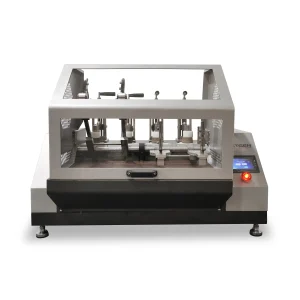
HG/T 2871-2022 Method B is a laboratory flexing (bending) test method used to evaluate whole rubber shoes after repeated flex cycles, with the inspection focused on abnormalities such as cracking and bond separation between key shoe components.
Because this is a whole-shoe durability evaluation, correct method selection, fixture fit, and cycle/inspection requirements can affect both test validity and equipment configuration—if you need help aligning Method B to your shoe type or internal specification, you can contact our team.
HG/T 2871-2022 Method B — Test method for flexing of whole rubber shoes
HG/T 2871-2022 is an HG/T (chemical industry) recommended standard that specifies a whole-shoe flexing test intended to reveal flex-related damage and assembly issues. The document includes multiple methods, and this page focuses on Method B as cited in customer, factory, or QA documentation.
This standard is commonly used in manufacturing quality control, supplier qualification, and product verification for rubber footwear where upper-to-sole integrity and visible cracking under repeated bending are key acceptance concerns.
Quick Definition
Standard type: Test method (whole product flexing / durability evaluation).
What Method B does: Repeatedly flexes an entire rubber shoe under defined conditions, then evaluates the shoe for visible abnormal conditions such as cracking and glue opening/separation at interfaces (for example, between the upper and sole).
Typical output: Pass/fail or graded observations based on the appearance and location of damage after the specified flexing exposure.
What This Standard Covers
HG/T 2871-2022 Method B covers a controlled, repeatable way to flex an assembled rubber shoe and then judge the condition of the product. The intent is to stress the shoe structure through repeated bending and identify defects or weakness that may not be visible before flexing.
It is focused on whole-shoe performance rather than material coupon properties, so results reflect the combined effects of materials, design, bonding/adhesion, and manufacturing processes.
Why This Standard Matters in Testing
Whole-footwear flexing is often used as an early indicator of durability issues that can drive returns or field failures, especially where repeated walking-like bending can initiate cracks, propagate existing defects, or open bonded seams.
For QA/QC and procurement teams, a method-based flexing test supports consistent acceptance decisions across factories, suppliers, and inspection labs—provided the edition, method (A vs. B), and inspection criteria cited in contracts are matched.
Common Materials, Product Types, or Applications Covered
This method is most commonly associated with whole rubber shoes and rubber-based footwear constructions where repeated bending can challenge the upper/sole interface, foxing/skirt areas, and other bonded or molded transitions.
Other footwear types may reference this approach when a whole-shoe flexing durability check is needed, but applicability and acceptance criteria should be defined by the product specification calling out Method B.
Common Test or Verification Workflow
Method B is typically used as a durability screening or compliance check within a larger footwear test plan.
Common workflow: Select and identify test shoes → mount the whole shoe in the appropriate flexing fixture → run the specified flexing exposure (cycles/conditions per Method B) → inspect the shoe for defined abnormalities (for example, cracking or bond opening) → document results and disposition (pass/fail or observation-based reporting, depending on the calling specification).
Practical caution: In whole-shoe flex tests, fixture fit and how the shoe is positioned can strongly influence where stress concentrates. For comparable results, labs typically standardize mounting, inspection lighting/magnification practices, and how/when interim inspections are performed (when required by the calling document).
Equipment Commonly Used for This Standard
HG/T 2871-2022 Method B generally points to a whole-shoe flexing tester capable of repeatedly bending the assembled shoe in a controlled and countable way, along with fixtures sized for the shoe construction being evaluated.
Common equipment elements: Whole-shoe flexing machine (cycle-controlled), shoe mounting fixtures/clamps, cycle counter and stop controls, and inspection tools for post-test evaluation (lighting and visual inspection aids).
Equipment selection note: Configuration details (fixture style, motion profile, cycle count capability, and any conditioning/environment needs) should be matched to the exact Method B requirements and any additional criteria in the product specification that cites HG/T 2871-2022.
How to Read This Designation or Revision
HG/T 2871-2022: HG/T identifies a chemical industry (HG) recommended (T) standard; 2871 is the document number; 2022 is the year of issue.
Method B: Indicates the specific method within the HG/T 2871-2022 document. When requesting testing or equipment, it is important to cite “Method B” explicitly, because different methods within the same standard can use different fixtures and exposure conditions.
Revision sensitivity: This edition supersedes earlier versions, and acceptance programs may still reference older editions. Always align the test setup and reporting to the exact edition and method named in the purchase specification or compliance requirement.
Related Standards, Methods, or Frameworks when useful
Depending on the footwear category and the requirement you are supporting, whole-shoe flexing may be paired with other whole-footwear test methods (for example, additional performance or physical tests) or referenced alongside earlier editions of the same HG/T method.
Common related references: HG/T 2871-2008 (earlier edition of the same whole rubber shoe flexing test method) and other whole-footwear test methods that may be cited by product standards and technical specifications.
Get help selecting a Method B flexing test setup
If you are outfitting a lab for whole-shoe flexing, we can help translate your requirement into a practical tester and fixture configuration (shoe size range, cycle capacity, controls, and documentation needs). When you are ready to compare options, you can request a detailed quote.