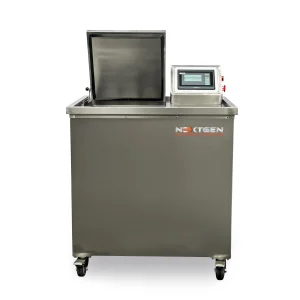
ISO 105-C04 is a textile colour fastness washing test (Test 4) that evaluates how a dyed or printed textile changes in colour and how much it stains adjacent fabric when washed under defined laboratory conditions.
This standard is withdrawn, but it is still encountered in legacy specifications and supplier agreements. If you need help mapping an older callout to a current method or aligning equipment to a buyer’s cited edition, contact our team.
ISO 105-C04:1989 — Textiles — Tests for colour fastness — Part C04: Colour fastness to washing: Test 4
ISO 105-C04 is part of the ISO 105 colour fastness test series for textiles. It describes “Test No. 4” within a set of washing fastness procedures.
The method is designed to produce a controlled wash exposure so you can grade both colour change in the specimen and staining on one or two adjacent fabrics using grey scale assessment.
Quick Definition
Standard type: Laboratory test method for wash colour fastness (legacy / withdrawn document).
What it measures: (1) change in colour of the specimen after washing and (2) staining of adjacent fabric(s), graded with grey scales.
What This Standard Covers
ISO 105-C04 describes a wash fastness procedure where a textile specimen is placed in contact with one or two specified adjacent fabrics, then mechanically agitated in a soap solution under defined conditions of time and temperature. After washing, the specimen is rinsed and dried.
Performance is evaluated by assessing both the specimen’s colour change and the adjacent fabric’s staining using grey scales.
Why This Standard Matters in Testing
Wash fastness is frequently used for incoming material approval, shade qualification, process changes (dyeing/printing/finishing), and supplier conformance where colour appearance and bleed control are critical.
Even when ISO 105-C04 is referenced only as a legacy callout, the pass/fail expectation usually ties directly to grey scale grades for colour change and staining, which makes edition matching and consistent visual grading essential.
Common Materials, Product Types, or Applications Covered
ISO 105-C04 applies broadly to textiles in many forms (for example fabrics and textile materials intended for garments and household goods) where a controlled wash exposure is used to evaluate dye or print durability.
It is commonly specified when there is concern about visible fading, shade shift, or colour transfer to other materials during washing.
Common Test or Verification Workflow
A typical ISO 105-C04 workflow includes preparing the specimen with adjacent fabric(s), running a defined laboratory wash with mechanical agitation in a soap solution, then rinsing and drying the assembly.
After exposure, results are graded using grey scales for both colour change (specimen) and staining (adjacent fabric). Reported outcomes are usually the grey scale grades and any required specimen identification and conditioning details required by the citing specification.
Equipment Commonly Used for This Standard
Equipment selection for ISO 105-C04 typically centers on controlling agitation, temperature, and time for the wash exposure, and on consistent post-wash visual evaluation.
Common equipment: Laboratory washing/agitator system with temperature control, suitable test containers, calibrated temperature measurement, rinsing and drying capability, and grey scales for colour change and staining. Many labs also use controlled lighting/viewing conditions for repeatable grading.
If you are quoting or configuring a wash fastness setup and need to align capacity (number of positions), control features, and evaluation accessories to a specific buyer requirement, you can request pricing for a configuration matched to your workflow.
How to Read This Designation or Revision
Designation: ISO 105-C04:1989 refers to Part C04 of ISO 105 (tests for colour fastness), specifically “Colour fastness to washing: Test 4.”
Status note: ISO 105-C04:1989 is withdrawn. ISO identifies ISO 105-C10:2006 as the newer version that replaced the earlier ISO 105-C01 through C05 washing tests.
Revision sensitivity: Washing fastness methods depend on the exact cited document and edition because details like wash conditions, adjacent fabrics, and reporting expectations can vary by method and specification. When a contract references “ISO 105-C04” without a year, clarify the edition and any buyer-specific deviations before running qualification testing.
Related Standards, Methods, or Frameworks
For current ISO wash fastness references, ISO 105-C10 is commonly used as the successor framework for controlled washing fastness evaluation. Other ISO 105 parts address different colour fastness exposures (for example rubbing, perspiration, water, and light) and are often specified alongside washing fastness depending on end-use.
When a product specification calls up multiple ISO 105 parts, it is important to align sample preparation, adjacent fabric selection, grading tools, and reporting format across the full test plan.
Talk with us about ISO 105-C04 testing setups
If you need help interpreting a legacy ISO 105-C04 callout, aligning it to an updated method, or selecting a washing fastness and grading setup that matches your customer’s acceptance criteria, talk with our team.