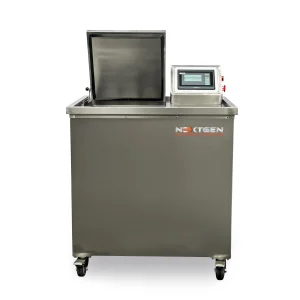
ISO 105-C06 is an ISO textile colour fastness test method for evaluating how well dyed or printed textiles resist colour change and staining during domestic or commercial laundering conditions using specified reference detergents.
It is commonly used to qualify apparel, uniforms, home textiles, and similar fabric-based products where wash durability and colour transfer control are purchasing and quality requirements. If you need help matching the correct wash severity (single vs. multiple test) to your product claim, contact our team.
ISO 105-C06:2010 — Textiles — Tests for colour fastness — Part C06: Colour fastness to domestic and commercial laundering
ISO 105-C06 is part of the ISO 105 series for colour fastness. This part focuses specifically on laundering-type exposure and the resulting colour change of the specimen and staining of adjacent fabrics.
The standard is designed around controlled laboratory washing conditions (temperature, alkalinity, optional bleach system, and mechanical/abrasive action) so results can be compared consistently across suppliers and labs.
Quick definition
ISO 105-C06 measures colour fastness to laundering by washing a textile specimen in contact with adjacent fabric(s), then rating (or instrumentally measuring) specimen colour change and adjacent-fabric staining.
What this standard covers
This method applies to textiles “of all kinds and in all forms” evaluated under laundering procedures intended to represent normal domestic or commercial washing of household-type articles using a reference detergent.
ISO 105-C06 includes different severities, including single (S) and multiple (M) testing concepts, with the multiple test generally being more severe due to increased mechanical action.
The method is intended for the detergent and bleach systems specified in the standard. It also notes that the method does not represent the effect of optical brighteners that may be present in commercial laundry products.
Why this standard matters in testing
Laundering is one of the most common real-world exposures for coloured textiles. ISO 105-C06 provides a repeatable way to compare dyeing/printing performance, finishing chemistry, and process control across lots and suppliers.
Because the method evaluates both colour change and staining, it is frequently used to manage claims and risks such as visible fading, colour bleed, and cross-staining onto linings, trims, or mixed loads.
Common materials, product types, or applications covered
ISO 105-C06 is used broadly wherever laundered textiles must maintain appearance and avoid colour transfer.
Common examples: Apparel fabrics (woven/knit), uniforms and workwear, home textiles (e.g., bedding and towels), dyed yarns or piece goods, printed fabrics, and blended-fibre constructions evaluated with appropriate adjacent fabrics.
Common test or verification workflow
Most lab workflows follow a controlled wash exposure followed by standardized visual and/or instrumental grading.
Typical workflow: Prepare a specimen in contact with specified adjacent fabric(s) (often a multifibre adjacent fabric) → launder in a sealed canister system using the specified reference detergent and defined mechanical action → rinse and dry → assess specimen colour change and adjacent-fabric staining using grey scales and/or instrumental methods → report ratings along with the selected test conditions (such as temperature and test severity).
Equipment commonly used for this standard
ISO 105-C06 is typically run on a laboratory laundering device that produces controlled temperature and mechanical action in stainless steel containers.
Common equipment families: Launderometer / gyrowash-style washing fastness testers with rotatable canisters in a thermostatically controlled water bath; stainless steel containers (canisters) sized for the method; stainless steel balls used to create abrasive/mechanical action; calibrated temperature control; specimen preparation tools for making composite specimens with adjacent fabric(s).
Evaluation tools: Grey scales for assessing change in colour and staining, and (where used) spectrophotometric/instrumental colour measurement capability consistent with the ISO 105 instrumental assessment approach.
If you are selecting a launderometer configuration (canister count, temperature range, control package, and accessory set) for ISO 105-C06, you can request a detailed quote matched to your throughput and reporting needs.
How to read this designation or revision
ISO 105 identifies the broader “Tests for colour fastness” series.
C06 identifies the specific part of the series covering colour fastness to domestic and commercial laundering.
:2010 is the publication year of the cited edition. Equipment setup and reporting expectations can depend on the exact edition referenced in a customer specification, so it is good practice to align purchase orders, lab SOPs, and certificates of analysis to the same cited year.
Related standards, methods, or frameworks when useful
ISO 105-C06 commonly appears alongside other ISO 105 parts used to prepare and grade laundering fastness results.
Frequently paired references within ISO 105: ISO 105-A01 (general principles), ISO 105-A02 (grey scale for change in colour), ISO 105-A03 (grey scale for staining), ISO 105-A04 and ISO 105-A05 (instrumental assessment), and ISO 105-F01 to ISO 105-F07 / ISO 105-F10 (adjacent fabric specifications, including multifibre adjacent fabric).
Talk with our team about ISO 105-C06 testing capacity
If you are building or upgrading a colour fastness lab and need help aligning equipment capability (temperature control, canister format, mechanical action approach, and grading tools) to the way ISO 105-C06 is cited in your customer requirements, talk with our team.