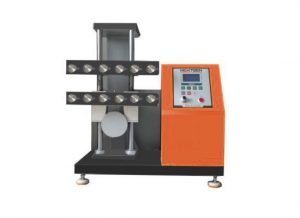
ISO 132:2017 is an ISO rubber test method that uses a De Mattia type flexing machine to compare how vulcanized or thermoplastic rubber resists crack formation (flex cracking) and crack propagation (crack growth) under repeated flexing.
This standard is typically used for compound screening, incoming material qualification, and durability benchmarking for rubber parts that see cyclic bending in service. If you need help matching the right edition or determining whether flex cracking or crack-growth evaluation is the best fit for your product, talk with our team.
ISO 132:2017 — Rubber, vulcanized or thermoplastic — Determination of flex cracking and crack growth (De Mattia)
ISO 132:2017 describes a laboratory method for repeatedly flexing rubber test pieces on a De Mattia type machine and then evaluating cracking behavior. It is intended for comparative testing, such as ranking materials, formulations, or processing conditions.
| Item | What to expect |
|---|---|
| Document type | Test method (flex cracking and crack growth on a De Mattia type machine) |
| Material scope | Vulcanized or thermoplastic rubber |
| Primary outcome | Comparative resistance to crack formation and/or crack growth under repeated flexing |
| Crack-growth option | Uses an artificial cut in the test piece to initiate cut growth |
Quick definition
ISO 132 (De Mattia): A repeated-flexing durability test for rubber that compares crack initiation and/or crack growth using a De Mattia type flexing machine.
What This Standard Covers
ISO 132:2017 focuses on cracking behavior that develops when a rubber specimen is repeatedly flexed. Depending on the evaluation approach, it can be used to compare:
- Resistance to surface cracking (crack initiation during flexing)
- Resistance to crack propagation (growth of a cut or crack during flexing)
Because results are intended for comparison, test conditions, specimen preparation approach, and the evaluation method selected within ISO 132 should be aligned to the way your lab reports results (e.g., pass/fail screening vs. ranked material comparisons).
Why This Standard Matters in Testing
Flex cracking and crack growth are common failure modes for rubber components exposed to cyclic bending. ISO 132:2017 is often used to support practical decisions such as:
- Compound selection and formulation changes
- Supplier comparisons and material approvals
- Process validation where flex-fatigue cracking is a known risk
In procurement and QA/QC workflows, specifying ISO 132 can help standardize how “flex durability” is evaluated across different lots, plants, or suppliers—provided the same evaluation approach and acceptance criteria are applied.
Common Materials, Product Types, or Applications Covered
This standard applies to vulcanized and thermoplastic rubbers and is commonly associated with flexible rubber components that experience repeated bending in service. Typical examples include:
- Rubber sheet and molded goods used in dynamic flexing environments
- Elastomer components where crack initiation and propagation resistance is a design concern
If your requirement is tied to a specific product standard (tire, belt, footwear, seal, etc.), it is common for ISO 132 testing to be one element of a broader qualification program rather than the only performance test.
Common Test or Verification Workflow
ISO 132:2017 is typically implemented as a comparative flex-fatigue program. While the exact details depend on the edition and the lab’s reporting approach, a common workflow includes:
Common workflows: Prepare rubber specimens, run repeated flexing on a De Mattia type machine, evaluate cracking and/or measure crack growth from an initiated cut, and report results as comparative performance between materials or conditions.
Common decisions supported: Material screening, formulation optimization, supplier qualification, and durability benchmarking against internal targets.
Equipment Commonly Used for This Standard
The equipment path for ISO 132:2017 is centered on generating controlled repeated flexing and then evaluating cracking consistently.
Core test system: De Mattia type flexing (flex-cracking) machine with cycle counting and repeatable specimen clamping.
Common supporting tools: Specimen preparation tools (cutting dies and/or molds as required by the chosen approach), a method to introduce a controlled artificial cut when performing crack-growth evaluation, and measuring tools for crack length or crack development (e.g., optical measurement aids).
Practical purchasing caution: When quoting a De Mattia system, key configuration questions usually include how many specimens must run at once, how crack growth will be measured and documented, and whether any temperature/conditioning capability is required by your internal procedure.
If you are comparing machine capacities or accessory packages for ISO 132 testing, you can request a detailed quote for a configuration matched to your specimen volume and reporting needs.
How to Read This Designation or Revision
Standard number: ISO 132.
Year suffix: The year in the designation (for example, ISO 132:2017) indicates the publication year of that edition.
Revision sensitivity: Because ISO 132 has multiple historical editions, equipment setup details and reporting expectations can depend on the exact edition cited in a purchase specification or customer requirement. Align the quoted system, fixtures, and measurement approach to the cited edition (not just “ISO 132” in general).
Related Standards, Methods, or Frameworks
ISO 132:2017 is part of a broader set of rubber physical test methods used to characterize durability under mechanical cycling. It is commonly specified alongside other elastomer performance tests (for example, tensile/elongation, tear, abrasion, hardness, and aging) depending on the product and end-use environment.
When a contract or drawing references multiple standards, it is important to confirm which tests are for material release versus which are ongoing quality checks, since that can change required throughput, fixturing, and documentation.
Get help selecting an ISO 132 test setup
If you need a De Mattia flexing system configured for your ISO 132 edition, specimen throughput, and crack evaluation approach, contact our team to discuss the right configuration before you lock in equipment and tooling.