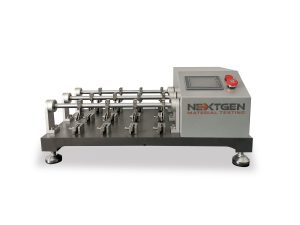
ISO 17694:2016 is a footwear materials test method used to evaluate the flex resistance of uppers and linings, regardless of material type. It is commonly referenced when qualifying upper and lining materials for durability under repeated bending in service.
If you need help aligning your sample type, conditioning, or acceptance criteria to the edition cited in your specification, talk with our team about your ISO 17694 test requirement.
ISO 17694:2016 — Footwear — Test methods for uppers and lining — Flex resistance
ISO 17694:2016 defines a laboratory procedure to determine flex resistance for footwear upper and lining materials. The intent is to assess whether a material is suitable for its intended end use when subjected to repeated flexing.
This is typically used by footwear brands, material suppliers, and test labs as part of material approval, supplier qualification, incoming inspection, or change-control verification for upper and lining constructions.
Quick Definition
Document type: Test method.
What it measures: Resistance of upper and lining materials to damage from repeated flexing.
Common output: A flex durability assessment based on the condition of the specimen after a defined flexing exposure (per the cited edition and test condition).
What This Standard Covers
ISO 17694:2016 covers a repeat-flex evaluation for uppers and linings. The method is written to apply irrespective of the material type, which can include natural leather, coated textiles, synthetic laminates, and multi-layer constructions.
The standard is commonly used when the expected failure modes are flex-related (such as cracking, surface damage, delamination, or other visible breakdown) and when comparative screening between materials or lots is needed.
Why This Standard Matters in Testing
Repeated bending is one of the most common mechanical stresses experienced by footwear uppers and linings during wear. A flex resistance method provides a practical way to compare candidate materials, validate supplier changes, and reduce the risk of premature durability complaints tied to flex-driven damage.
Because flex resistance results can be sensitive to conditioning and the exact procedure used, test planning should always reference the exact cited edition and any customer or brand-specific acceptance criteria tied to the result.
Common Materials, Product Types, or Applications Covered
ISO 17694 is most often applied to:
-
Upper materials: Leather, synthetic leather, coated fabrics, laminates, and composite upper packages.
-
Lining materials: Woven, knitted, nonwoven, and laminated lining constructions used inside footwear.
-
Use cases: Material qualification for casual, athletic, outdoor, uniform, and fashion footwear where repeated flexing is part of normal service.
Common Test or Verification Workflow
ISO 17694 is typically run as part of a durability screening workflow rather than as a single stand-alone mechanical property test.
Common workflows: Supplier/material approval, comparative benchmarking between constructions, incoming QC checks on critical upper/lining lots, and verification after a material/process change.
Practical note: Many purchasing specifications cite ISO 17694 alongside other footwear component tests (for example, thickness, tear, abrasion, water vapour performance, and color fastness), so labs often schedule it within a broader conditioning and test plan.
Equipment Commonly Used for This Standard
ISO 17694 is centered on controlled repeated flexing of prepared test pieces. The exact configuration and settings depend on the edition and any required test condition (for example, dry, wet, or cold testing when specified).
Common equipment: A flexing/flexometer-style test machine designed for repeat bending cycles, specimen preparation tools (cutters/dies appropriate to the required specimen shape), and a way to count and control flex cycles.
Common supporting equipment: Conditioning capabilities (standard laboratory atmosphere and, when required, temperature conditioning for cold testing) and accessories for wet exposure when wet testing is specified by the method or by a customer requirement.
If you are selecting a flexing tester or need to match capacity, fixtures, and conditioning accessories to your specimen type, you can request a detailed quote for a configuration aligned to your ISO 17694 workflow.
How to Read This Designation or Revision
Standard number: ISO 17694.
Year/edition: ISO 17694:2016 (Edition 2) is a current published edition, and it replaced an earlier ISO 17694:2003 edition.
Revision sensitivity: Specimen preparation, conditioning options (such as dry/wet/cold), flex exposure, and reporting expectations can vary by edition and by how a brand or program cites the method. For purchasing specifications, always match your test plan to the exact designation shown on the requirement (including the year).
Related Standards, Methods, or Frameworks
ISO 17694 is commonly used alongside other footwear sampling and conditioning references and, in some material programs, alongside flex testing methods written for specific material classes.
Examples of related references used with ISO 17694: ISO 17709 (sampling location, preparation, and conditioning duration), ISO 18454 (standard atmospheres for conditioning/testing of footwear and components), and ISO 5402-1 (flex resistance of leather via a flexometer method).
Get help running ISO 17694 testing
If you are preparing to implement ISO 17694 for upper or lining qualification, we can help you match the flexing system, fixtures, and conditioning approach to your material construction and the edition cited by your customer. To discuss equipment options and lead times, request pricing for an ISO 17694-ready setup.