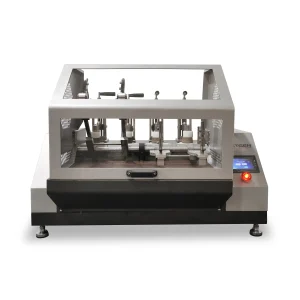
ISO 24266 Method A is a whole-footwear flexing durability test method used to repeatedly bend a complete shoe along its normal flex line and then evaluate damage, cracking, or other flex-related failures after a defined exposure.
Method A is commonly selected when a lab needs a standardized whole-shoe flex test with defined machine setup and controlled cycling to support product development, QA comparisons, and supplier/customer acceptance discussions. If you need help confirming whether Method A is the right choice for your shoe type or test objective, talk with our team.
ISO 24266:2020 — Footwear — Test methods for whole shoe — Flexing durability (Method A)
ISO 24266 is an ISO test-method document for evaluating flexing durability of whole shoes. It provides two alternative methods (Method A and Method B), and notes that results between methods may not be comparable.
Method A focuses on repeatedly flexing an intact shoe about its flexing line using a dedicated flexing machine and then assessing the condition of the footwear after the specified flexing exposure.
Quick definition
ISO 24266 Method A: A laboratory procedure for repeatedly flexing a complete shoe about its normal flex line under specified machine conditions, then recording flex-related damage and the test exposure used to reach that condition.
What this standard covers
Method A covers how to prepare and condition the whole shoes for test, how to identify and align the shoe’s flexing line in the machine, how to run repeated flex cycles, and how to record observations and results.
ISO 24266 also defines applicability limits for the overall test approach (for example, it is not intended for certain high-heel configurations and unusually thick sole flexing regions), so shoe type and construction details matter before selecting the method.
Why this standard matters in testing
Whole-shoe flexing is a practical way to stress the upper/sole system as-built, including material interfaces and construction features that are not captured by outsole-only or component-only tests.
Method A is often used to compare designs, materials, or build parameters under a repeatable flexing exposure, and to support internal durability targets or buyer requirements when a whole-shoe flex test is specified.
Common materials, product types, or applications covered
This method is typically applied to complete footwear where forefoot flexing durability is a concern, including many everyday walking and casual constructions.
Because the method is run on the whole shoe, it can be relevant to multi-material assemblies (upper materials, adhesives, stitched areas, foxing/tapes, midsoles/outsoles) where repeated bending can drive cracks, separations, or visible damage.
Common test or verification workflow
Method A is commonly used in a workflow like the following:
- Select and document the shoe style/size(s) and test quantity (often as pairs, by agreement).
- Condition the shoes in a controlled laboratory atmosphere as required by the standard.
- Mark/identify the shoe flexing line and mount the whole shoe in the flexing machine.
- Run the flexing exposure (cycles and any intermediate inspections as specified/needed).
- Inspect the footwear and record damage/condition along with the applied exposure and key machine settings.
Equipment commonly used for this standard
Method A typically points to a dedicated whole-shoe flexing durability machine designed to repeatedly bend a shoe about its flex line at controlled speed and angle, with a counter/timer to capture test exposure.
Common equipment elements: Whole-shoe flexing machine, shoe holding/clamping system aligned to the flexing line, cycle counter/timer, and basic measuring tools used for setup checks and documentation.
Buying/quoting caution: Method A performance depends heavily on how the machine controls flex angle/speed and how the fixture holds and aligns the shoe. If you are comparing machine options or fixture styles for different footwear constructions, you can request pricing for a configuration matched to your sample range.
How to read this designation or revision
ISO 24266:2020 is the ISO standard that contains both Method A and Method B for whole-shoe flexing durability. “Method A” refers to the specific procedure and apparatus setup described within that document.
Revision sensitivity: Machine setup details, conditioning references, applicability limits, and reporting requirements can change by edition. When purchasing equipment or comparing data, match the exact cited edition (for example, ISO 24266:2020) and the selected method (A vs B).
Related standards, methods, or frameworks
ISO 24266 commonly references other ISO documents for supporting requirements such as controlled conditioning atmospheres and certain footwear stiffness/rigidity context used to define applicability boundaries.
If a customer specification calls out additional whole-shoe or outsole flex methods, it is important to confirm whether results are intended to be compared directly, since ISO 24266 notes that Method A and Method B may not produce comparable outcomes.
Talk with us about ISO 24266 Method A testing
If you are aligning a durability requirement to a specific shoe construction (heel height, sole thickness, flex zone geometry) or need to choose between Method A and Method B, contact our team to discuss the right setup and documentation approach for your lab.