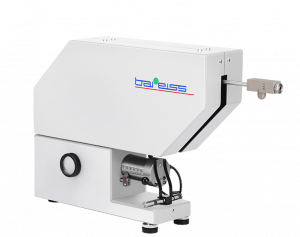
ISO 4662 is an ISO test standard for determining rebound resilience (impact energy return) of vulcanized or thermoplastic rubber using defined impact methods and instrumentation.
It is commonly used to compare “springiness” and damping behavior of elastomers for dynamic applications where bounce, vibration response, or energy loss matters. If you need help matching your material, hardness range, and method choice to the right setup, talk with our team.
ISO 4662:2017 — Rubber, vulcanized or thermoplastic — Determination of rebound resilience
ISO 4662:2017 defines standardized approaches for measuring rebound resilience of rubber within a specified hardness range. The standard is used in materials qualification, incoming inspection, and compound/product comparisons where consistent impact-style deformation is required.
Because rebound resilience is sensitive to material formulation and test conditions, the exact apparatus type and the exact edition cited on drawings or customer specifications should be followed.
Quick Definition
ISO 4662 in one line: A rebound resilience test standard for vulcanized or thermoplastic rubber that specifies two instrumented methods (pendulum and tripsometer) and calculates resilience from measured kinetic energy before and after impact.
What you get: A rebound resilience value used to compare elastic energy return and damping behavior between rubber materials or lots.
What This Standard Covers
ISO 4662:2017 specifies two methods for determining rebound resilience of rubber:
- Pendulum method: A mass with a spherical end impacts a flat test piece that is firmly held while remaining free to bulge.
- Tripsometer method: A flat test piece is impacted by a hemisphere mounted on the periphery of a rotating disc system.
The standard applies to rubber within a defined hardness range (reported by ISO as 30 IRHD to 85 IRHD). For materials outside that range or for non-rubber polymers/foams, a different method may be more appropriate.
Why This Standard Matters in Testing
Rebound resilience is often used as a practical indicator of how an elastomer responds to impact-like deformation: higher resilience generally indicates more energy return (more “bounce”), while lower resilience indicates greater energy loss (more damping).
In production and QA/QC, ISO 4662 can support material release decisions, supplier comparisons, and lot-to-lot monitoring where a controlled, repeatable impact condition is required rather than a slow-rate mechanical test.
Common Materials, Product Types, or Applications Covered
ISO 4662 is commonly applied to vulcanized rubber and thermoplastic elastomers evaluated in slab or plaque form, as used across:
- General elastomer compound development and benchmarking
- Vibration and damping-oriented rubber components (where energy loss/return is a selection factor)
- Products where rebound behavior is a performance or feel requirement (e.g., resilient pads, bumpers, and similar elastomer parts)
The standard is typically used for material comparison and control; product-level acceptance criteria (pass/fail limits) are normally defined by the buyer, drawing, or internal specification—not by ISO 4662 itself.
Common Test or Verification Workflow
A typical ISO 4662 workflow in a lab or production setting includes method selection, specimen preparation/selection, conditioning as required by the cited procedure, and repeated impacts to obtain reportable resilience results.
Common workflows: Material qualification (new compound), supplier approval, incoming inspection, process change validation, and periodic QC checks for elastomer batches.
Practical caution: Results can be highly sensitive to the apparatus type (pendulum vs. tripsometer) and the specific setup requirements in the cited edition, so test reports should clearly state the method used and the referenced ISO 4662 edition.
Equipment Commonly Used for This Standard
ISO 4662 is typically performed on dedicated rebound resilience instruments rather than a universal testing machine. Equipment selection depends on which of the two ISO 4662 methods you need to run and how your lab plans to control conditioning and data capture.
Common equipment: Pendulum rebound resilience tester (ISO 4662 pendulum method), tripsometer-style rebound resilience tester (ISO 4662 tripsometer method), appropriate specimen support/holding fixtures, and instrument software or readout for energy-based calculations.
Typical accessories: Specimen cutting/preparation tools for flat test pieces, basic dimensional measurement tools, and (when required by your internal procedure) environmental conditioning capability to control test temperature.
If you are comparing manual vs. automated rebound testers or need a configuration that aligns with how your customers cite the method, you can request pricing for an ISO 4662-capable rebound system matched to your throughput and reporting needs.
How to Read This Designation or Revision
Common citation format: ISO 4662:2017.
What the year means: The “2017” indicates the publication year of the referenced edition. ISO also identifies this as Edition 4 and notes that it was last reviewed and confirmed in 2022, meaning it remained current at that review.
Why edition matters: Apparatus requirements, method details, and reporting expectations can vary by edition, so purchasing, quoting, and test reporting should match the exact ISO 4662 edition specified by your customer or internal documentation.
Related Standards, Methods, or Frameworks
Rebound resilience testing is also referenced in other national or industry documents. For example, DIN 53512 addresses rebound resilience using a pendulum approach and has been associated with ISO 4662 in practice.
Some rebound resilience instruments are designed to support multiple published methods (ISO, DIN, and ASTM) in one platform. When a customer specification cites a non-ISO method, it is important to confirm that the instrument configuration and calculation/reporting mode matches that specific method—not only that the instrument is broadly described as a “rebound tester.”
Get help selecting an ISO 4662 test setup
If you are setting up rebound resilience testing for elastomers and need to align method choice (pendulum vs. tripsometer), throughput, and reporting with the way your customers cite ISO 4662, you can request a detailed quote for an equipment package that fits your workflow.