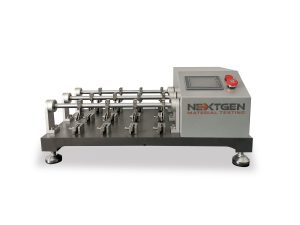
ISO 5402-1 is an ISO test method for determining the dry or wet flex resistance of leather and leather finishes using a flexometer. It is commonly used to evaluate how leather (and its surface finish) holds up under repeated bending and flexing in service.
This standard is widely referenced for footwear, leather goods, and upholstery programs where cracking, finish break, or fatigue from repeated flexing is a key quality risk. If you need help matching a flexometer setup to the edition you must follow, talk with our team.
ISO 5402-1: Leather — Determination of flex resistance — Part 1: Flexometer method
ISO 5402-1 defines a flexometer-based procedure to assess flex resistance in leather and finishes applied to leather. The method can be run in dry or wet conditions and is intended for flexible leather below 3.0 mm thickness.
Quick definition
Document type: Test method.
Measures: Resistance to damage (such as cracking or finish breakdown) when leather is repeatedly flexed.
Typical output: A flexing performance result based on the required flexing conditions and the condition/appearance of the specimen after cycling.
What this standard covers
This standard specifies a flexometer method for determining the dry or wet flex resistance of leather and finishes applied to leather.
It is intended for flexible leather materials below 3.0 mm in thickness, where repeated bending can drive visible cracking, finish break, or other fatigue-related changes.
Why this standard matters in testing
Flex resistance testing helps teams screen materials and finishing systems before production and helps manufacturers control variability between lots, suppliers, or process conditions.
For finished leathers, a flex test is often used as a durability gate because repeated flexing can reveal finish brittleness, adhesion weaknesses, or fatigue behavior that may not show up in basic tensile or tear testing.
Common materials, product types, or applications covered
ISO 5402-1 is commonly applied to flexible leather used in products where repeated bending is expected during normal use, including:
- Footwear upper leather and finished leathers (where surface appearance retention matters)
- Leather goods (belts, bags, straps) where fold lines and repeated flex points are common
- Upholstery and interior leather applications where cyclic flexing contributes to wear
Common test or verification workflow
Most programs use ISO 5402-1 as part of a larger leather qualification workflow (incoming inspection, supplier approval, process change validation, and customer-specific durability requirements).
Common workflow: Prepare specimens from the required area of the hide/leather, condition as required, run flexing in the specified dry or wet condition for the required number of cycles, and evaluate the specimen and finish condition after cycling using the acceptance criteria defined by the specification or customer requirement.
Practical caution: Results can be sensitive to specimen selection (location/orientation), leather thickness, and whether the test is run dry versus wet—so equipment configuration and reporting should match the exact edition and the purchasing specification that cites the test.
Equipment commonly used for this standard
ISO 5402-1 is centered on a flexometer that repeatedly bends leather specimens in a controlled, repeatable motion for a defined number of cycles.
Common equipment: Flexometer (with specimen holders/clamps), cycle counter/controller, specimen cutting tools (dies/cutters), conditioning space for pre-test conditioning, and basic inspection aids (lighting and magnification) for evaluating cracks or finish damage.
For wet flex testing, labs typically also use water exposure/handling accessories and a controlled approach to post-wet evaluation consistent with the cited procedure and acceptance criteria.
How to read this designation or revision
ISO 5402-1 identifies Part 1 of the ISO 5402 flex resistance series, specifically the flexometer method.
Year suffix matters: When cited as ISO 5402-1:2022 (or another year), the year indicates the edition that defines the exact procedure details and reporting expectations. Purchase specifications and customer requirements may require a specific edition.
Related standards, methods, or frameworks
Depending on what your customer specification is trying to simulate, ISO 5402-1 may be used alongside other leather flex resistance approaches and supporting leather test standards.
- ISO 5402-2 (vamp flex method) for an alternative flex resistance approach in the same series.
- ISO sampling/location practices commonly used in leather testing programs to define where specimens are taken from the hide/leather.
Get help selecting a flexometer configuration
If you are equipping a lab for ISO 5402-1 dry and/or wet flex testing, you can request a detailed quote for a flexometer configuration and accessory package aligned with your throughput and evaluation requirements.