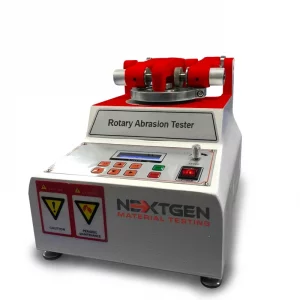
ISO 5470-1:2016 is an ISO test method for assessing the abrasion (wear) resistance of rubber- or plastics-coated fabrics using a Taber abrader.
It is commonly used to compare coated textile constructions, support material selection and product qualification, and document abrasion performance for coated-fabric components and assemblies. If you need help confirming whether Taber (Part 1) or another abrasion approach fits your requirement, talk with our team.
ISO 5470-1:2016 — Rubber- or plastics-coated fabrics — Determination of abrasion resistance — Part 1: Taber abrader
ISO 5470-1:2016 focuses on abrasion resistance testing for coated fabrics using the Taber abrader platform. The standard is written around the coated-fabric use case (a textile substrate with a polymeric or rubber coating) and provides a repeatable laboratory approach for running and reporting controlled abrasive wear.
| Item | What it means for your lab |
|---|---|
| Document type | Test method (abrasion resistance evaluation using a Taber abrader) |
| Primary material focus | Rubber- or plastics-coated fabrics |
| Core apparatus | Taber abrader with abrasive wheels and controlled loading |
Quick Definition
ISO 5470-1:2016 is a Taber abrasion method used to assess abrasive wear resistance of rubber- or plastics-coated fabrics under controlled, repeatable lab conditions.
What This Standard Covers
This standard covers an abrasion resistance assessment performed with a Taber abrader on coated fabric test pieces. The coated fabric is exposed to abrasive action from rotating wheels under a defined load for a defined number of cycles.
In practice, the cited product specification or internal test plan typically defines the wheel type, applied load, number of cycles, and the pass/fail or comparison criterion to be used for the coated fabric being evaluated.
Why This Standard Matters in Testing
Abrasion is a frequent durability driver for coated fabrics used in contact, rub, drag, or handling environments. ISO 5470-1 is often selected when buyers or engineers need a standardized, equipment-based way to compare constructions or demonstrate a minimum abrasion resistance level for qualification.
Because abrasion results are sensitive to wheel selection, loading, endpoint definition, and how results are expressed, most quality systems treat the exact cited edition of the standard and the referenced test conditions as part of the controlled method.
Common Materials, Product Types, or Applications Covered
ISO 5470-1 is associated with coated fabrics where a polymeric or rubber coating provides functional performance and the textile reinforcement provides strength, dimensional stability, or handling.
- Industrial protective covers, curtains, and flexible barriers made from coated textiles
- Inflatable or flexible structures using coated fabric constructions
- Coated fabric components where surface wear can expose reinforcement yarns or reduce barrier performance
- Coated fabrics used in equipment housings, transport, or material-handling environments where rubbing/drag is expected
Common Test or Verification Workflow
Most ISO 5470-1 workflows follow a simple pattern: prepare coated-fabric specimens, condition them as required, run abrasion cycles on a Taber abrader using defined wheels and loading, and then evaluate wear using the specified endpoint or measurement approach.
Typical workflow decisions that affect equipment setup: abrasive wheel selection, applied load (including added weights), test duration in cycles, cleaning or debris removal approach during the run, and the evaluation/endpoint definition used for reporting.
Equipment Commonly Used for This Standard
The equipment path for ISO 5470-1 centers on a Taber abrader system configured for repeatable cycle counting, controlled loading, and consistent abrasive contact with the coated fabric specimen.
Common equipment: Taber abrader (rotary platform abrasion tester), abrasive wheels compatible with the required severity, wheel resurfacing/refacing accessories (when required by your procedure), calibrated weights/loading accessories, specimen cutter (for consistent specimen geometry), and a balance if your evaluation approach uses mass change.
If you are selecting an abrader configuration, wheel set, or loading accessories to match a specific customer or internal requirement, you can request a detailed quote for a setup aligned to your coated-fabric abrasion workflow.
How to Read This Designation or Revision
ISO 5470-1 identifies Part 1 of the ISO 5470 series, which is the Taber abrader method for coated fabrics. The year (for example, :2016) indicates the published edition being referenced.
ISO 5470-1:2016 is a published standard and has an older withdrawn edition (ISO 5470-1:1999). When purchasing equipment, comparing results, or quoting compliance, it is important to align your lab’s procedure with the exact edition and any additional requirements defined by the product specification that cites ISO 5470-1.
Related Standards, Methods, or Frameworks
ISO 5470 is a multi-part series under the general title “Rubber- or plastics-coated fabrics — Determination of abrasion resistance.” Part 1 covers the Taber abrader approach, and other parts in the series may use different abrasion equipment.
When a drawing, contract, or procurement document references “ISO 5470” without a part number, clarifying the intended part (and the intended abrasion apparatus) avoids mismatched equipment and non-comparable results.
Talk with Us About ISO 5470-1 Test Setup
If you have a specific coated fabric, a required endpoint, or a customer citation that includes wheel/load/cycle details, contact our team to align the planned equipment configuration and reporting approach to the requirement you need to meet.