ISO 604 is an ISO test method for determining compressive properties of plastics under defined conditions, including compressive strength, compressive modulus, and the compressive stress/strain relationship.
Because compression results are sensitive to specimen geometry, buckling risk, test speed, and conditioning, it is important to match your setup to the exact ISO 604 edition cited in your requirement. If you need help aligning fixtures, strain measurement, or reporting to a customer or internal spec, talk with our team.
ISO 604:2002 Plastics — Determination of compressive properties
ISO 604:2002 is an International Standard that defines a laboratory method for measuring compressive properties on plastics specimens using a controlled compression test.
It is commonly used to generate comparable material property data for design allowables, quality control checks, supplier qualification, and product development when plastics parts are loaded primarily in compression.
Quick Definition
What ISO 604 is: A standardized compression test method for plastics that produces compressive strength, compressive modulus, and other stress/strain metrics under specified conditions.
What it is not: A general “all materials” compression method; its scope is plastics-focused and includes stated limitations for certain reinforced, cellular, or sandwich constructions.
What This Standard Covers
ISO 604 specifies a compression testing approach for plastics using a defined specimen concept and controlled test speeds. It allows the specimen length to be adjusted to reduce buckling effects so the results reflect compressive material behavior rather than instability.
The standard is intended to characterize compressive behavior and determine properties such as compressive strength and compressive modulus from the measured stress/strain response.
ISO 604 applies to a range of plastics, including rigid and semi-rigid thermoplastic and thermoset molding/extrusion materials and sheet, as well as thermotropic liquid-crystal polymers. It also addresses applicability to certain short-fiber-reinforced compounds in alignment with ISO 10350-1 and ISO 10350-2, and it notes that the method is not normally suitable for some textile-fiber-reinforced materials, many composites/laminates, rigid cellular materials, or sandwich structures.
Why This Standard Matters in Testing
Compression testing can be highly sensitive to alignment, end conditions, and specimen stability. ISO 604 matters because it provides a consistent framework for generating compression property data that can be compared across material lots, suppliers, and labs when the same geometry and test conditions are used.
The standard also highlights practical comparability risks—such as differences in specimen dimensions, preparation conditions, test speed, and conditioning—that can shift results even when the material is unchanged.
Common Materials, Product Types, or Applications Covered
ISO 604 is commonly applied to rigid and semi-rigid plastics in forms such as molded plastics, extruded plastics, and sheet materials where compressive loading is relevant.
Typical use cases: Material datasheet generation, incoming inspection comparisons, process change validation, and R&D benchmarking for plastics used in load-bearing components, housings, structural inserts, and other parts where compressive stress is expected.
Common Test or Verification Workflow
Most ISO 604 programs follow a straightforward lab workflow focused on controlling specimen stability and strain measurement.
Common workflow: Prepare specimens (molded or machined) → condition specimens as required → set up compression platens and alignment → apply compressive load at a specified test speed → measure force and deformation/strain → calculate compressive strength, compressive modulus, and reported stress/strain values → document specimen details, test speed, and conditioning so results remain comparable.
Practical caution: If the specimen buckles or the platens introduce bending, the test may no longer represent true compressive material behavior; fixture selection and alignment are key parts of a defensible result.
Equipment Commonly Used for This Standard
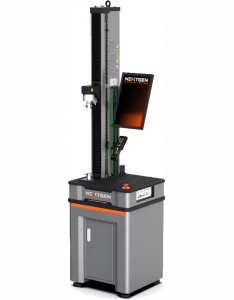
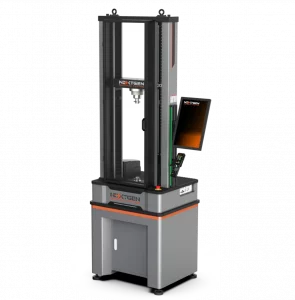
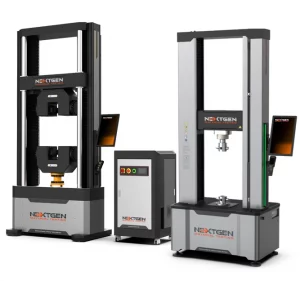
ISO 604 compression testing is typically run on a universal testing machine configured for compression and equipped to control speed and capture force and deformation accurately.
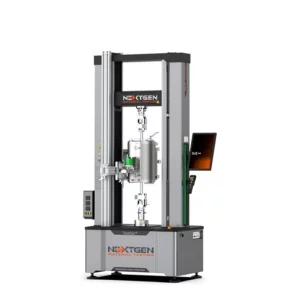
Common equipment: Universal testing machine (UTM) with compression capability, compression platens, aligned compression fixtures (as needed for stability), and appropriate data acquisition/software for stress/strain reporting.
Common measurement add-ons: Strain or displacement measurement suitable for modulus work (selection depends on the material and the required strain range).
Common environmental options: Temperature-controlled conditioning and/or a test environment solution when properties must be reported at non-ambient conditions.
How to Read This Designation or Revision
Designation format: “ISO 604:2002” identifies the ISO standard number (604) and the year of publication (2002).
Status and currency: ISO 604:2002 is published and was last reviewed and confirmed in 2022, so this edition remains current.
Edition sensitivity: Procurement specs and customer drawings often cite ISO 604 with the year; labs should match the cited edition because test speeds, specimen guidance, and reporting expectations can be edition-dependent.
Related Standards, Methods, or Frameworks
ISO 604 commonly appears alongside plastics specimen preparation and property reporting frameworks.
Frequently used references with ISO 604: ISO 3167 (multipurpose test specimen, where specimens may be machined from the central portion), and ISO 10350-1 / ISO 10350-2 for property presentation conventions referenced for certain short-fiber-reinforced compounds.
Get a compression testing setup aligned to ISO 604
If you are selecting a UTM load range, compression platens, and strain measurement for ISO 604 work, you can request a detailed quote for a configuration matched to your material type, specimen geometry, and reporting requirements.