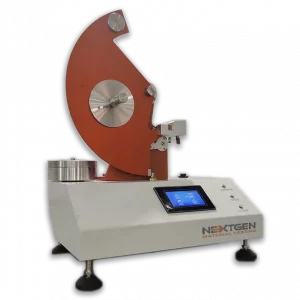
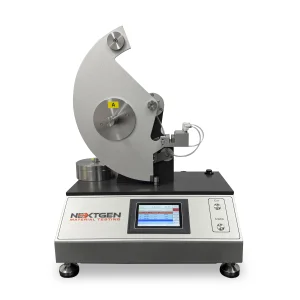
ISO 6383-2:1983 is an ISO test method for measuring tear propagation resistance in plastic film and flexible sheeting using the Elmendorf pendulum approach.
If you need help confirming whether Elmendorf tear testing is the right match for your film type (especially very extensible or more rigid films), contact our team and we’ll help you align equipment capability to the way your specification cites ISO 6383-2.
ISO 6383-2:1983 — Plastics — Film and sheeting — Determination of tear resistance — Part 2: Elmendorf method
ISO 6383-2 is focused on measuring the force needed to propagate a tear over a defined distance from a defined slit in a thin, flexible plastic film or sheet specimen under specified loading conditions.
This method is widely used for product development and QC comparisons where tear propagation performance is a key functional requirement (for example, packaging films and other thin polymer sheets that must resist accidental tearing once a nick or slit is present).
Quick Definition
What it is: A pendulum (Elmendorf) tear propagation test for plastic film and flexible sheeting.
What it reports: Tear propagation force over a specified tear distance, generated from a controlled pendulum tear event.
Practical note: Applicability depends on the material’s behavior during tearing; very extensible films can show variable elongation and angled tearing that reduce repeatability.
What This Standard Covers
ISO 6383-2 specifies an Elmendorf-based procedure for determining the force required to propagate a tear starting from a defined slit in a plastic film or flexible sheet specimen.
The maximum thickness that can be tested is not a single fixed value; it depends on the tear force level of the material relative to the capacity of the tearing tester being used.
The method is commonly applicable to flexible PVC and polyolefin films, but it may be less suitable for the most extensible films due to variability in elongation and the tendency for the tear to run at an angle. It can also be inappropriate for more rigid films (examples commonly cited include rigid PVC, polyamide films, and polyester films).
Why This Standard Matters in Testing
Film tear performance is often a go/no-go property for real-world handling, converting, and end use. ISO 6383-2 provides a standardized way to compare tear propagation resistance across materials, suppliers, resin lots, or process changes.
Because the Elmendorf method is a fast, repeatable pendulum approach when the material is within the method’s practical range, it is frequently used as a production-facing metric for trend monitoring and incoming material checks.
Common Materials, Product Types, or Applications Covered
ISO 6383-2 is commonly referenced for thin plastic films and flexible sheeting where tear propagation resistance is important after a cut, notch, or handling damage.
Common examples: Flexible PVC films, polyolefin films, and similar thin flexible plastic sheets used in packaging and protective film applications.
Common caution areas: Very extensible films (repeatability can suffer), and more rigid films where tear behavior may not be well represented by this pendulum-based approach.
Common Test or Verification Workflow
In a typical ISO 6383-2 workflow, specimens are prepared with a defined slit, then mounted in an Elmendorf tearing tester. A pendulum is released to propagate the tear over a defined distance, and the instrument indicates the tear propagation force.
Common workflow goals: Compare tear resistance between film constructions, monitor process changes, support supplier qualification, and document compliance to a customer or internal requirement that calls up ISO 6383-2.
Equipment Commonly Used for This Standard
ISO 6383-2 points to an Elmendorf pendulum tear testing setup designed for thin plastic film and flexible sheeting.
Common equipment: Elmendorf tear tester (pendulum type), specimen cutting tools/templates for consistent geometry and slit preparation, and verification accessories appropriate to the instrument’s measurement range.
When quoting or configuring equipment, the most important matching factors are the expected tear-force range (to select the correct pendulum capacity and resolution) and the material behavior (to reduce angled tearing and improve repeatability where possible). If you are selecting a tester for a range of film types, you can request a detailed quote for a configuration sized to your force range and throughput.
How to Read This Designation or Revision
ISO 6383-2 identifies Part 2 of the ISO 6383 series for tear resistance of plastics film and sheeting.
:1983 indicates the publication year for this edition of the standard. ISO periodically reviews older documents; if your purchase specification or customer requirement references ISO 6383-2, test setup details and reporting expectations should follow the exact edition cited in that requirement.
Related Standards, Methods, or Frameworks
ISO 6383 is a multi-part series for tear resistance of plastics film and sheeting. For applications where a trouser-tear style method is specified instead of a pendulum method, ISO 6383-1 is commonly referenced within the same series.
Some material specifications may also reference other regional pendulum tear methods for plastic films; always align the instrument setup and reporting to the exact standard cited in the controlling document.
Talk to us about ISO 6383-2 testing capacity and configuration
If you’re standardizing Elmendorf tear testing across multiple film products or need to match an existing customer requirement, talk with our team about the right capacity range, accessories, and documentation outputs for ISO 6383-2 workflows.