ISO 6506-1:2014 defines the Brinell hardness test method for metallic materials, covering how Brinell hardness is determined using fixed-location and portable hardness testing machines.
If you need help matching your part size, surface condition, or expected hardness range to the right Brinell setup (bench vs. portable, indenter, force level, and measurement approach), talk with our team about your application.
ISO 6506-1:2014 — Metallic materials — Brinell hardness test — Part 1: Test method
ISO 6506-1 is a test-method standard used to generate Brinell hardness results on metallic materials using a Brinell hardness testing machine. It is commonly referenced for incoming inspection, production control, heat treatment verification, and material qualification where a Brinell scale is required.
This document focuses on the test method itself. In many quality systems, it is used alongside the other parts of the ISO 6506 series for machine verification, reference blocks, and hardness tables.
Quick Definition
Document type: Test method (International Standard).
In one line: Provides the procedure for performing Brinell hardness testing on metallic materials using either fixed (bench) or portable Brinell hardness machines.
Common output: A reported Brinell hardness value for a specified test condition (force/indenter combination) based on the indentation produced.
What This Standard Covers
ISO 6506-1 specifies the method for conducting a Brinell hardness test on metallic materials. Practically, this typically includes selecting the appropriate test condition (indenter and force), creating an indentation under controlled loading, measuring the indentation, and reporting a Brinell hardness value with the required test details.
It is applicable to both fixed-location hardness testers and portable Brinell systems, which is important when testing large fabrications, installed components, or parts that cannot be brought to a bench tester.
Why This Standard Matters in Testing
Brinell hardness testing is often selected when a larger indentation is helpful for representing the bulk response of a metal (for example, in castings or materials with relatively coarse microstructures). ISO 6506-1 provides a consistent method so results can be compared across shifts, sites, suppliers, and inspection stages.
For labs and production teams, the most common risk is not the hardness calculation itself, but inconsistent test conditions (force/indenter selection, surface condition, thickness/support, and measurement approach). Using the cited method helps align the test setup and reporting to what customers and auditors expect.
Common Materials, Product Types, or Applications Covered
ISO 6506-1 is used broadly for metallic materials where Brinell hardness is specified or accepted, including many steels, cast irons, nonferrous alloys, and heat-treated parts.
Typical applications: Foundry and casting QA, forged parts, large machined components, weld procedure checks (where permitted by the governing requirement), heat treatment verification, and incoming inspection where a Brinell scale is called out on a drawing or purchase specification.
Common Test or Verification Workflow
Most Brinell programs built around ISO 6506-1 follow a repeatable workflow tied to part geometry and acceptance criteria.
Common workflow: Confirm the required Brinell scale/test condition from the drawing or customer requirement; prepare a suitable test surface; choose bench or portable testing based on part size and access; perform the indentation(s) and measure the impression; report the Brinell hardness with the test details required by the quality plan.
Common verification step: Establish a routine for machine performance checks using hardness reference blocks and a defined schedule (often aligned with internal procedures and the companion ISO 6506 series parts).
Equipment Commonly Used for This Standard
Equipment selection for ISO 6506-1 is driven by the required test condition, part geometry, and whether testing must be done on the shop floor or in a lab environment.
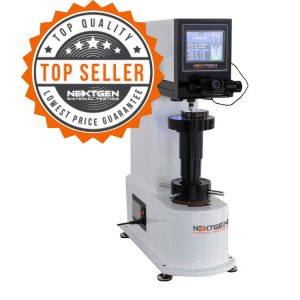
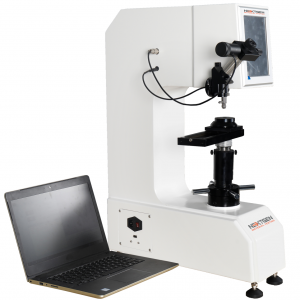
Common equipment: Bench Brinell hardness testers (deadweight or closed-loop), portable Brinell hardness testers for large/installed parts, tungsten carbide ball indenters, appropriate anvils/support fixtures, and optical or digital systems to measure indentation diameter.
Common accessories: Hardness reference blocks for routine checks, calibration/verification tooling as required by your quality system, and fixturing to stabilize curved or irregular parts so the indentation is made on a properly supported surface.
If you are comparing bench vs. portable Brinell options or need a configuration built around your parts and reporting requirements, you can request pricing for a matched system.
How to Read This Designation or Revision
Designation: “ISO 6506-1” identifies Part 1 (the test method) within the ISO 6506 Brinell hardness test series.
Date suffix: The year in “ISO 6506-1:2014” is the published edition year. Many purchase orders and technical documents require the exact edition, so equipment, procedures, and reporting templates should be checked against the cited version.
Practical note: When a requirement cites “ISO 6506” without the part number, clarify whether it intends the test method (Part 1) and whether it also expects the related verification, reference block, or table documents used in your quality system.
Related Standards, Methods, or Frameworks
ISO 6506-1 is part of the ISO 6506 Brinell series. In practice, Part 1 is frequently used alongside the companion documents addressing testing machine verification/calibration, reference block calibration, and Brinell hardness tables.
When customers allow alternative hardness scales (or when engineering chooses a different indentation size or load), other ISO hardness method families such as Vickers (ISO 6507) or Rockwell (ISO 6508) may be referenced instead. Any substitutions should be confirmed by the controlling drawing, code, or customer requirement.
Get help selecting a Brinell hardness testing setup
If you need a Brinell hardness tester (bench or portable) aligned to ISO 6506-1 and your part geometry, throughput, and documentation needs, request a detailed quote and include your material, thickness, target hardness range, and test location (lab or field).