ISO 6507 is the ISO standard series used for Vickers hardness testing of metallic materials. It is commonly referenced for macro- and micro-Vickers hardness measurements on metals, hardmetals/cemented carbides, and many coated metallic systems where an indentation-based hardness value is required.
Because ISO 6507 is published as multiple parts (test method, machine verification, reference blocks, and hardness tables), equipment selection and quality documentation usually depends on which part and edition is cited on your drawing, procedure, or customer requirement. If you need help matching a quoted system to a specific citation, talk with our team.
ISO 6507 — Metallic materials: Vickers hardness test (all parts)
ISO 6507 is the primary ISO framework for producing Vickers hardness values (HV) using a diamond pyramid indenter and measuring indentation diagonals. In practice, labs and production facilities cite the specific ISO 6507 part that governs how the test is performed and how the system is checked.
Many purchasing decisions connect directly to ISO 6507 because Vickers hardness testing requires a controlled test force, a qualified indenter, a reliable diagonal measurement system (optical or digital imaging), and routine verification using certified reference blocks.
Quick Definition
What it is: A multi-part ISO standard series for Vickers hardness testing of metallic materials.
What it’s used for: Generating HV hardness values and maintaining traceable confidence in results through verification and calibration of the hardness tester and reference blocks.
Where it shows up: Heat treat and metallurgical labs, QA/QC inspection, incoming material verification, process validation, failure analysis, and coatings evaluation where indentation hardness is specified.
What This Standard Covers
ISO 6507 addresses both the Vickers indentation hardness test itself and the controls around it. Depending on the part cited, ISO 6507 can cover:
- How to perform Vickers hardness tests across different force ranges (often implemented as micro- and macro-Vickers testing).
- How to verify and calibrate the hardness testing machine, the indenter, and the diagonal measurement system.
- How to calibrate and use reference blocks for indirect verification of the machine.
- Hardness tables used with Vickers testing performed under the method.
ISO 6507 is most directly equipment-relevant when you are specifying a Vickers hardness tester configuration (force range, optics/imaging, stage and fixturing, and verification accessories) and documenting how the system will be kept in tolerance.
Why This Standard Matters in Testing
Vickers hardness is widely used because it can cover a broad range of metallic materials and can be applied to small features or thin sections when a lower force is appropriate. ISO 6507 helps ensure that an HV value is not just a number on a report, but the outcome of a controlled indentation and a measurement system that is demonstrated to be performing correctly.
When hardness results are used for release decisions, supplier qualification, or customer compliance, the ISO 6507 verification and reference-block requirements are often just as important as the test method itself.
Common Materials, Product Types, or Applications Covered
ISO 6507 is commonly applied to metallic materials and metal-based products where Vickers hardness is specified, including:
- Heat-treated steels and alloy steels (case hardness checks, core hardness checks, process monitoring).
- Nonferrous alloys (aluminum, copper alloys, titanium alloys) where indentation hardness is used for QA/QC.
- Hardmetals / cemented carbides.
- Metallic and other inorganic coatings where a smaller indentation may be required to avoid substrate influence.
- Welds and heat-affected zones where hardness mapping is part of qualification or investigation work.
Common Test or Verification Workflow
While the exact steps depend on the cited part and force range, ISO 6507 workflows typically include:
Test planning: Select the Vickers force level and dwell time appropriate to the material and the feature size, and confirm that the surface finish and thickness are suitable for an indentation method.
Indentation and measurement: Apply the specified test force using a qualified diamond indenter and measure the indentation diagonals using optics or digital imaging.
Verification and control: Perform routine checks using certified reference blocks (indirect verification) and follow the required intervals and criteria for machine verification/calibration when results are compliance-critical.
Reporting: Report Vickers hardness as HV with the applied force (and any other required reporting elements from the cited part/edition), so results can be correctly interpreted and repeated.
Equipment Commonly Used for This Standard
ISO 6507 most commonly points buyers toward a Vickers hardness testing system and the supporting verification tools needed to keep the system compliant over time.
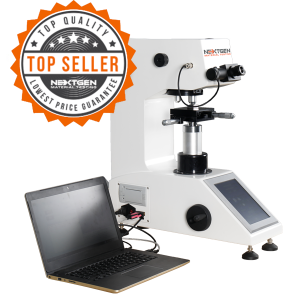
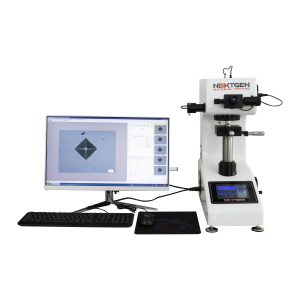
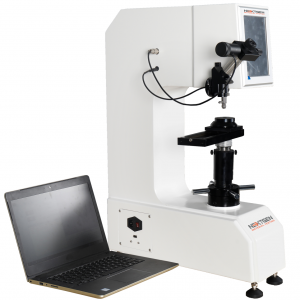
Common equipment: Vickers hardness testers (micro- and macro-force ranges as needed), certified Vickers diamond indenters, optical measuring systems or camera-based automatic measurement, precision stages and workholding/fixturing, and certified Vickers reference blocks for indirect verification.
Practical quoting caution: The force range, diagonal measurement approach (manual optics vs. automated imaging), and the reference-block/verifications package should match the exact ISO 6507 part(s) and any customer or accreditation requirements your lab must follow.
How to Read This Designation or Revision
ISO 6507 is a multi-part designation. Most technical documents cite it using both a part number and a year (edition), for example “ISO 6507-1:2023”.
Common parts you may see cited:
- ISO 6507-1: Test method.
- ISO 6507-2: Verification and calibration of testing machines.
- ISO 6507-3: Calibration of reference blocks.
- ISO 6507-4: Tables of hardness values.
If your procedure, customer, or accreditation body cites a specific edition year, match the setup, verification schedule, and reporting to that exact edition.
Related Standards, Methods, or Frameworks
Vickers hardness testing is often specified alongside other indentation hardness methods for metallic materials, depending on part geometry, hardness range, and production throughput needs. If multiple hardness methods are allowed on a drawing or control plan, confirm how results will be accepted and whether any conversion rules are permitted in your quality system.
Request a quote for ISO 6507-oriented Vickers hardness testing
If you are specifying a Vickers hardness tester (force range, optics or automated imaging, stage travel, and a verification kit with reference blocks), you can request a detailed quote for a configuration aligned to the ISO 6507 part(s) you need to satisfy.