ISO 6892-1:2019 specifies a room-temperature tensile test method for metallic materials and defines the mechanical properties that can be determined from a uniaxial tensile test.
If you need help aligning grips, extensometry, and control mode to the exact edition cited on a drawing or purchase specification, talk with our team about your specimen type and reporting requirements.
ISO 6892-1:2019 — Metallic materials — Tensile testing — Part 1: Method of test at room temperature
ISO 6892-1 is used when a specification, drawing, or quality plan requires standardized tensile results at room temperature for metals and metal products. It is commonly referenced for incoming inspection, production QA/QC, qualification testing, and comparative R&D work.
This document is a test method standard (an ISO “International Standard”) focused on how to run the tensile test and how to determine/report properties from the test results. It does not replace product-specific material specifications or acceptance criteria.
Quick Definition
In one sentence: ISO 6892-1 defines how to perform a room-temperature tensile test on metallic materials and which mechanical properties can be determined from that test.
Common outputs: Yield-related values (when applicable), ultimate tensile strength, elongation measures, and related tensile properties derived from the stress–strain curve.
What This Standard Covers
ISO 6892-1 covers the practical execution of a uniaxial tensile test at room temperature on metallic test pieces, including how test results are used to determine tensile properties.
What it focuses on: Test execution and control, measurement of force and extension/strain, and determination of mechanical properties from the recorded data.
What it does not do: Set pass/fail criteria for a particular alloy or product form. Acceptance limits typically come from the applicable material/product specification or purchase requirements.
Why This Standard Matters in Testing
Room-temperature tensile data is one of the most common mechanical test requirements for metals, and ISO 6892-1 helps laboratories generate results that are consistent and comparable across different test systems and sites.
For equipment selection, the biggest practical drivers are accurate force measurement, appropriate extension/strain measurement, stable control through yielding and into plastic deformation, and grips that prevent slippage or unintended bending.
Common Materials, Product Types, or Applications Covered
This standard is used broadly across metallic materials where tensile properties at room temperature are required.
- Mill products and stock forms (bar, rod, plate, sheet, strip)
- Wire and fastener-related materials (where tensile properties are specified)
- Cast, forged, and heat-treated metal products
- Manufactured components tested using representative coupons
Typical users: Metals producers, fabrication and machining suppliers, automotive and aerospace supply chains, energy and industrial equipment manufacturers, and independent test laboratories.
Common Test or Verification Workflow
ISO 6892-1 is typically invoked as part of a larger compliance workflow where a product specification calls for tensile verification at room temperature.
- Confirm the cited edition/part (ISO 6892-1) and any customer- or product-specific requirements.
- Select the correct specimen type and dimensions per the applicable product/material specification (and any referenced specimen standards).
- Set up the test system with suitable grips and alignment controls to minimize bending.
- Run the tensile test with appropriate measurement of force and extension/strain to support the required reported properties.
- Report tensile properties in the format required by the governing specification or customer documentation.
Practical note: The measurement approach for extension/strain can directly impact yield-related results, so the extensometer (or non-contact strain method) selection should match the properties you must report.
Equipment Commonly Used for This Standard
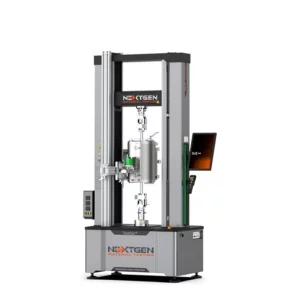
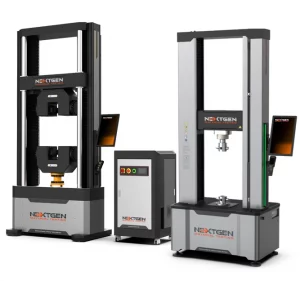
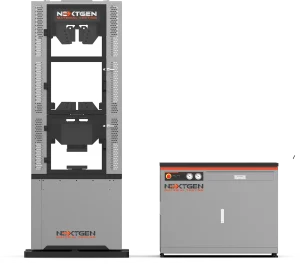
ISO 6892-1 tensile testing is commonly performed on a universal testing machine (UTM) configured for metals, with fixtures and instrumentation sized for the expected force range and specimen geometry.
Common equipment: Electromechanical or servo-hydraulic UTM, wedge or hydraulic grips, suitable jaws/inserts, and an extensometer or non-contact strain measurement system.
Common accessories and options: Self-centering grips, alignment fixtures, safety shields, specimen marking tools for gauge length, and software capable of calculating and reporting tensile properties from the recorded curve.
Calibration/traceability considerations: Tensile results depend on both the force-measurement system and the extension/strain-measurement system; many laboratories pair ISO 6892-1 testing with appropriate calibration/verification standards for load and extensometry to support traceable results.
If you are selecting a load frame capacity, grip style, and extensometer type for a specific specimen and force range, you can request pricing for a configured tensile system matched to your ISO 6892-1 workflow.
How to Read This Designation or Revision
Designation format: “ISO 6892-1” indicates Part 1 of the ISO 6892 tensile testing series for metallic materials (room-temperature method).
Year suffix: A citation such as “ISO 6892-1:2019” identifies the publication year of the referenced edition. Requirements can change between editions, so the test setup, control approach, and reporting should be aligned to the exact year referenced in your requirement.
Status note: ISO 6892-1:2019 is a published International Standard, and ISO indicates it was reviewed and confirmed in 2025.
Related Standards, Methods, or Frameworks
ISO 6892-1 is part of a broader tensile testing series for metallic materials. Depending on temperature requirements, other parts may be cited instead of (or alongside) Part 1.
- ISO 6892-2 (elevated-temperature tensile testing)
- ISO 6892-3 (low-temperature tensile testing)
- ISO 6892-4 (tensile testing in liquid helium)
When a purchase specification calls out calibration or verification requirements for the testing system, additional standards may be referenced for the force-measuring system and the extensometer/strain measurement system.
Get help matching ISO 6892-1 to your tensile setup
If you need to match capacity, grips, alignment, and extensometry to the properties you must report under ISO 6892-1, ask for a detailed quote with your specimen drawings (or product form) and target force range.