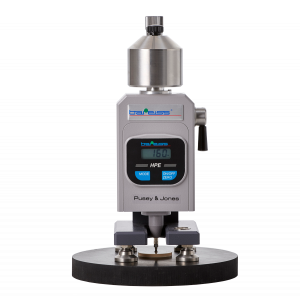
ISO 7267-3 describes the Pusey and Jones indentation method used to determine the apparent hardness of rubber-covered rollers. It applies to roller covers made from vulcanized rubber or thermoplastic rubber, with results reported as a Pusey and Jones indentation value.
If you need help matching an internal roller-hardness requirement to the correct method (including whether a newer replacement standard should be used), you can talk with our team about your application and documentation.
ISO 7267-3:2017 — Rubber-covered rollers — Determination of apparent hardness — Part 3: Pusey and Jones method
ISO 7267-3 is a method-focused standard for evaluating rubber-covered roller surfaces using a controlled indentation approach. The reported value is based on how far an indenter penetrates the rubber under a specified force, using a Pusey and Jones plastometer apparatus.
This standard has been withdrawn, and many specifications now cite a newer ISO document for the same Pusey and Jones approach. Labs and production sites may still encounter ISO 7267-3 in legacy purchase specifications and historical test reports.
Quick Definition
ISO 7267-3 defines a Pusey and Jones indentation test to determine the apparent hardness of rubber-covered rollers by measuring indentation depth under a defined force and reporting a corresponding indentation value (inverse to hardness).
What This Standard Covers
ISO 7267-3 covers the Pusey and Jones method for determining apparent hardness on rubber-covered roller covers. The method uses a dedicated plastometer apparatus to create an indentation and measure the indentation depth.
It is intended for roller-cover materials (vulcanized rubber and thermoplastic rubber) where the measured response is influenced by localized compression at the indenter. The result is expressed as a Pusey and Jones indentation value rather than a Shore or IRHD hardness number.
Why This Standard Matters in Testing
Rubber-covered rollers are performance-critical in many web-handling and contact processes, where surface compliance can affect nip pressure, traction, print/coat uniformity, and wear behavior. Apparent hardness testing provides a practical way to compare roller covers and monitor production consistency.
Because the Pusey and Jones indentation value is an inverse hardness indicator (harder covers yield lower indentation values), test reports should be interpreted carefully—especially when switching between hardness scales or comparing to specifications written around Shore or IRHD methods.
Common Materials, Product Types, or Applications Covered
ISO 7267-3 is associated with rubber-covered rollers and roller coverings where apparent hardness is specified using the Pusey and Jones indentation approach.
Common product context: Rubber-covered process rollers, roller sleeves/covers, and coated roller surfaces used in production equipment.
Common material types: Vulcanized rubber roller covers and thermoplastic rubber roller covers.
Common Test or Verification Workflow
ISO 7267-3 is typically used as part of incoming inspection, in-process QA, or final acceptance testing for roller coverings. It can also be used to compare refurbishment lots or to track changes after wear, cleaning, or service exposure when a specification requires Pusey and Jones values.
Typical workflow: Select the test location(s) on the roller cover, apply the indenter using the Pusey and Jones plastometer under the specified force, measure indentation depth, and report the Pusey and Jones indentation value as required by the purchase specification or internal control plan.
Equipment Commonly Used for This Standard
ISO 7267-3 points to a dedicated indentation instrument rather than a universal testing machine. Equipment selection is mainly about achieving controlled force application and reliable indentation-depth measurement on curved roller surfaces.
Common equipment: Pusey and Jones plastometer apparatus with an appropriate indenter, a controlled force application mechanism, and a displacement/indentation measurement system.
Practical equipment considerations: Calibration capability (force and displacement), stable fixturing/support for the roller during measurement, and a measurement approach appropriate for the roller geometry and the required reporting resolution.
If you are standardizing roller-cover hardness checks across production lines or supplier sites, you can request a detailed quote for a Pusey and Jones indentation setup aligned to your throughput and documentation needs.
How to Read This Designation or Revision
ISO 7267-3 identifies Part 3 of the ISO 7267 series for rubber-covered rollers and corresponds specifically to the Pusey and Jones method for apparent hardness.
ISO 7267-3:2017 indicates the 2017 edition (Edition 4). ISO has withdrawn ISO 7267-3:2017 and indicates a newer ISO standard for the Pusey and Jones roller-cover method; many users will need to confirm which document edition their customer or internal specification requires before testing or quoting equipment.
Related Standards, Methods, or Frameworks
Apparent hardness by Pusey and Jones indentation can be confused with other rubber hardness methods that report in different scales. When comparing requirements, it is important to confirm whether the requirement calls for Pusey and Jones indentation values or a different rubber hardness method.
Common related reference: ISO 48-8 (apparent hardness of rubber-covered rollers by the Pusey and Jones method) is identified by ISO as the newer document that replaced ISO 7267-3.
Talk to a test equipment specialist
If you are working from a legacy drawing or customer spec that cites ISO 7267-3, our team can help you map the requirement to the right instrument type and documentation package—contact our team to discuss your roller material and reporting requirements.