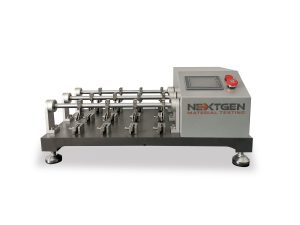
IULTCS / IUP 20-1 is used to evaluate the flex resistance of flexible leather and leather finishes using a flexometer-style repeated bending test. It is commonly referenced when durability against flexing is important for footwear uppers, garment leather, leather goods, and finished leathers where surface cracking is a concern.
If you need help matching a buyer or brand requirement to the correct flexing method (including wet vs. dry flexing and inspection criteria), talk with our team about your application.
IULTCS / IUP 20-1 — Determination of flex resistance (flexometer method)
IULTCS / IUP 20-1 is associated with the flexometer method for determining flex resistance of leather, including leather with applied finishes. In practice, it supports durability screening and quality control where repeated bending can cause cracking, finish breakdown, or other visible damage.
This method is typically selected when you need a controlled, repeatable flexing action and a cycle-count basis for comparing materials, constructions, or finishing systems.
Quick Definition
In plain terms: A cut specimen of leather is repeatedly flexed in a flexometer, and the leather/finish is evaluated for damage (commonly cracking or surface breakdown) after a defined number of cycles and/or at defined inspection intervals.
Common outcome: A durability assessment used for material approval, incoming inspection, process control, and comparative benchmarking.
What This Standard Covers
This standard is used for determining dry or wet flex resistance of leather and finishes applied to leather. It is intended for flexible leather and is commonly referenced for leathers below 3.0 mm thickness.
Because flex testing is often acceptance-criteria driven (brand specs, internal requirements, or end-use categories), the specific pass/fail criteria and inspection definitions should be taken directly from the cited edition of the standard and any controlling customer specification.
Why This Standard Matters in Testing
Flexing is one of the most common real-world stresses for many leather products. A controlled flexometer test helps labs compare material options, validate finishing changes, and reduce the risk of field failures such as finish cracking, surface checking, or premature aesthetic degradation.
For procurement and QA/QC teams, a repeatable flex test method supports consistent supplier evaluation and clearer communication of durability expectations across sites.
Common Materials, Product Types, or Applications Covered
IULTCS / IUP 20-1 is most commonly associated with flexible leathers and finished leathers where repeated bending is expected in service.
Common applications: Footwear upper leather, garment leather, leather goods, and other flexible leather components where finish performance and surface integrity under flexing are critical.
Common Test or Verification Workflow
Flex resistance testing is typically run as a comparative or acceptance test with defined conditioning, specimen selection, and inspection requirements.
Typical workflow: (1) condition and select specimens, (2) cut test pieces, (3) set up the flexometer for the specified dry or wet procedure, (4) run to the required number of cycles with any required interim inspections, (5) evaluate and record damage in the required manner, and (6) report results with the cited edition and any deviations.
Equipment Commonly Used for This Standard
The equipment path for IULTCS / IUP 20-1 centers on a flexometer capable of repeatable bending cycles and consistent specimen holding.
Common equipment: Flexometer (often referred to as a Bally-type flexometer), specimen cutting tools/dies, counters/timers and cycle controls, and (when wet flexing is required) accessories for wet conditioning or maintaining wet test conditions as required by the method.
Practical selection notes: When quoting or configuring a flexometer system, details that commonly affect suitability include cycle rate control, counter accuracy, fixture compatibility with specimen geometry, repeatability across stations (multi-position units), and how the lab will perform and document the required inspections.
If you are selecting a flexometer configuration (number of stations, controls, and any wet-testing accessories), you can request a detailed quote matched to your throughput and reporting needs.
How to Read This Designation or Revision
IULTCS “IUP” designations are issued under the IULTCS Physical Test Commission. In IULTCS cross-reference listings, the flexometer method for flex resistance is associated with ISO 5402-1 (Leather — Determination of flex resistance — Part 1: Flexometer method).
Revision sensitivity: Flex testing can be sensitive to the exact cited edition (cycle counts, wet vs. dry conditions, inspection and reporting requirements). For purchasing decisions and compliance documentation, always align your procedure and reporting to the exact edition referenced by your customer or internal specification.
| Item | What buyers typically look for |
|---|---|
| Common international equivalent | ISO 5402-1 (flexometer method) |
| What it evaluates | Dry or wet flex resistance of leather and applied finishes |
| Applicability note | Commonly referenced for flexible leather below 3.0 mm thickness |
Related Standards, Methods, or Frameworks when useful
Flex resistance testing is often specified alongside other physical durability methods for leather (for example, abrasion, tear, tensile, thickness, and water resistance), depending on the end-use and customer acceptance criteria.
When multiple methods are cited together, ensure specimen conditioning, sampling location, and reporting conventions are consistent across the test plan so results are comparable and auditable.
Get help selecting flex resistance test equipment
If you are aligning a lab setup to an IULTCS / IUP flex resistance requirement and need help with station count, controls, or wet-testing needs, contact our team to discuss your workflow and the exact standard edition you must follow.