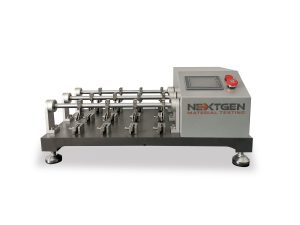
JIS K 6545:1994 is a Japanese Industrial Standard test method for evaluating the flexing endurance of light leathers (including shoe upper leather) and their surface finishes.
This standard is withdrawn, but it may still appear in legacy specifications, customer drawings, or purchase requirements. If you are not sure whether a legacy citation is acceptable for your program (or needs to be updated), contact our team to discuss what you are trying to qualify and how you plan to report results.
JIS K 6545:1994 — Testing method for flexing endurance of light leathers and their surface finishes
JIS K 6545 focuses on how light leather and finished surfaces hold up under repeated flexing. It is commonly associated with durability screening of upper leather and similar thin leather materials where cracking, finish break, or visible damage from bending is a concern.
| Item | What to know |
|---|---|
| Document type | Test method |
| Published (edition shown) | 1994-10-31 |
| Status | Withdrawn (2022-01-20) |
| Replaced by | JIS K 6557-8:2017 (flexometer method) |
Quick Definition
JIS K 6545: A flexing endurance test method for light leather and leather surface finishes, commonly used to evaluate damage from repeated bending.
Typical pass/fail focus: Appearance-related flex damage such as cracking or finish breakdown after a defined flexing exposure.
What This Standard Covers
JIS K 6545 specifies a method intended for shoe upper leather and other light leathers. The scope is centered on flexing endurance—how the material and any surface finish withstand repeated bending in a controlled test setup.
Because this document is withdrawn, it is most often used when a customer requirement still cites JIS K 6545 explicitly, or when historical data sets need to be compared against older qualification records.
Why This Standard Matters in Testing
Flexing is a primary real-world stress for footwear uppers and many thin leather goods. A controlled flex test helps teams screen materials, compare finishing systems, and reduce field failures related to cracking, premature wear, or visible surface damage.
For QA/QC and procurement, standards-based flex testing can also provide a consistent acceptance check across lots, suppliers, or finishing changes—provided the same edition and evaluation criteria are applied.
Common Materials, Product Types, or Applications Covered
JIS K 6545 is commonly associated with:
- Shoe upper leather and other light (thin) leathers
- Leather goods where repeated bending is expected in use
- Finished leather surfaces where coating/finish durability is critical
Common Test or Verification Workflow
A typical workflow influenced by JIS K 6545 includes:
1) Define the requirement: Confirm whether the contract calls for JIS K 6545 specifically (legacy) or permits an updated method (such as its successor standard).
2) Prepare and mount specimens: Cut test pieces from the leather and clamp them into a flexing fixture so the same bending condition is repeated cycle after cycle.
3) Run flex exposure: Operate the flexing apparatus for the specified number of cycles and test conditions stated in the cited edition.
4) Evaluate and report: Inspect the leather and surface finish for damage per the evaluation criteria defined in the requirement (often appearance-based), then report results with the exact edition and conditions used.
Revision sensitivity: Setup, acceptance language, and reporting expectations can vary between withdrawn legacy methods and newer replacements, so always match the edition named in the customer requirement.
Equipment Commonly Used for This Standard
JIS K 6545 is commonly performed using a dedicated leather flexing endurance tester (often referred to as a flexometer in leather testing) with fixtures designed to repeatedly bend clamped leather specimens at a controlled rate and cycle count.
Common equipment: Flexing endurance tester (flexometer), specimen clamps/holders, cycle counter/controller, and basic inspection tools for post-test evaluation.
Practical quoting caution: Equipment selection depends on the specific flexing method referenced (legacy JIS K 6545 vs. newer successor methods), the specimen geometry your program uses, how many stations you need (throughput), and whether your workflow includes any conditioning or wet/dry handling steps.
How to Read This Designation or Revision
JIS K 6545: “JIS” identifies the Japanese Industrial Standard system, “K” indicates the chemical-related division where leather-related methods are historically grouped, and “6545” is the document number.
:1994 (year after the colon): This indicates the year of the edition (the year of establishment or the most recent revision that defines the cited edition).
Status note: JIS K 6545:1994 was withdrawn on 2022-01-20. When a requirement still cites it, the test plan should explicitly state that the withdrawn edition is being used, or document an approved transition to a current method.
Related Standards, Methods, or Frameworks
JIS K 6557-8:2017: This is the designated successor standard covering flex resistance determination by the flexometer method, and it is aligned to ISO 5402-1:2011 with modification.
If your customer language allows an updated method, aligning test execution and reporting to the current successor can reduce ambiguity and improve comparability across suppliers and regions.
Get help selecting a flexing test setup
If you need a flexometer-style system for leather flex endurance work—especially when you are converting an older JIS K 6545 requirement into a practical lab workflow—you can request a detailed quote based on your sample type, throughput needs, and reporting requirements.