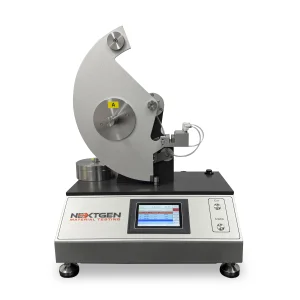
JIS P 8116 is a Japanese Industrial Standard test method for measuring the out-of-plane tearing resistance of paper using an Elmendorf-type tearing tester (pendulum method). It is commonly used to compare tear performance for paper grades where tear propagation resistance is a key durability indicator.
If you need help matching JIS P 8116 to your material type, capacity range, or data-readout requirements, contact our team for application guidance.
JIS P 8116: Paper — Determination of tearing resistance — Elmendorf tearing tester method
JIS P 8116 defines a standardized way to determine tearing resistance for paper using an Elmendorf tearing tester. The method is designed around a controlled tear propagation initiated from a pre-cut slit and quantified by the instrument’s pendulum energy/work measurement.
This standard may also be applicable to light-weight paperboard when the measured tear values fall within the instrument’s working range. Corrugated board itself is not within the scope, but the component papers used to make corrugated board can be evaluated using this method when appropriate.
Quick definition
What it is: A paper tear-resistance test method using an Elmendorf (pendulum) tearing tester.
What it measures: Resistance to tear propagation for a slit specimen, reported as tearing resistance/tear strength as defined by the standard.
Typical use: Comparing paper grades, monitoring production consistency, and supporting product qualification where tear durability matters.
What This Standard Covers
JIS P 8116 covers the apparatus and procedure for measuring the tearing resistance of paper with an Elmendorf tearing tester method. The method is based on propagating a tear through a defined specimen geometry and determining the tearing resistance from the tester’s measurement.
Scope boundary: The standard focuses on paper (and may extend to certain light paperboards within instrument range); it does not treat corrugated board as a product, although its constituent papers may be tested.
Why This Standard Matters in Testing
Tear resistance is a practical indicator of how paper may perform during converting, packaging operations, and end use where a small cut or notch can propagate into a failure. Using a standardized method helps suppliers and buyers compare results across labs and track process-related shifts in tear performance.
Because the Elmendorf method depends on matching specimen preparation and instrument capacity to the material’s tear level, the standard is often used as a purchasing reference for both testing services and tear-testing equipment configuration.
Common Materials, Product Types, or Applications Covered
JIS P 8116 is most commonly applied to paper grades where tear propagation resistance is a key quality attribute.
Common examples: Printing/writing papers, packaging papers, and other paper materials evaluated for tear durability. Light paperboard may also be evaluated when the expected tear values fit the tester’s measurement range.
Typical decisions supported: Grade comparisons, supplier qualification, incoming inspection criteria, and production QC trending for tear-related performance.
Common Test or Verification Workflow
Most JIS P 8116 workflows follow a consistent pattern: prepare slit specimens to the standard’s dimensions, select an appropriate pendulum capacity (and any required sheet stacking approach if permitted by the method and your lab practice), run repeated tests, and report tear resistance in the format required by the standard and internal specifications.
Practical caution: Results can be sensitive to specimen direction, specimen preparation quality, and instrument capacity selection. For purchasing or audit use, align on the exact edition of JIS P 8116 being cited and the lab’s reporting conventions before comparing data between sites.
Equipment Commonly Used for This Standard
JIS P 8116 is strongly equipment-linked: it is built around an Elmendorf-type tearing tester with a suitable measurement range for the paper being tested.
Common equipment: Elmendorf (pendulum) tearing tester; specimen cutting tools/dies appropriate for the required specimen geometry and slit; accessories or capacity options needed to keep measurements within the instrument’s intended range.
Selection guidance: When quoting or specifying a tear tester for JIS P 8116, the most important inputs are your expected tear range, paper basis weight/grade range, and whether you need digital readout/data output options for your QC system. If you are comparing tester capacities or configuration options, you can request a detailed quote for a setup matched to your materials and reporting needs.
How to Read This Designation or Revision
Designation: “JIS P 8116” identifies a JIS standard in the P category (pulp and paper) with the document number 8116.
Year/edition: When shown as “JIS P 8116:2022”, the suffix indicates the edition year. Because requirements and instrument details can change between editions, purchase specifications and compliance statements should cite the full designation including the year whenever possible.
International alignment: JIS P 8116:2022 is listed as a modification (MOD) of ISO 1974:2012. If your organization works across regions, confirm whether the project requires the JIS edition, the ISO edition, or a customer-specific cross-reference.
Related Standards, Methods, or Frameworks
ISO 1974: Paper — Determination of tearing resistance — Elmendorf method (often referenced for international programs and global supplier alignment).
When a customer specification references both JIS and ISO tearing resistance requirements, align the edition and reporting expectations up front to avoid mismatched acceptance criteria.
Get help selecting a JIS P 8116 test setup
If you are outfitting a lab for Elmendorf tear testing or updating an existing method to a specific cited edition, talk with our team about capacity selection, accessories, and a documentation package that fits your QA workflow.