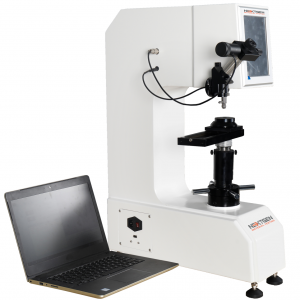
JIS Z 2245 is a Japanese Industrial Standard that defines how to perform Rockwell and Rockwell superficial hardness testing for metallic materials using stationary or portable hardness testers.
It is commonly used for incoming inspection, heat-treat verification, and production QA where a fast indentation hardness check is needed and results must be reported on specific Rockwell scales (for example, regular and superficial scales). If you need help matching a Rockwell scale, indenter type, or verification approach to your parts and acceptance criteria, talk with our team.
JIS Z 2245:2021 — Rockwell hardness test — Test method
JIS Z 2245 specifies a standardized Rockwell hardness testing method for metallic materials. The document covers both “regular” Rockwell hardness and Rockwell superficial hardness testing and is intended for use with stationary bench machines as well as portable testers where applicable.
This standard is aligned to the general Rockwell hardness method framework used internationally, with JIS-specific requirements and annexes that support consistent testing and verification.
Quick definition
JIS Z 2245 defines how to measure Rockwell hardness by applying a specified preliminary force and additional test force with a defined indenter, then determining hardness from the indentation depth under prescribed conditions.
Document type: Test method.
Primary output: Rockwell hardness values reported on the applicable Rockwell or Rockwell superficial scale.
What this standard covers
JIS Z 2245 addresses the practical requirements that drive repeatable Rockwell testing, including selection and use of Rockwell scales, indenter use, and machine performance controls suitable for both regular and superficial Rockwell testing.
- Rockwell regular hardness testing for metallic materials on defined scales.
- Rockwell superficial hardness testing for metallic materials on defined scales.
- Use with both stationary and portable hardness testing machines (when the equipment can meet the method and verification expectations).
- Supporting provisions for routine checks and verification activities (for example, daily verification procedures and indenter inspection topics via annexes).
This standard also recognizes that certain material categories and products may require different, dedicated hardness standards rather than general Rockwell testing.
Why this standard matters in testing
Rockwell hardness testing is widely used because it is fast, relatively simple to run, and well suited to shop-floor and laboratory QA. JIS Z 2245 matters because it provides a consistent method and common language for hardness reporting, helping reduce disputes caused by differences in scale selection, indenter condition, machine performance, or verification practices.
Practical takeaway: For Rockwell results to be comparable between suppliers, plants, or labs, the cited Rockwell scale, indenter type, and machine verification approach must be aligned—not just the numeric hardness value.
Common materials, product types, or applications covered
JIS Z 2245 is typically used for metallic materials where Rockwell regular or superficial testing is appropriate for the part geometry and hardness range.
- Heat-treated steel components (process verification and lot release testing).
- Machined or formed metal parts where quick indentation hardness is used as a process control check.
- Production QA checks on finished goods where hardness is an acceptance characteristic.
- Field or in-situ checks using portable Rockwell-type equipment when a bench machine is not practical and the method requirements can still be met.
For specialized materials (for example, certain hardmetals or other sintered metal materials), dedicated standards may be more appropriate than general Rockwell testing.
Common test or verification workflow
Rockwell testing is sensitive to setup, surface condition, and equipment performance. JIS Z 2245 is commonly used as part of a controlled hardness workflow where the lab or production team maintains ongoing confidence in the tester and indenters.
Common workflow: Select the correct Rockwell (regular or superficial) scale for the material and thickness → prepare/verify the test surface and support → perform hardness measurements under the method conditions → document results with the correct scale notation → perform routine checks and verification using reference blocks and defined procedures as required by the quality system.
Revision sensitivity: Method details and verification expectations can vary by edition and by the specific Rockwell scale being used, so the cited edition (for example, JIS Z 2245:2021) should be reflected in the lab procedure and report format.
Equipment commonly used for this standard
JIS Z 2245 points to Rockwell hardness testing systems that can apply controlled forces, use the required indenter types, and measure indentation depth in a stable, repeatable way.
- Rockwell hardness tester: Bench (stationary) Rockwell tester or qualified portable Rockwell-type tester, depending on the application.
- Indenters: Diamond and/or ball indenters as required by the selected Rockwell scale, with inspection and condition control as part of the quality workflow.
- Support and fixturing: Appropriate anvils and supports to minimize part rocking, flexing, or movement during loading.
- Verification tools: Reference (calibration/verification) blocks for indirect verification and routine checks, aligned with the Rockwell scales used in production.
Equipment selection caution: When quoting or specifying a system, the most important details are the required Rockwell scales (regular vs superficial), the part geometry/support needs, and how your quality system expects daily checks and periodic verification to be handled. If you are comparing configurations for production use, you can request pricing for a Rockwell hardness tester setup matched to your scales and throughput.
How to read this designation or revision
JIS standards are commonly cited by the standard number plus a publication year (for example, JIS Z 2245:2021). The year identifies the edition of the document being referenced.
What to specify on POs and reports: Use the full designation with year when the edition matters for acceptance criteria, verification routines, or inter-lab comparability.
Related standards, methods, or frameworks
Rockwell testing programs often rely on additional documents for verification artifacts and special material categories. Depending on your application, related documents may include standards covering Rockwell reference blocks and standards covering specific materials where general Rockwell testing is not the preferred method.
Common related needs: Reference blocks for indirect verification, indenter inspection controls, and uncertainty/traceability expectations that support quality audits.
Get help selecting a Rockwell hardness testing setup
If you share the material type, hardness range, part size/thickness, and the Rockwell scales you must report, we can help narrow down a practical tester configuration, indenter approach, and verification workflow for your lab or production floor. To move forward with equipment sizing and options, request a detailed quote.