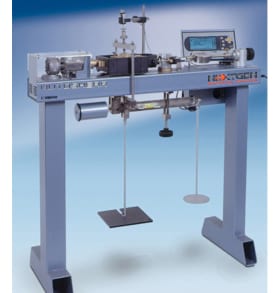
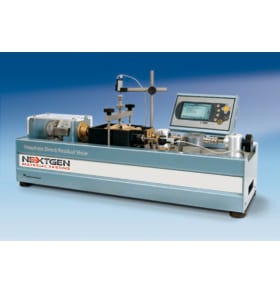
NF P 94-071 is a French geotechnical testing standard series used for rectilinear shear testing of soil specimens in a shearbox (often referred to as a Casagrande shear box). It is commonly used to support drained shear-strength characterization for design and verification work in earthworks, foundations, and slope stability studies.
Because this designation is typically applied through its published parts (for example, “-1” and “-2”), it is important to match the cited part and edition to your lab’s shearbox configuration, loading system, and data acquisition approach. If you need help mapping a project specification to the right setup, talk with our team.
NF P 94-071 (series) — Sols : reconnaissance et essais — shearbox rectilinear shear testing
NF P 94-071 is used in soil investigation and laboratory testing programs where a rectilinear shearbox test is specified. The series is associated with consolidated, drained shear testing in a shearbox apparatus and is used to obtain shear resistance parameters from controlled normal loading and imposed horizontal displacement.
In practice, this designation is most often encountered via the part numbers (for example NF P 94-071-1 and NF P 94-071-2). When a contract document cites only “NF P 94-071,” it should be clarified which part and conditions are intended.
Quick Definition
NF P 94-071 refers to French standard methods for measuring soil shear resistance using a rectilinear shearbox (Casagrande-type), typically under drained conditions with defined apparatus and reporting requirements.
Document type: Test method series (soil investigation and testing).
Common outputs: Shear stress at failure versus applied normal stress; shear strength parameters commonly derived from multiple normal stress levels (as specified by the cited part/edition and project requirements).
What This Standard Covers
NF P 94-071 is centered on shearbox-based rectilinear shear testing, including requirements tied to the measured parameters, apparatus characteristics, test execution, and presentation of results.
- Preparation and placement of a soil specimen in a shearbox.
- Application of a controlled normal load (vertical stress) before and during shearing.
- Imposed horizontal displacement to generate a shear plane at the split line of the shearbox.
- Measurement of shear force and displacement, with results reported for the chosen test condition.
Why This Standard Matters in Testing
Shearbox testing is widely used when a project needs practical, repeatable shear resistance characterization with a defined shear plane. The NF P 94-071 series matters because it ties the test results to a recognized framework for apparatus expectations and reporting, which helps comparability between labs and projects.
For equipment selection, the key practical issue is that the cited part and test condition drive what your system must control and record (normal loading method, displacement control, sensor resolution, and data logging format).
Common Materials, Product Types, or Applications Covered
NF P 94-071 is used for geotechnical soils evaluated in civil engineering contexts, including natural soils and reconstituted laboratory specimens when a shearbox method is specified.
- Earthworks and embankment materials (selection and design inputs).
- Foundation bearing and sliding checks where shear parameters are required.
- Slope stability and interface-type checks where a controlled shear plane approach is acceptable.
- Quality and performance comparisons across material sources or treatment options (when the specification cites the method).
Common Test or Verification Workflow
A typical NF P 94-071 workflow uses multiple specimens (or repeated tests) at different normal stress levels to build a relationship between normal stress and shear resistance for the chosen condition.
Common workflow: Specimen preparation → placement in shearbox → application of normal load and conditioning per the cited part/edition → displacement-controlled shearing → capture shear force and displacement → determine representative shear resistance values and report results in the specified format.
Practical caution: The shearbox test outcome is sensitive to drainage condition, displacement rate, specimen preparation, and the selected failure criterion (peak/residual). These details are governed by the exact part/edition and the project specification.
Equipment Commonly Used for This Standard
NF P 94-071 points to a rectilinear shearbox test system designed to apply a controlled normal load and a controlled horizontal displacement while measuring shear force and movement.
- Shearbox frame (Casagrande-type) sized for the specimen geometry required by the cited procedure.
- Normal loading system (dead weights, lever system, pneumatic/hydraulic loading, or electromechanical loading depending on configuration).
- Horizontal drive with controlled displacement rate.
- Force measurement (load cell or proving ring, depending on setup) for shear force.
- Displacement measurement (LVDT/dial indicators/encoders) for horizontal displacement (and vertical movement when required by the procedure).
- Data acquisition and software for continuous recording and reporting.
If you are selecting a shearbox system or upgrading sensors and acquisition to match a customer specification, you can request a detailed quote for a configuration matched to your loading ranges and reporting needs.
How to Read This Designation or Revision
“NF P” identifies a French national standard designation commonly used in civil engineering and public works testing references. “94” is the geotechnical soil testing domain, and “071” points to the shearbox rectilinear shear testing topic within that domain.
In many specifications, the operative document is identified by a part number (for example “NF P 94-071-1” or “NF P 94-071-2”). When an order, report, or contract cites only “NF P 94-071,” clarify the intended part number and edition because the apparatus and procedure expectations can differ.
Related Standards, Methods, or Frameworks
Depending on the project and geography, shearbox testing may also be specified under other national or international methods. Where a cross-reference is needed, it should be handled by the project’s controlling specification and the exact cited edition.
Commonly encountered related references: ISO/TS 17892-10 (geotechnical laboratory testing for direct shear) and ASTM D3080 (direct shear of soils under consolidated drained conditions).
Get help matching NF P 94-071 to the right shearbox setup
If you need to align a quoted system or an existing rig to the exact cited part (for example “-1” vs “-2”), loading ranges, and instrumentation expectations, contact our team with the specification language and the material type you test.