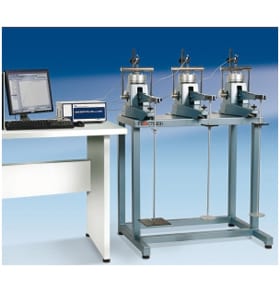
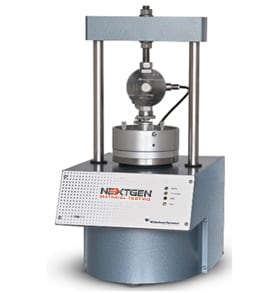
NF P 94-091 is used in geotechnical laboratories to evaluate soil swelling behavior using an oedometer (one-dimensional confinement). It focuses on measuring vertical deformation during a controlled loading sequence on multiple specimens.
This standard is commonly referenced when assessing expansive clays and swell-prone foundation soils, and when documenting swelling deformation results for design studies, forensic investigations, or earthworks suitability decisions. If you need help matching an oedometer configuration to your lab workflow, talk with our team.
XP P94-091 — Sols : reconnaissance et essais — Essai de gonflement à l’oedomètre
XP P94-091 is a French geotechnical test method for oedometer-based swelling testing. The method is used to quantify vertical deformation under applied vertical stresses in a laterally confined specimen, with measurements taken through a defined loading and observation sequence.
Because swelling response is sensitive to specimen condition and the applied stress path, this standard is typically specified when results must be produced and reported in a consistent, comparable format.
Quick definition
In plain terms: An oedometer swelling test method that measures how much a soil specimen changes height while vertical load is applied in a confined ring, using multiple specimens to build the result set.
Typical output: Reported deformation values tied to the applied vertical stresses and the test sequence defined by the standard.
What this standard covers
This standard covers an oedometer swelling test where deformation is measured during loading on several specimens. It includes requirements around the test principle, required apparatus (loading frame, oedometer cell, loading and measurement system), operating steps, data processing, and the minimum content expected in the test report.
It is written for soils testing in a controlled laboratory setup using oedometer equipment intended for one-dimensional deformation measurements.
Why this standard matters in testing
Swell-prone soils can contribute to heave, differential movement, cracking, and serviceability issues in slabs, pavements, lightly loaded structures, and buried infrastructure. When a project specification calls out NF/XP P94-091, the test results typically become part of the technical basis for comparing sites, selecting mitigation measures, and documenting geotechnical assumptions.
From a lab operations standpoint, using a cited standard helps align test execution, measurement resolution expectations, and reporting content—especially when results must be defendable across stakeholders (owner, designer, contractor, and independent reviewers).
Common materials, product types, or applications covered
This standard is most often applied to natural fine-grained soils where swelling is a concern, including expansive clays encountered in foundation investigations and earthworks characterization.
Common applications: Geotechnical site investigations, swell-risk studies, comparative soil characterization for design, and laboratory documentation supporting earthworks decisions.
Common test or verification workflow
In practice, XP P94-091 is usually run as part of a broader soil characterization program. The oedometer swelling test is scheduled after sample selection and basic identification testing, then executed using an oedometer cell and a controlled vertical loading setup with displacement measurement.
Common workflow: Sample selection → specimen preparation for oedometer ring → oedometer setup and calibration checks → loading sequence with deformation measurement → data reduction per the standard → test report with required identifiers and results.
Equipment commonly used for this standard
The standard is equipment-driven and points to an oedometer (consolidation) system capable of applying vertical load and measuring small vertical deformations repeatably.
Common equipment: Oedometer loading frame (manual or automated), oedometer cell(s) sized for soil specimens, vertical load application system, displacement measurement (e.g., dial gauge or electronic transducer), and supporting lab items for handling and mass/moisture determination as required by the test program.
If you are configuring an oedometer system (cell count, load range, automation level, and data acquisition), you can request pricing for a setup matched to your throughput and reporting needs.
How to read this designation or revision
Designation: The official designation is commonly shown as XP P94-091. In some specifications and legacy reports it may be written as NF P 94-091 while referring to the same oedometer swelling test method.
Revision sensitivity: Test setup, reporting expectations, and referenced companion procedures can vary by edition. For procurement and compliance documentation, it is good practice to keep the exact cited designation (including any date shown in the project specification) aligned with the standard copy used in the lab.
Related standards, methods, or frameworks when useful
XP P94-091 is typically used alongside other French geotechnical laboratory standards in the P 94 series for soil identification and mechanical testing. Project specifications may also pair oedometer swelling work with consolidation and shear testing methods, depending on the design question being addressed.
When a client specification lists multiple methods, the controlling requirement is usually the project document set (geotechnical investigation plan, CCTP, or laboratory testing schedule) that calls out the exact combination of tests and reporting format.
Get help selecting an oedometer configuration for XP P94-091
If you need to match load capacity, specimen ring sizes, number of test stations, or automation level to an XP P94-091 workflow, contact our team to discuss your sample types, throughput targets, and reporting requirements.