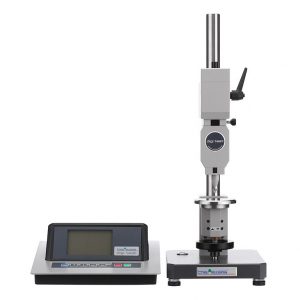
NF T 46-003 is a French designation commonly used for standardized determination of rubber hardness expressed in International Rubber Hardness Degrees (IRHD), also referred to in French contexts as DIDC. It is widely referenced for quality control and product verification of vulcanized rubber and thermoplastic rubber/elastomer parts.
If you need help matching a customer or drawing requirement that cites “NF T 46-003” to the right current document (for example an ISO 48 part number and edition), talk with our team and we’ll help you align the citation to the right test setup.
NF T 46-003 (linked to NF ISO 48) — what it is
In practice, “NF T 46-003” is used to point to AFNOR’s rubber hardness determination standard aligned with ISO 48. Depending on how a requirement is written, it may refer to an older consolidated document or to a specific part within the ISO 48 / NF ISO 48 multipart series.
Document type: Hardness test method / measurement standard for elastomers (IRHD/DIDC hardness).
Quick Definition
NF T 46-003 is used to specify how to measure the hardness of vulcanized or thermoplastic rubber using standardized indentation-based hardness methods reported in IRHD (DIDC) units, with defined conditions for applying force, timing, and reading the result.
What This Standard Covers
This designation is primarily associated with determination of rubber hardness in IRHD/DIDC for vulcanized and thermoplastic rubbers. It is typically used when a purchaser or internal spec needs a comparable hardness number for incoming inspection, production control, or conformance documentation.
Because the ISO 48 family is published in parts, the exact procedures (flat vs. curved surfaces, normal vs. micro approaches, or verification requirements) can depend on the cited part/edition.
Why This Standard Matters in Testing
Hardness is a fast, practical property check that helps detect material mix shifts, cure variation, aging effects, and lot-to-lot changes. When hardness is specified on a drawing or purchase order, using the cited standard is important because hardness results can vary with indenter type, applied force, dwell time, and sample support.
Practical impact: The same rubber can show different “hardness” values if a different method or scale is used—so the exact NF/ISO citation is critical for acceptance decisions.
Common Materials, Product Types, or Applications Covered
NF T 46-003 hardness references are commonly seen for elastomeric components where hardness is a key fit-and-function variable.
- Vulcanized rubber compounds (general industrial rubber)
- Thermoplastic rubber / thermoplastic elastomer materials (when specified as “thermoplastic rubber” in the requirement)
- Seals, gaskets, O-rings, molded parts, hose and tube compounds, and rubber-coated elements (where a hardness target is specified)
Common Test or Verification Workflow
Most labs use this type of hardness reference as a quick verification step tied to product release or incoming inspection.
Common workflow: Condition specimens as required by the controlling spec → select the appropriate IRHD/DIDC method and scale referenced by the requirement → perform repeated indentations at defined locations → report the hardness value and any required test conditions (method/part, specimen description, and equipment identification).
Common decision point: If the part geometry is curved or the section thickness is limited, the specific method/part selection can change the required test approach and fixturing.
Equipment Commonly Used for This Standard
Equipment selection is driven by whether the requirement expects IRHD/DIDC results and by specimen geometry and thickness. In many QA/QC environments, repeatability is improved by using a bench instrument rather than a handheld device.
Common equipment: IRHD/DIDC hardness tester (bench/stand type), appropriate indenters and anvils/support tables, specimen support tooling for small parts, and reference materials used for routine checks.
Calibration & verification: Many hardness programs include regular verification checks and documented calibration status for the tester used in acceptance testing, especially when hardness is part of a customer specification.
How to Read This Designation or Revision
“NF T 46-003” is often written as a short-form reference on drawings and purchase specifications. In AFNOR listings, it appears as a classification index associated with NF ISO 48, and modern publications may be issued as NF ISO 48 or as NF ISO 48 parts (often shown with a related “T46-003-x” index).
Revision sensitivity: Test conditions and reporting expectations can vary by edition and by part number, so hardness requirements should be quoted and executed against the exact cited document reference whenever possible.
Related Standards, Methods, or Frameworks
Hardness requirements may be specified using different but related document families depending on geography, industry, and whether the requirement calls for IRHD/DIDC or Shore hardness.
- NF ISO 48 (and multipart NF ISO 48 documents) for rubber hardness determination aligned with ISO 48
- NF ISO 7619-1 when a specification calls for Shore hardness by durometer (different scale and method than IRHD/DIDC)
Get help configuring hardness testing for an NF T 46-003 requirement
If you’re equipping a lab for IRHD/DIDC hardness testing (or replacing an older hardness bench with a current system), you can request a detailed quote based on your part geometry, throughput, and documentation needs.