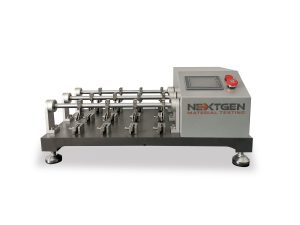
SATRA TM55 is a SATRA test method for evaluating the flexing resistance of flexible upper materials using a Bally flexometer-style setup. It is commonly used to assess cracking and crease-related damage that can develop in footwear uppers during repeated bending.
The method applies broadly to flexible upper materials, including leathers, coated fabrics, and textiles, and can be run on dry or wet specimens at ambient or sub-zero temperatures. If you need help matching TM55 conditions to your product risk or a buyer specification, you can talk with our team about your application.
SATRA TM55: Flexing resistance of upper materials – Bally flexometer
SATRA TM55 is a flexing durability test method intended to indicate how resistant a material is to cracking or other failure at flexing creases. In footwear programs, it is often used as a screening and comparative method for upper materials and upper laminates where repeated creasing can drive appearance and performance issues.
Because the result is based on visible damage after repeated flexing, TM55 is frequently used in material selection, supplier qualification, change control, and quality investigations for upper material failures.
Quick definition
What it is: A SATRA test method that repeatedly flexes a folded specimen in a Bally flexometer configuration and visually evaluates cracking or other damage at set intervals.
What it tells you: How well an upper material resists crease-related damage under repeated flexing, under dry or wet conditions and potentially at reduced temperatures.
Typical output: Visual condition versus flex cycles (often including cycles to first crack or to a defined damage level, depending on the requirement).
What This Standard Covers
TM55 is intended to determine resistance to cracking or other failure at flexing creases for flexible materials, with particular relevance to leathers, coated fabrics, and textiles used in footwear uppers.
The method describes a repeated flexing action (oscillation through a fixed angle at a defined rate) with visual assessment of damage at intervals. The procedure can be performed on wet or dry specimens, and at ambient or sub-zero temperatures.
Why This Standard Matters in Testing
Upper materials can fail in ways that are strongly crease-driven (cracking, finish breakdown, coating failure, or other damage concentrated on flex lines). TM55 provides a controlled, repeatable way to compare candidate materials and constructions when flexing durability is a key purchase or brand requirement.
For lab managers and QA/QC teams, TM55 can also serve as a practical tool to investigate field complaints where the failure mode is localized at repeated bend points, helping separate material limitations from process- or design-driven issues.
Common Materials, Product Types, or Applications Covered
TM55 is used most often for footwear upper material evaluation, including flexible materials such as:
- Upper leathers and leather finishes
- Coated fabrics and coated textiles used as uppers or overlays
- Textiles and synthetic upper materials intended to flex repeatedly in wear
It is most relevant when specifications focus on crease durability, surface cracking, or finish/coating performance under repeated bending.
Common Test or Verification Workflow
TM55 is typically run as a comparative or qualification test, where multiple materials (or multiple suppliers/production lots) are flexed under the same conditions and then assessed using the same damage criteria.
Common workflows: Material selection for new upper constructions, incoming material approval, supplier qualification, investigation after cracking complaints, and verification after a material/process change.
Common decisions supported: Accept/reject against a buyer requirement, rank-order comparisons between materials, and identifying whether wet exposure or low temperature conditions increase the cracking risk.
Equipment Commonly Used for This Standard
TM55 points primarily to Bally flexometer-style flexing equipment capable of holding folded specimens in clamps and repeatedly oscillating through a defined motion while counting cycles.
Common equipment: Bally flexometer / upper material flexing tester with appropriate specimen clamps and cycle counting.
Common options (application-dependent): Accessories or configurations to support wet testing and/or sub-zero temperature conditioning/testing (when the purchase specification calls for these conditions).
What to confirm when quoting equipment: Number of stations (throughput), how cycles are set and recorded, how inspections are timed and documented, and whether your program requires ambient-only testing or needs wet and/or low-temperature capability.
How to Read This Designation or Revision
Designation: SATRA TM55.
Edition/date reference: TM55 is commonly cited with an issue month/year (for example, “TM55:1999”). This method shows an issue date of March 1999, with earlier issue and revision history noted by SATRA.
Revision sensitivity: Buyer specifications may reference a specific dated issue of TM55, and test conditions (such as wet versus dry and ambient versus sub-zero) can materially change results. Align the exact cited issue and test conditions before running comparisons between labs or suppliers.
Related Standards, Methods, or Frameworks
Flexing resistance by flexometer is also addressed in other standards used in leather and footwear testing (for example, the ISO 5402 flexometer method family). When a brand or customer requirement includes both SATRA and ISO references, it is important to confirm whether they are intended as alternatives or whether specific reporting and acceptance criteria differ.
Get help selecting a Bally flexometer setup for TM55
If you are equipping a lab to run SATRA TM55 and need to match station count, temperature capability, and documentation needs to your workflow, you can request a detailed quote for a configuration aligned to your program.